
Ingredient file // Fruit or vegetable
Pears
Printed as “Whole Pears” on some labels. Same ingredient.
A real fruit with a modest job
Pears add sugar and some fiber to dog food, but fresh pears are mostly water. Their name on a kibble bag does not tell you how much fruit remains in the finished food. Digestive and antioxidant promises go further than the evidence.
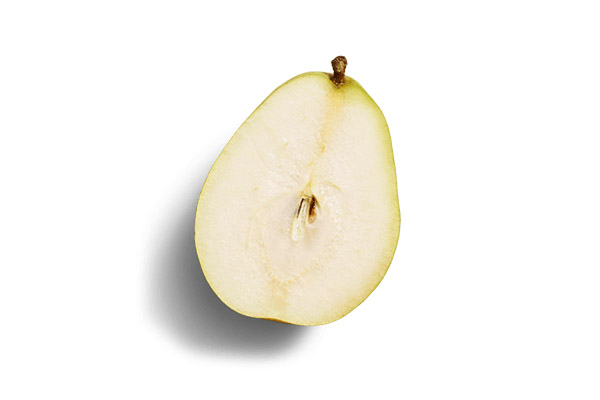
- What it is
- Pear fruit named as an ingredient in dog food, with its preparation and seed handling undisclosed by the name.
- Made from
- Pear fruit from orchard trees
- Main job
- Fruit flavor and some fiber
- Typical amount
- Not published
- Watch for
- Fresh fruit weighs mostly water
- Not the same as
- Pear pomace
Our read // In our catalog
In 1 of every 113 foods we track
Share of foods that list it
1%
23 of the 2,595 foods with an ingredient list on file, from 4 brands. 22 dry dog food, 1 wet dog food.
Each square is 1% of the catalog
Where it sits on the label
Median position 30. In the top five of 0 foods, so it is usually a minor ingredient.
Above the salt
Usually listed after the salt, which caps it at roughly 1% of the recipe in 71% of foods.
Price per lb
Median of the cheapest bag price across 22 priced foods, 32% above the catalog. The price is the food's, not the ingredient's.
Who leans on it
48%
of the foods that list it are from Acana. 4 brands use it in total.
What it is
How it is made
Pears come from an orchard fruit crop. They may enter a recipe fresh or after drying, which removes water from a perishable fruit. The ingredient name does not reveal the supplier's preparation.2,3,4,8
- 01 // Source Pear fruit Orchard pears supply the fruit; the edible portion contains sugars and dietary fiber.
- 02 // Process Fruit preparation In one published drying study, researchers removed seed nests and sliced pears. That does not describe every dog food supplier.
- 03 // Process Fresh or dried Pears may remain fresh or be dried to remove water. The opened dog food label does not identify the route.
- 04 // Output Prepared pears Pear fruit reaches the recipe with its moisture level and seed handling undisclosed on the ingredient list.
What is in it
Composition, dry matter
61
% sugars
Calculated from USDA values for raw edible pear. Most of the fruit's dry matter is sugar, while fresh pear weighs mostly water.
Why it is in the bag
What the manufacturer gets
-
01
Adds a familiar fruit
Pears give manufacturers a recognizable fruit to name on the bag. A companion animal nutrition review identifies label appeal as one reason fruit ingredients attract pet food makers.1,4
-
02
Contributes sugar and fiber
The fruit supplies both. How much either contributes to the finished food depends on the amount of pear used, which the opened product label does not disclose.3,4
-
03
Balances handling costs
Fresh pears are perishable and mostly water. Drying preserves the fruit but uses energy, so the choice between fresh and dried material has a handling cost the label does not reveal.3,8
How much The opened dog food label lists whole pears but gives no separate pear percentage, leaving that recipe's inclusion amount unknown.4
Our read // The claims
What the evidence supports
Strong: controlled studies in dogs agree. Some: small or mixed dog data. Thin: mechanism or lab work only. None: nothing, or the evidence points the other way.
-
Brands say
Pears add fiber to dog food
Evidence
- Strong
- Some
- Thin
- None
USDA reports 3.1 g of dietary fiber per 100 g of raw edible pear. That makes a fiber contribution certain, but its size in a finished food depends on the undisclosed amount of pear used.3,4
-
Brands say
Pears support a dog's digestive health
Outruns the evidence
Evidence
- Strong
- Some
- Thin
- None
A brand links whole pears to digestive health. A companion animal nutrition review discusses laboratory fermentation of other fruit fibers but gives no pear feeding result showing a digestive benefit in dogs.1,4
-
Owners say
Pear antioxidants protect dogs from disease
Outruns the evidence
Evidence
- Strong
- Some
- Thin
- None
A companion animal nutrition review describes potential fruit compounds but says health studies on fruit fibers are sparse. It reports no pear feeding trial that measured antioxidant protection or disease outcomes in dogs.1
-
Owners say
Dogs need vitamin C from pears
Outruns the evidence
Evidence
- Strong
- Some
- Thin
- None
Raw pear contains 4.3 mg of vitamin C per 100 g. Dogs make vitamin C in their liver, and Merck reports no AAFCO dietary requirement for it. Pears do not fill a vitamin C need.3,5,6
Straight answers
What owners ask
-
Q01
Is it just filler?
NoPears supply sugar and fiber, so they have a nutritional role. Label appeal is another reason to include them. Because fresh pear is mostly water and the amount used is undisclosed, the name alone proves little about the finished food.1,3,4
-
Q02
Are the seeds removed?
Not disclosedResearchers removed seed nests before drying pears in one study. The opened dog food label names whole pears but gives no preparation method, so that study cannot tell you how the food's supplier handles seeds.2,4
-
Q03
Does pear replace added fiber?
No proofRaw pear contains fiber, but it brings much more water and sugar. Without a disclosed pear amount, the label cannot show whether it supplies enough fiber to replace a concentrated fiber ingredient.3,4
-
Q04
Can I share fresh pear?
Yes, preparedOffer a small amount of washed pear flesh cut to your dog's size. Remove the core and seeds first. Large servings can upset a dog's stomach, regardless of whether its kibble lists pears.6,7
Who uses it
Brands, best sellers and the company it keeps
Top brands, by foods that list it
Usually listed with, share of the foods that list it
- Chicken 52%
- Turkey 43%
- Salmon 39%
- Red Lentils 39%
- Whole Herring 35%
- Chicken Liver 30%
- Herring Meal 30%
- Pollock Meal 22%
- Pork 22%
- Dehydrated Chicken 22%
- Chicken Meal 22%
- Chickpeas 22%
Our read // On the bag
Read past pears to judge the food
Check the ingredients above pears and the food's complete nutritional analysis. Ingredient lists rank materials by weight, and fresh pear carries substantial water. Treat pears as a modest fruit addition. Their presence alone does not demonstrate a digestive, antioxidant or vitamin benefit for your dog.
On labels as
Other names for this
Manufacturers do not all use the same wording. These all mean the same thing.
Sources
What we read
Checked October 1, 2026.
- 1 Alternative Dietary Fiber Sources in Companion Animal Nutrition
- 2 Influence of Pear Variety and Drying Methods on the Quality of Dried Fruit
- 3 USDA National Nutrient Database for Standard Reference Release 26: Basic Report 09252, Pears, raw
- 4 Singles, Duck & Pear Recipe
- 5 Nutritional Requirements of Small Animals
- 6 Can Dogs Eat Pears? Benefits, Risks, and Feeding Tips
- 7 Poisonous Plants
- 8 Pears: An Alternative Feed