
Ingredient file // Flavor
Garlic
Printed as “Organic Garlic” on some labels. Same ingredient.
Mostly aroma, with a real dose warning
Garlic in kibble comes from the pungent bulb, often dried and ground for flavor. At flavoring amounts it contributes little nutrition, while larger repeated doses can damage a dog's red blood cells. Dog studies have not defined a safe kibble amount for ordinary garlic.
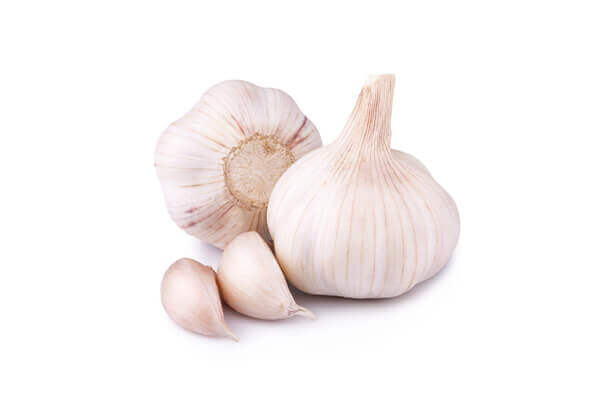
- What it is
- Garlic bulb added to dog food for its aroma, commonly as dried pieces or powder.
- Made from
- Peeled garlic cloves
- Main job
- Flavor and aroma
- Typical amount
- Not published
- Watch for
- Extra garlic given on top of food
- Not the same as
- Aged garlic extract
Our read // In our catalog
In 1 of every 44 foods we track
Share of foods that list it
2%
59 of the 2,595 foods with an ingredient list on file, from 5 brands. All dry dog food.
Each square is 1% of the catalog
Where it sits on the label
Median position 28. In the top five of 0 foods, so it is usually a minor ingredient.
Above the salt
Usually listed after the salt, which caps it at roughly 1% of the recipe in 95% of foods.
Price per lb
Median of the cheapest bag price across 50 priced foods, 7% below the catalog. The price is the food's, not the ingredient's.
Who leans on it
63%
of the foods that list it are from Blue. 5 brands use it in total.
What it is
How it is made
Garlic is grown as a spice crop. Powder comes from the cloves themselves, not a processing leftover. Peeling, drying and milling turn the bulbs into a measured flavor ingredient that stores more easily than fresh garlic.6,9
- 01 // Source Garlic bulbs Harvested bulbs supply the cloves used to make dried garlic for the food ingredient market.
- 02 // Process Peeled and sliced Processors remove the husks, sort the cloves and cut them into thin pieces for drying.
- 03 // Process Dried and milled The pieces lose moisture in a dryer, then pass through a grinder to become powder.
- 04 // Output Garlic powder The dry powder is packaged for food makers to weigh into a recipe as a flavor ingredient.
What is in it
Composition, dry matter
18
% protein
Protein in one tested garlic powder. That figure does not make garlic a protein source when a recipe uses it for flavor.
Why it is in the bag
What the manufacturer gets
-
01
Adds a strong aroma
Garlic's smell lets a small addition change a food's aroma. Pet food industry commentary describes its use as flavoring, though it does not show that dogs prefer the result.9
-
02
Appeals to shoppers
Garlic is a familiar cooking ingredient. An industry nutritionist judged its use in dog food to be partly about how owners perceive the label, rather than a proven gain in palatability.9
-
03
Uses existing spice supply
Food makers can source dried garlic through the human food ingredient market. Powder stores and weighs more conveniently than fresh cloves, which matters when garlic serves as a small flavor addition.6,9
How much The available dog trials tested extracts by body weight, not a kibble percentage, and an ingredient list does not disclose the amount.1,2,8
Our read // The claims
What the evidence supports
Strong: controlled studies in dogs agree. Some: small or mixed dog data. Thin: mechanism or lab work only. None: nothing, or the evidence points the other way.
-
Vets say
Garlic can damage a dog's red blood cells
Evidence
- Strong
- Some
- Thin
- None
A controlled dog trial gave extract equivalent to 5 g of whole garlic per kg of body weight daily for 7 days. Red cell damage markers appeared, although no dog developed hemolytic anemia. It demonstrates a hazard at that dose, not at an unknown kibble dose.1
-
Brands say
Small amounts of garlic in kibble are safe
Outruns the evidence
Evidence
- Strong
- Some
- Thin
- None
A trial in 9 Beagles found no blood injury after 12 weeks of aged garlic extract. That specially prepared extract differs from ordinary dried garlic, so the result does not set a safe amount for kibble.1,2,9
-
Brands say
Garlic boosts immune and antioxidant defenses
Outruns the evidence
Evidence
- Strong
- Some
- Thin
- None
In a 9 Beagle trial, aged garlic extract changed the activity of antioxidant response genes. The supplier funded the study. It measured no protection from illness, and ordinary garlic in kibble was not tested.2
-
Brands say
Garlic makes kibble more appealing to dogs
Outruns the evidence
Evidence
- Strong
- Some
- Thin
- None
An industry nutritionist describes garlic as a flavor ingredient but judges its value largely a matter of perception. The article presents no controlled dog preference test of garlic alone, so better acceptance remains unshown.9
-
Owners say
Garlic keeps fleas off dogs
Outruns the evidence
Evidence
- Strong
- Some
- Thin
- None
A veterinary evidence review found zero qualifying studies testing garlic against fleas in living dogs. Its traditional use is not evidence of protection, and adding garlic to chase this claim increases exposure to a known red cell hazard.1,3
Straight answers
What owners ask
-
Q01
Is it just filler?
NoGarlic has a flavoring job. It is not included to supply meaningful protein or calories, and an industry nutritionist says its appeal to the person reading the label may exceed any proven benefit to the dog.4,9
-
Q02
Does garlic on the bag mean poisoning?
Not by itselfAn ingredient list shows relative weight, not the amount your dog eats. The controlled injury trial used repeated, high extract doses; it did not test kibble. Do not add cloves or powder on top of the food.1,8
-
Q03
Should I use it for fleas?
NoThe veterinary evidence review found no qualifying dog trial showing flea prevention or treatment. Garlic adds a dose dependent red blood cell risk without demonstrated flea control.1,3
Who uses it
Brands, best sellers and the company it keeps
Top brands, by foods that list it
Amazon best sellers that list it
- #1 Blue Life Protection Formula Adult Chicken and Brown Rice Recipe Dry Dog Food
- #5 Blue Life Protection Formula Adult Small Breed Chicken and Brown Rice Recipe Dry Dog Food
- #27 Blue Life Protection Formula Senior Chicken and Brown Rice Recipe Dry Dog Food
- #35 Blue Life Protection Formula Small Breed Senior Chicken and Brown Rice Recipe Dry Dog Food
Rank on Amazon's dog food best seller list, checked October 2026.
Usually listed with, share of the foods that list it
- Peas 64%
- Chicken 56%
- Chicken Meal 56%
- Pea Starch 56%
- Brown Rice 53%
- Barley 53%
- Natural Flavor 44%
- Oatmeal 42%
- Flaxseed 42%
- Pea Fiber 42%
- Chicken Fat 41%
- Pea Protein 36%
Our read // On the bag
Read garlic as flavor, then check the food
Garlic low on a bag is a flavor cue, not a nutrient. Judge the food by its main ingredients and nutritional adequacy statement. Skip extra cloves or powder for flea or immune claims. If garlic appears high on the list, ask the maker how much the recipe contains.
On labels as
Other names for this
Manufacturers do not all use the same wording. These all mean the same thing.
Sources
What we read
Checked September 1, 2026.
- 1 Hematologic changes associated with the appearance of eccentrocytes after intragastric administration of garlic extract to dogs
- 2 Safety and efficacy of aged garlic extract in dogs: upregulation of the nuclear factor erythroid 2-related factor 2 (Nrf2) signaling pathway and Nrf2-regulated phase II antioxidant enzymes
- 3 Can garlic prevent, repel or kill fleas that infest dogs?
- 4 Effects of Feeding Garlic Powder on Growth Performance, Rumen Fermentation, and the Health Status of Lambs Infected by Gastrointestinal Nematodes
- 5 Effect of adding guava leaf (Psidium guajava) and garlic (Allium sativum) powders in diets on growth performance and diarrhea incidence of weaned piglets
- 6 Development of an ecological and standardized process for the production of garlic powder (Allium Sativum) in the agricultural sector of the region of Arequipa
- 7 Potentially Dangerous Items for Your Pet
- 8 Reading Labels
- 9 Onions and garlic offer flavor in the right amounts