
Ingredient file // Flavor
Tomato Paste
A sauce ingredient, not a health supplement
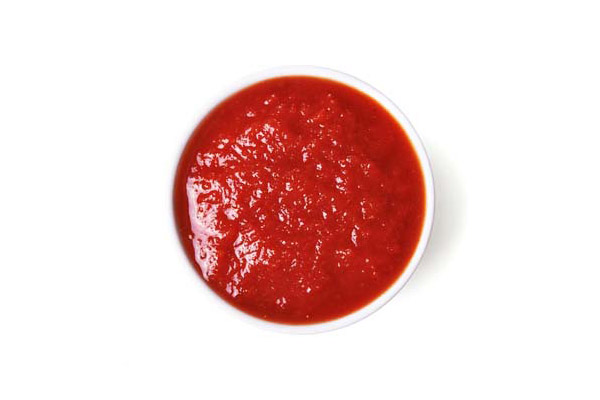
Tomato paste is ripe tomato pulp strained and concentrated until thick. In wet dog food it adds tomato flavor, red color and body to the sauce. It contains lycopene, but there is no evidence that paste in dog food protects a dog's health.
- What it is
- Ripe tomato pulp with skins and seeds removed, concentrated into a thick paste by evaporating water.
- Made from
- Ripe tomatoes
- Main job
- Tomato flavor and color
- Typical amount
- Not published
- Watch for
- Onion in seasoned human tomato sauces
- Not the same as
- Dried tomato pomace
Our read // In our catalog
In 1 of every 279 foods we track
Share of foods that list it
0%
9 of the 2,508 foods with an ingredient list on file, from 3 brands. All wet dog food.
Each square is 1% of the catalog
Where it sits on the label
Median position 9. In the top five of 0 foods, so it is usually a supporting ingredient.
Above the salt
Almost always listed before the salt, so there is more of it than a pinch.
Who leans on it
78%
of the foods that list it are from Fromm. 3 brands use it in total.
What it is
How it is made
Tomato processors make paste for sauces and other foods by concentrating ripe fruit. Crushing and sieving separate the pulp from skins and seeds. Evaporation removes much of its water, leaving a thick ingredient manufacturers can add to recipes.5
- 01 // Source Ripe tomatoes Ripe fruit is washed and sorted before entering the paste line.
- 02 // Process Crushed and sieved Crushing releases the pulp; sieves separate it from skins and seeds.
- 03 // Process Water evaporated Vacuum evaporation concentrates the strained pulp while keeping the cooking temperature lower.
- 04 // Output Tomato paste The thick pulp is pasteurized and packed for shipment to food manufacturers.
What is in it
Composition, dry matter
76
% carbohydrate
Carbohydrate by difference in one unfortified paste analysis. This includes fiber and says nothing about the amount in a dog food.
Why it is in the bag
What the manufacturer gets
-
01
Adds tomato flavor
A pet food brand identifies flavor as a reason to use paste. Concentration gives manufacturers tomato taste without adding as much water as fresh pulp.5,7
-
02
Colors and thickens sauce
Paste brings red color and a thick consistency to a wet recipe. Those are properties of the concentrated pulp, not evidence of a health benefit.5,7
-
03
Simplifies bulk production
Paste is produced at high volume and packed for storage and shipment. A dog food maker can buy concentrated tomato pulp without running a fresh tomato processing line.5
How much Ingredient lists show tomato paste's rank by weight, but do not disclose its percentage in a dog food recipe.6
Our read // The claims
What the evidence supports
Strong: controlled studies in dogs agree. Some: small or mixed dog data. Thin: mechanism or lab work only. None: nothing, or the evidence points the other way.
-
Brands say
Dogs absorb more lycopene from cooked paste
Outruns the evidence
Evidence
- Strong
- Some
- Thin
- None
In a study of 5 people, paste produced a 3.8-fold greater lycopene response than fresh tomatoes eaten with oil. The dog study gave purified lycopene in capsules. It made no paste comparison, so the claim is untested in dogs.1,2
-
Brands say
Tomato paste makes dog food tastier
Outruns the evidence
Evidence
- Strong
- Some
- Thin
- None
A pet food brand calls paste a flavor ingredient. Neither that description nor the tomato processing source reports a controlled dog preference trial comparing otherwise identical recipes. Better acceptance by dogs remains untested.5,7
-
Brands say
Lycopene protects dogs from disease
Outruns the evidence
Evidence
- Strong
- Some
- Thin
- None
A 28-day study in 6 dogs measured blood and tissue levels after purified lycopene capsules. It did not feed tomato paste or test disease prevention. Detecting lycopene in a dog does not demonstrate protection.1
-
Brands say
Tomato paste supplies useful stool fiber
Outruns the evidence
Evidence
- Strong
- Some
- Thin
- None
One unfortified paste measured 4.17% dietary fiber on a dry basis. Dog food labels do not disclose how much paste is added, and no cited feeding trial tested whether paste improves stool.3,6
-
Owners say
Tomato paste is toxic to dogs
Outruns the evidence
Evidence
- Strong
- Some
- Thin
- None
Paste production uses ripe fruit and removes skins and seeds. ASPCA identifies ripe tomato fruit as non-toxic to dogs; its warning concerns the plant. The ingredient name does not signal poisoning.5,8
Straight answers
What owners ask
-
Q01
Is it just filler?
NoPaste adds tomato flavor, red color and body to a wet recipe. Those are formulation jobs. Its place on the label does not show a health benefit or reveal how much paste the dog eats.5,6,7
-
Q02
Is it the same as pomace?
NoPaste is the concentrated tomato pulp. Feedipedia identifies pomace as the skins, crushed seeds and small amount of pulp left after tomatoes are processed into paste and other products. The names describe different materials.4,5
-
Q03
Will its lycopene protect my dog?
No proofDogs absorbed purified lycopene given in capsules, but that study measured where it went in the body, not whether it improved health. It cannot predict a benefit from the undisclosed amount of paste in a recipe.1,6
Who uses it
Brands, best sellers and the company it keeps
Top brands, by foods that list it
Usually listed with, share of the foods that list it
- Potatoes 100%
- Carrots 89%
- Peas 78%
- Beef 44%
- Beef Broth 44%
- Beef Liver 33%
- Pork 33%
- Pork Broth 22%
- Dried Egg Product 22%
- Chicken 22%
- Duck 22%
- Chicken Liver 22%
On the shelf
Foods that list it
9 foods in our reviews list it. Here are some of them.
Show 9 more
Fromm Four-Star Diner Favorites Bella’s Beef Barkundy Stew Wet Dog Food38.9% proteinFromm Pâté Chicken & Duck Pâté Wet Dog Food40.9% proteinFromm Pâté Lamb & Sweet Potato Pâté Wet Dog Food34.1% proteinFromm Four-Star Pâté Turkey, Duck, & Sweet Potato Pâté Wet Dog Food36.4% proteinFromm Four-Star Shredded Pork in Gravy Entrée Wet Dog Food43.8% proteinFromm Pâté Beef & Barley Pâté Wet Dog Food40.9% proteinTiki Dog Taste of the World Beef, Potatoes & Carrots Burgundy Recipe Wet Dog Food44.4% proteinFromm Four-Star Pâté Turkey Pâté Wet Dog Food31.8% proteinBlue Delights - Top Sirloin Flavor Wet Dog Food36.4% proteinOur read // On the bag
Read it as sauce, then check the food
If tomato paste sits below the main ingredients in a wet food, read it as flavor, color and sauce body. Its list position shows relative weight, not a dose of lycopene. Check the food's nutritional adequacy statement and main ingredients. Do not buy it for a lycopene promise.
Sources
What we read
Checked October 1, 2026.
- 1 Safety Evaluation of Certain Food Additives and Contaminants
- 2 Lycopene is more bioavailable from tomato paste than from fresh tomatoes
- 3 Nutritional composition and consumer acceptance of tomato paste fortified with palm weevil larvae (Rhynchophorus phoenicis Fabricius) in the Ashanti region, Ghana
- 4 Tomato pomace, tomato skins and tomato seeds
- 5 Fruit and vegetable processing - Ch09 Vegetable specific processing technologies (cont.)
- 6 Reading Labels
- 7 Tomato Paste in Dog Food
- 8 Toxic and Non-toxic Plants: Tomato Plant
- 9 Toxic and Non-toxic Plants: Onion