Can Dogs Eat Apples?
Apple flesh is safe, low calorie and high in fiber. Two parts need removing, and the one people worry about is not the one most likely to cause trouble.
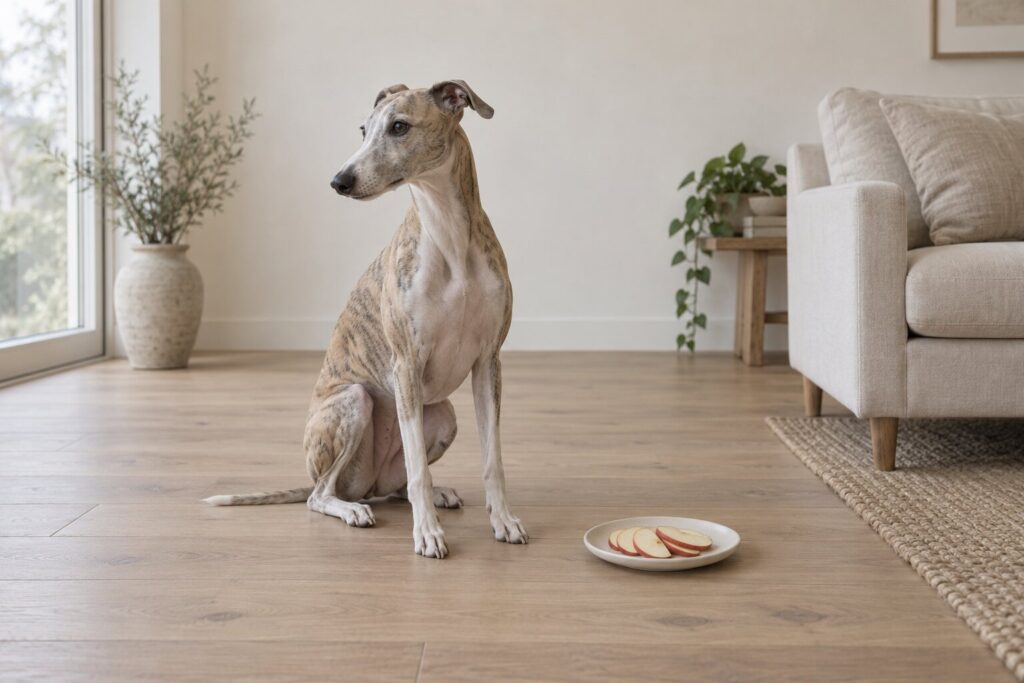
Yes. Apple flesh is safe, low in calories, high in fiber, and most dogs enjoy the crunch. It is one of the better everyday fruit treats.
Two parts need removing: the core and the seeds. Neither is the emergency the internet sometimes suggests, but both are worth taking seriously for different reasons.
Apple Seeds And Cyanide
Apple seeds contain amygdalin, which releases cyanide when the seed is crushed or chewed. That much is true, and it is where the warning comes from.
The proportion matters. The amount in a few seeds is very small, the seeds have a tough coating that usually passes through a dog whole and intact, and a dog would need to chew a large quantity to be at real risk. A dog that swallows a couple of seeds is almost certainly fine.
So the honest position is: core the apple, do not panic if a seed gets through. If your dog has eaten a significant number of crushed seeds, or you are unsure, call your vet rather than guessing.
The Core Is The Bigger Risk
Less discussed and more likely to cause an actual problem. An apple core is tough, fibrous, and awkwardly shaped, which makes it a genuine choking hazard and a plausible intestinal obstruction in a small or medium dog.
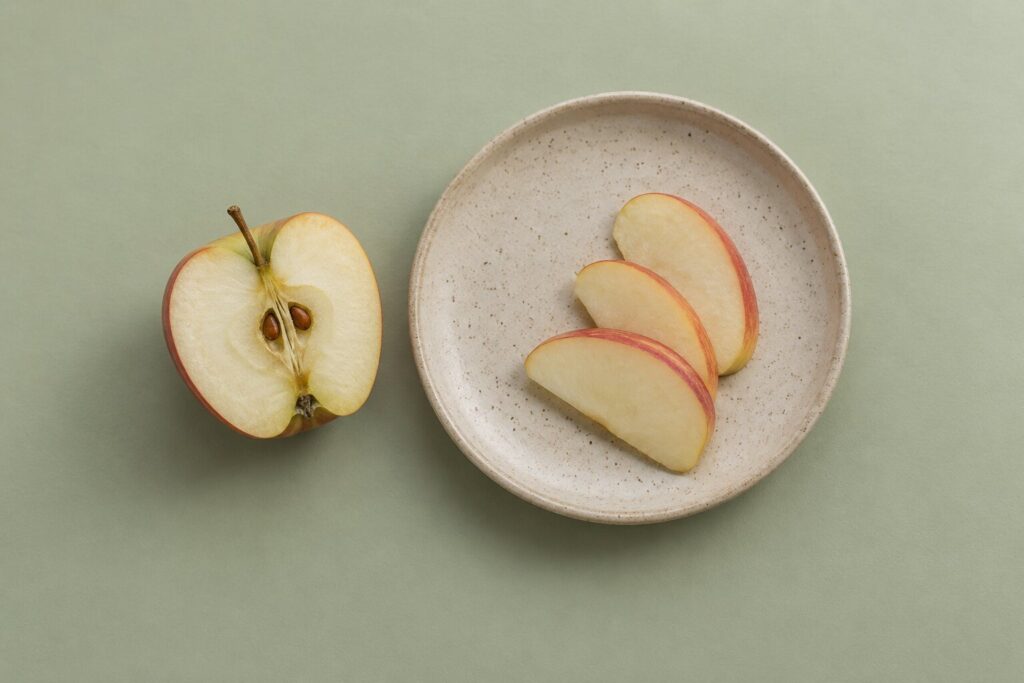
Do not hand a dog the core when you have finished the apple. That is the single most common way this goes wrong.
How Much
Apple runs about 52 calories per 100g, and a medium apple is around 95 calories. Treats and extras should stay under 10% of daily calories, which puts a sensible portion at:
| Dog weight | Rough daily calories | 10% budget | Sensible apple portion |
|---|---|---|---|
| Under 10 lb | ~350 | ~35 cal | Two or three thin slices |
| 20 to 30 lb | ~750 | ~75 cal | Up to half an apple |
| 50 lb and up | ~1,250 | ~125 cal | Up to a whole apple, cored |
The practical limit arrives before the calorie limit. Apple is high in fiber, and a large amount at once produces gas and loose stools.
Skin On Or Off?
On, for most dogs. The skin carries a good share of the fiber and nutrients, and it is not a problem for a healthy dog.
Two exceptions. Dogs with a sensitive stomach sometimes do better with it peeled, since the skin is the least digestible part. And apples hold surface pesticide residue more than most produce, so wash them properly whichever way you go.
What Apples Provide
Fiber, vitamin C, vitamin A, potassium and antioxidants. As with most fruit, a dog on a complete commercial food already has all of this covered, and the vitamin C does nothing special because dogs synthesize their own.
Where apple genuinely earns its place is as a low calorie, high volume snack for a dog that is always hungry. The crunch also does a small amount of mechanical good for teeth. That is worth having, but it is not a substitute for brushing and no fruit is.
Which Apples, And Which Apple Products
Any variety of fresh apple is fine. Sweeter varieties carry a little more sugar, which only matters for diabetic dogs.
What to avoid:
- Applesauce with added sugar. Unsweetened is fine in small amounts; the standard sweetened kind is unnecessary sugar.
- Anything sugar free. Sugar free applesauce or apple products may contain xylitol, which causes a rapid insulin crash and liver failure in dogs. This is the most dangerous thing in this article.
- Apple pie, crumble, or anything baked. Sugar, butter, and frequently nutmeg, which is toxic to dogs.
- Dried apple rings. Concentrated sugar, often sulphited.
- Apple juice. Sugar without the fiber that made the fruit worth eating.
- Crab apples. The whole plant, including stems and leaves, contains more amygdalin than a supermarket apple.
Which Dogs Should Go Easy
- Diabetic dogs. Apple is moderate on sugar, and treat routines belong in a conversation with your vet.
- Dogs prone to loose stools, since apple is high in fiber.
- Dogs on an elimination diet. Nothing outside the trial food.
- Any dog that swallows without chewing. Slice thinly rather than chunking.
Good Ways To Serve It
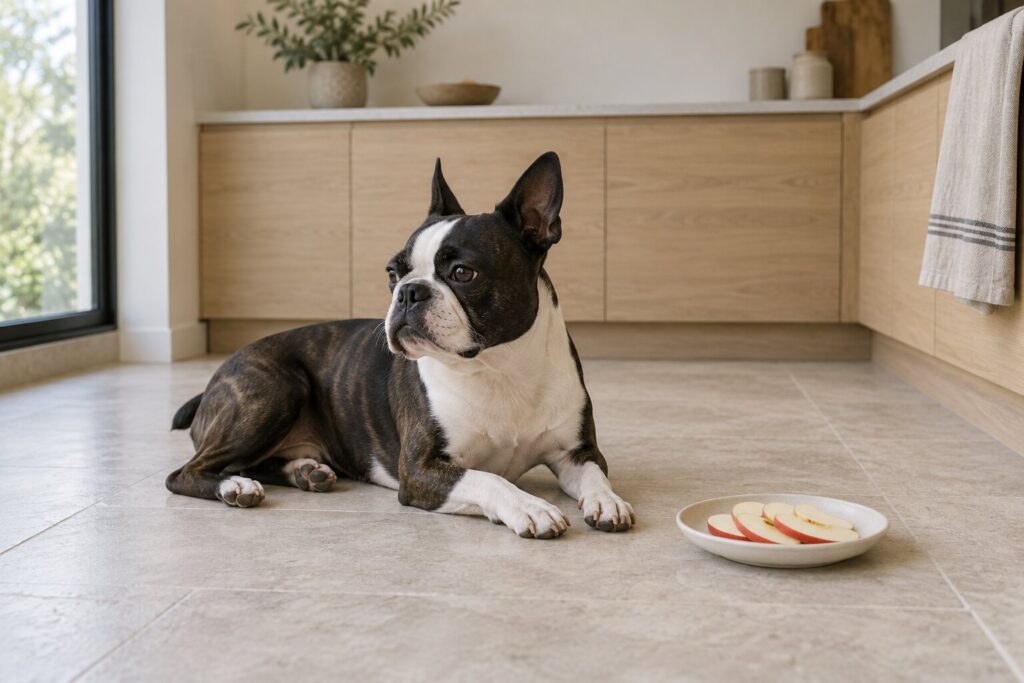
- Thin slices, cored, skin on. The default and hard to beat.
- Frozen slices. Useful in hot weather and last longer.
- Diced into a puzzle toy, alone or with a little plain unsweetened applesauce, then frozen.
Where This Sits In The Diet
An apple is a snack. What your dog is actually living on is what is in the bowl twice a day, and that is a label question rather than a fruit question.
You will also see apples on ingredient panels, generally near the bottom and generally in fractions of a percent, since panels weigh ingredients before cooking and fresh fruit is mostly water. A food is not better for listing them. We convert every guaranteed analysis we index to the same basis so two bags can be compared directly, which you can browse in the dog food reviews.
In The Kibble reads labels and publishes what the numbers say. Guides are general information, not veterinary advice. Your vet knows your dog's history and we do not, so take anything here to them before you change how you feed.
Found this useful?
Comments
No comments yet. Tried this with your dog? Tell other readers how it went.