Can Dogs Eat Potatoes?
Cooked plain potato yes, raw or green potato no. That distinction is the whole answer, and the gap between them is bigger than it sounds.
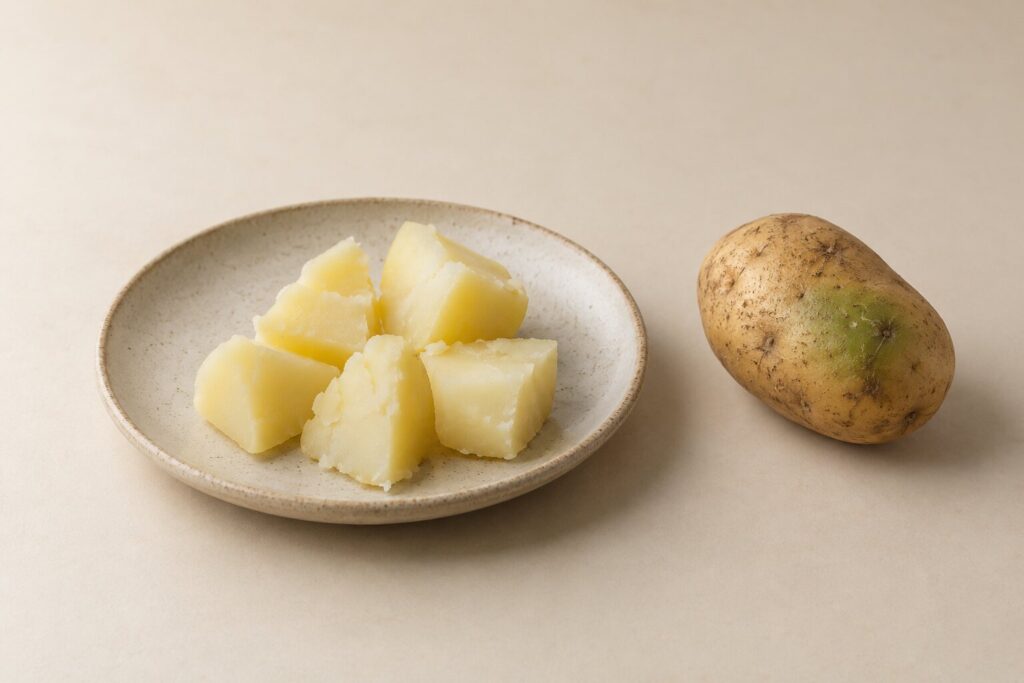
Cooked plain potato, yes. Raw or green potato, no. That distinction is the entire answer, and it is a bigger gap than it sounds: one is a bland starch, the other contains a genuine toxin.
Why Raw And Green Potatoes Are Dangerous
Potatoes are nightshades, and they contain solanine, a natural pesticide the plant makes to defend itself. Solanine is concentrated in the skin, in any green patches, in sprouts and eyes, and in the leaves and stems of the plant.
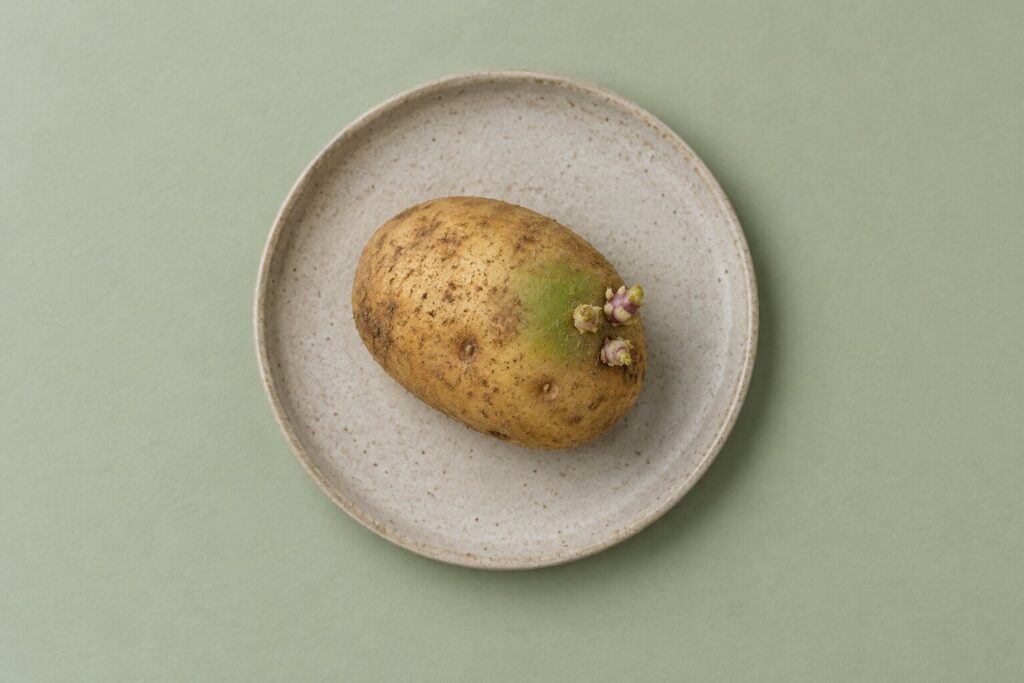
In dogs it causes vomiting, diarrhea, lethargy, tremors and in serious cases heart rhythm problems. Cooking breaks most of it down, which is why the cooked version is fine and the raw one is not.
Practically: never feed raw potato, discard any potato with green patches rather than cutting around them, keep sprouting potatoes out of reach, and keep dogs away from potato plants if you grow them. A dog that eats a raw or green potato is worth a call to your vet.
Cooked Potato Is Fine, And Fairly Pointless
Boiled, baked or steamed, with nothing on it: no butter, no oil, no salt, no seasoning, and no sour cream or cheese.
Plain cooked potato is safe, digestible and provides potassium, vitamin C and some fiber. It is also mostly starch, which means it is calories without much else. At around 87 calories per 100g boiled it is roughly twice a carrot and three times a green bean.
So while your dog can have it, there is usually a better option. If you want a filling low calorie treat, green beans or cucumber do that job far more efficiently. If you want something starchy for a bland diet, plain white rice is the conventional choice.
How Much
Treats and extras should stay under 10% of daily calories so the complete food keeps holding the nutritional balance together.

- Small dogs (under 20 lb): a tablespoon or two of plain mashed or diced potato.
- Medium dogs: a quarter of a medium potato.
- Large dogs: up to half a medium potato.
Introduce it in a small amount and give it a day, as with anything new.
Mashed Potato, Fries And Chips
Mashed potato is only as safe as what went into it. Plain mash made with nothing is fine. Real mash usually contains butter, cream, salt, and often garlic, and garlic is toxic to dogs in every form including powdered. Assume the answer is no unless you made it yourself with nothing in it.
French fries are not toxic but are a poor idea: deep fried, heavily salted, and calorie dense. A stolen fry will not hurt a healthy dog. A habit will.
Potato chips and crisps are worse on salt and fat, and flavored varieties frequently contain onion and garlic powder. Skip them.
Potato skins as a dish are usually loaded with cheese, bacon and seasoning. The skin itself also holds the highest concentration of solanine, so even plain, it is the part worth leaving off.
Sweet Potato Is A Different Vegetable
Worth separating, because people use the names interchangeably and they are not related plants.
Sweet potato is not a nightshade and contains no solanine. It is more nutrient dense, higher in fiber and beta carotene, and generally the better choice, though it is also higher in calories at around 86 per 100g cooked. It still needs to be cooked and served plain, and raw sweet potato is hard to digest even though it is not toxic.
Potatoes In Dog Food, And The DCM Question
This is the part worth understanding, because potato shows up in a lot of grain free foods and it has been under scrutiny.
Potato and potato starch are common carbohydrate sources, used to replace grains in grain free recipes and to bind kibble together. Seeing potato high in an ingredient list tells you the food leans on starch, not that the food is bad.
Since 2018 the FDA has been investigating a possible association between diets high in peas, lentils, legumes and potatoes and dilated cardiomyopathy in dogs. Some important caveats: the investigation has not established causation, the mechanism is not understood, peas and lentils have drawn considerably more attention than potatoes, and the FDA has not asked anyone to stop feeding these diets. It remains open.
The reasonable response is awareness rather than alarm. Know how much of your dog’s food is starch, and if your dog is on a grain free diet, it is a conversation worth having with your vet rather than a reason to switch in a panic.
How To Find Out How Much Starch Is In Your Food
You cannot read it off the bag, because nobody is required to print it and almost nobody volunteers it. The guaranteed analysis lists protein, fat, fiber and moisture, and starch is what is left once you subtract those plus an assumed ash figure from 100.
We run that calculation on every food we index, which is where the starch figures on our review pages come from. It is an estimate and worth treating as one: the method page sets out the assumptions involved and where the estimate is weakest.
You can browse the results in the dog food reviews, or put two candidates side by side in the comparison tool. There is more on how vegetables function in commercial food, as opposed to how the bag art suggests they do, in our guide to the best vegetables for dogs.
Which Dogs Should Skip Potato
- Diabetic dogs. Potato is high glycemic and raises blood glucose quickly. Check with your vet before it becomes routine.
- Overweight dogs. Starch calories with little else attached.
- Dogs on an elimination diet. Nothing outside the trial food.
- Any dog offered it raw, green or sprouting. That is not a moderation question.
In The Kibble reads labels and publishes what the numbers say. Guides are general information, not veterinary advice. Your vet knows your dog's history and we do not, so take anything here to them before you change how you feed.
Found this useful?
Comments
No comments yet. Tried this with your dog? Tell other readers how it went.