Can I Feed My Dog Table Food?
Table food is not one question but three: is it toxic, how many calories does it displace, and what does feeding it teach your dog. Most people only ask the first.
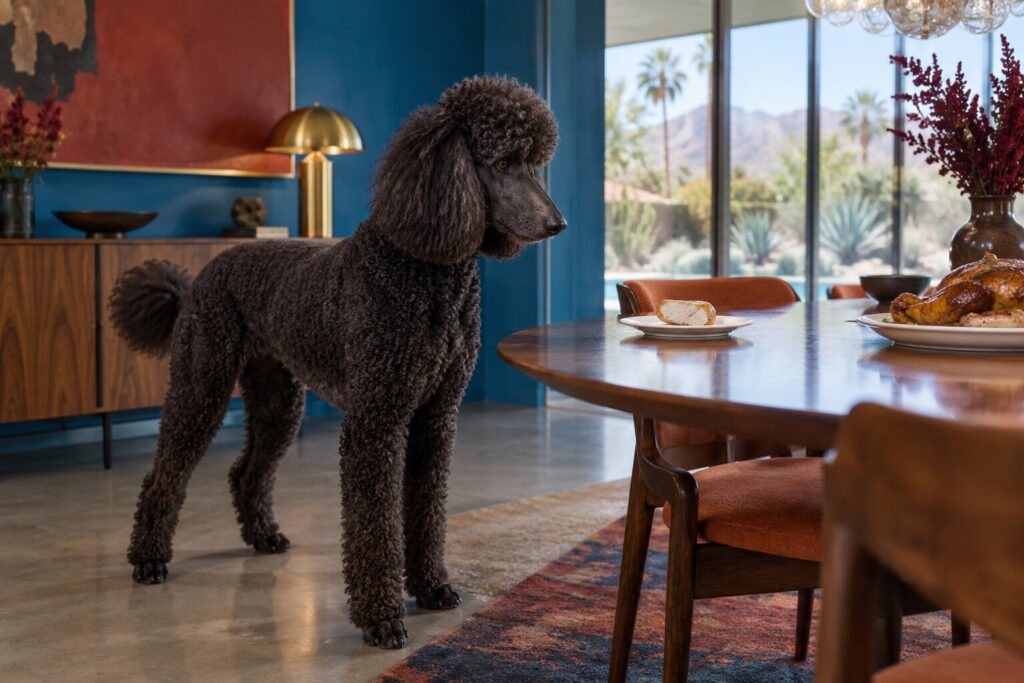
You can, within limits. “Table food” is not a category with a single answer, because a piece of plain roast chicken and a spoonful of creamed onion gravy are not the same proposition. One is lean protein. The other can cause hemolytic anemia.
So the useful version of this question is three separate ones: is this particular food toxic, how many calories does it displace, and what does feeding it teach your dog. Most people only ask the first.
The Foods That Are Never Safe
Start here, because nothing else matters if the answer is on this list. These are not “in moderation” foods. They are avoid entirely.
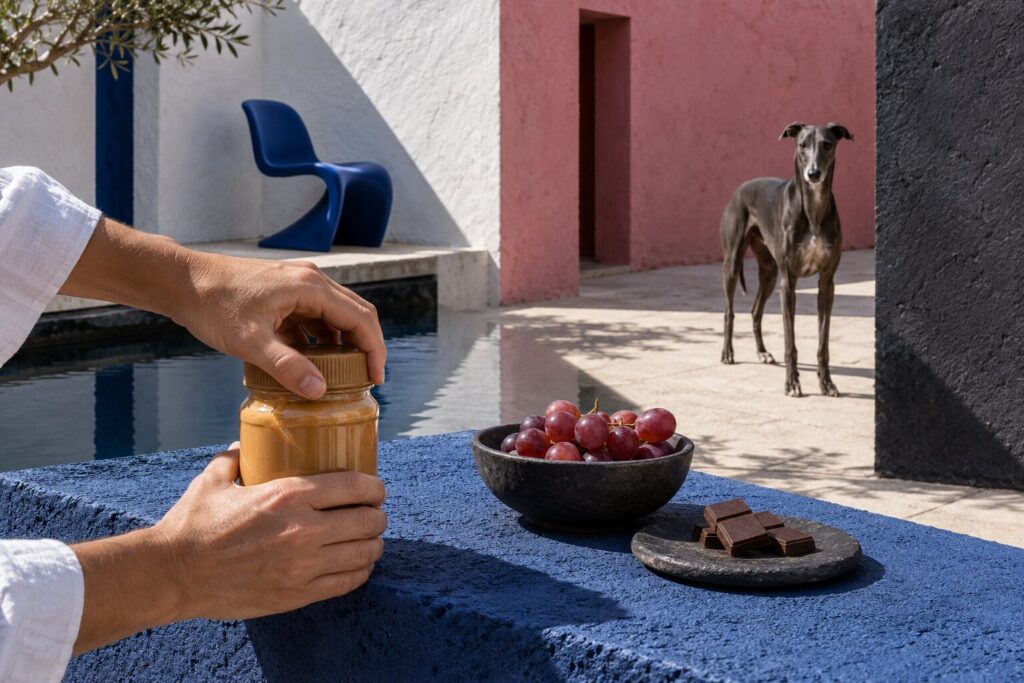
- Xylitol (also sold as birch sugar). Found in sugar free gum, peanut butter, baked goods and some medications. Triggers a rapid insulin release in dogs and can cause fatal hypoglycemia and liver failure at small doses. Check peanut butter labels specifically, because it is the one people give deliberately.
- Grapes and raisins. Cause acute kidney failure in some dogs. The toxic dose is not predictable from body weight, so there is no safe amount.
- Onions, garlic, leeks, shallots and chives, raw, cooked, powdered or in stock. They damage red blood cells. Powdered forms are the most concentrated and turn up in almost every savory dish people cook.
- Chocolate, with dark and baking chocolate far more dangerous than milk.
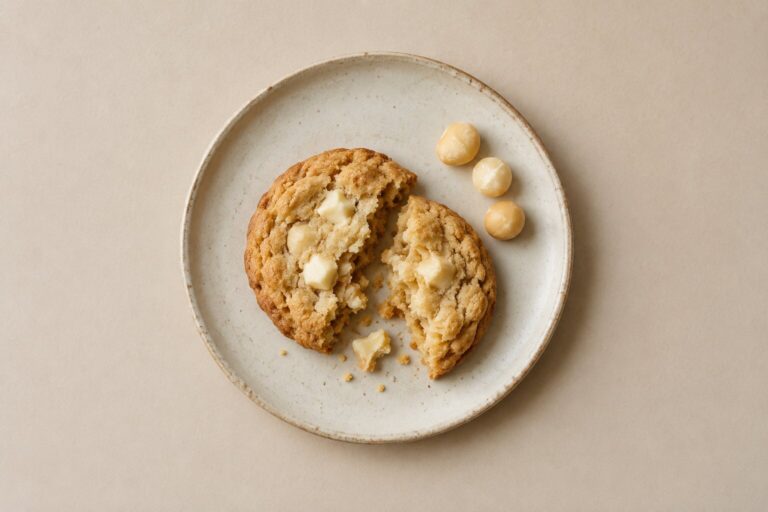
- Macadamia nuts. Cause weakness, tremors and hyperthermia at low doses.
- Alcohol and raw yeast dough. Dough rises in the stomach and ferments.
- Cooked bones. Cooking makes bone brittle, and brittle bone splinters into shards. Poultry bones are the usual culprit.
If your dog has eaten any of these, that is a phone call to your vet or an animal poison line now, not a wait and see.
The Foods That Are Fine, In Small Amounts
Plain, unseasoned, and without the sauce is the whole rule.
- Cooked chicken, turkey, beef or lamb, with fat and skin trimmed and bones removed.
- Cooked salmon and other cooked fish, deboned. Never raw salmon in North America, because of salmon poisoning disease.
- Cooked egg.
- Plain cooked rice, oatmeal, and plain pasta.
- Carrots, green beans, pumpkin, sweet potato, and most cooked vegetables that are not alliums.
- Apple, banana, blueberries and melon, without seeds or pits.
- Plain yogurt and plain cottage cheese, if your dog handles dairy, which many do not.
The word doing the work in that list is “plain”. The chicken is fine. The chicken that has been roasted in a pan with onion, garlic and a lot of butter is a different food.
The Problem Nobody Weighs: Calories
This is where most table food damage actually happens, and it is not dramatic enough to feel like a risk.
Your dog’s food is formulated to deliver a complete set of vitamins, minerals, protein and fat in a specific number of calories. Anything you add on top is unbalanced by definition, because it was not formulated for that job. The convention is to keep all treats and extras under 10% of daily calories, which leaves the complete diet as 90% of intake and enough to hold the balance together.
Ten percent is a smaller allowance than it sounds:
| Dog weight | Rough daily calories | 10% budget | What that is |
|---|---|---|---|
| 10 lb | ~350 | ~35 cal | Half an ounce of cheese |
| 30 lb | ~750 | ~75 cal | One ounce of lean chicken breast |
| 60 lb | ~1,250 | ~125 cal | A slice of plain turkey and a carrot |
A 10 lb dog eating two small cubes of cheddar has spent its entire day’s allowance. This is why dogs get quietly overweight in households where nobody thinks they are overfeeding: the meals are measured and the extras are not.
If you do feed table scraps regularly, take the calories off the meal rather than adding them to it.
Fat Is Its Own Risk
Beyond calories, a sudden load of fat is the classic trigger for pancreatitis, which is painful, sometimes serious, and reliably arrives in vet clinics the day after major holidays. Trimmed fat, bacon, gravy, drippings and skin are the usual causes.
Small dogs, overweight dogs, and breeds with a known predisposition such as miniature schnauzers are at higher risk, and a dog that has had pancreatitis once is more likely to have it again. For those dogs, fatty scraps are worth ruling out completely rather than moderating.
The Behavior Question
Feeding from the table teaches your dog that standing near the table produces food. That is not a moral failing, it is just learning, and it works exactly as well as any other training you do.
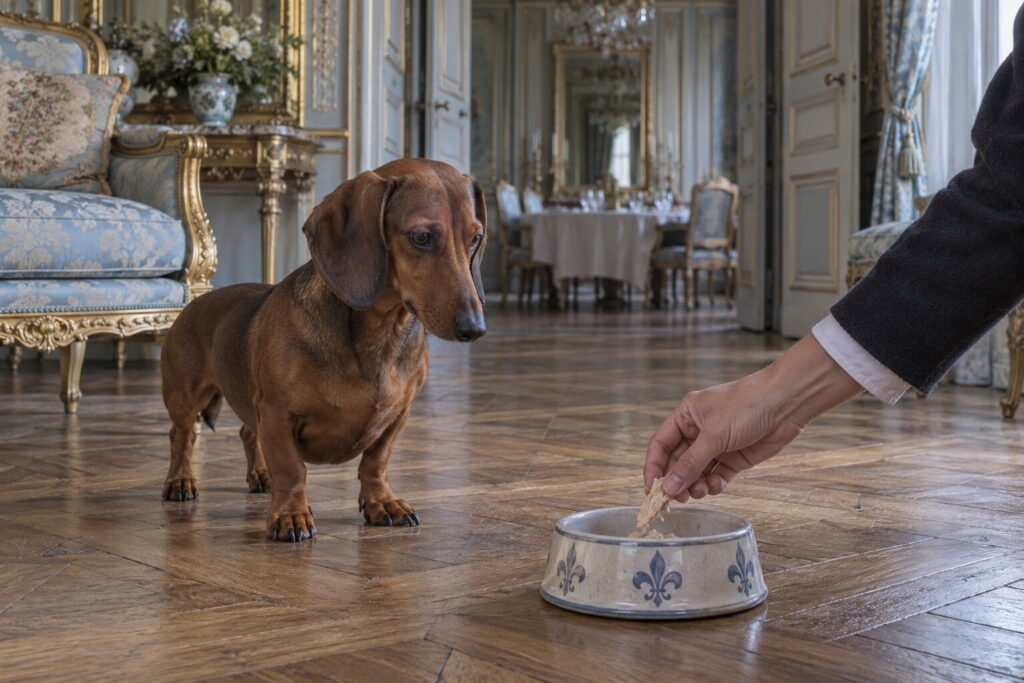
The fix is not to never share food. It is to break the association: put the scrap in the food bowl after the meal rather than handing it down, and do not feed a dog that is actively begging, because that rewards the begging rather than the dog.
How To Do This Sensibly
- Check the food against the toxic list first. Every time, including things that seem obviously fine, because alliums hide in stock and sauce.
- Serve it plain. No salt, no butter, no seasoning, no sauce.
- Keep everything you add under 10% of daily calories, and subtract it from the meal.
- Introduce one new food at a time so you know what caused a reaction.
- Feed it in the bowl, not from the table.
- If your dog is on a prescription or elimination diet, feed nothing else at all. That is the entire point of those diets and one scrap invalidates the trial.
What This Says About The Main Diet
If you find yourself adding food to make meals appealing, the question underneath is whether the food in the bowl is the right one. That is answerable from the label rather than from the packaging: protein and fat levels, what the first ingredients actually are, and how much of the bag is starch once everything else is subtracted.
We convert every guaranteed analysis we index to the same basis so two bags can be compared directly, which you can browse in the dog food reviews. The method page sets out exactly what we measure and what those figures can and cannot tell you.
In The Kibble reads labels and publishes what the numbers say. Guides are general information, not veterinary advice. Your vet knows your dog's history and we do not, so take anything here to them before you change how you feed.
Found this useful?
Comments
No comments yet. Tried this with your dog? Tell other readers how it went.