Carbohydrates in Dog Food: The Number Missing From the Label
Dog food labels do not list carbohydrates. How to estimate them in ten seconds, what the estimate can claim, and why grain-free does not mean low-carb.
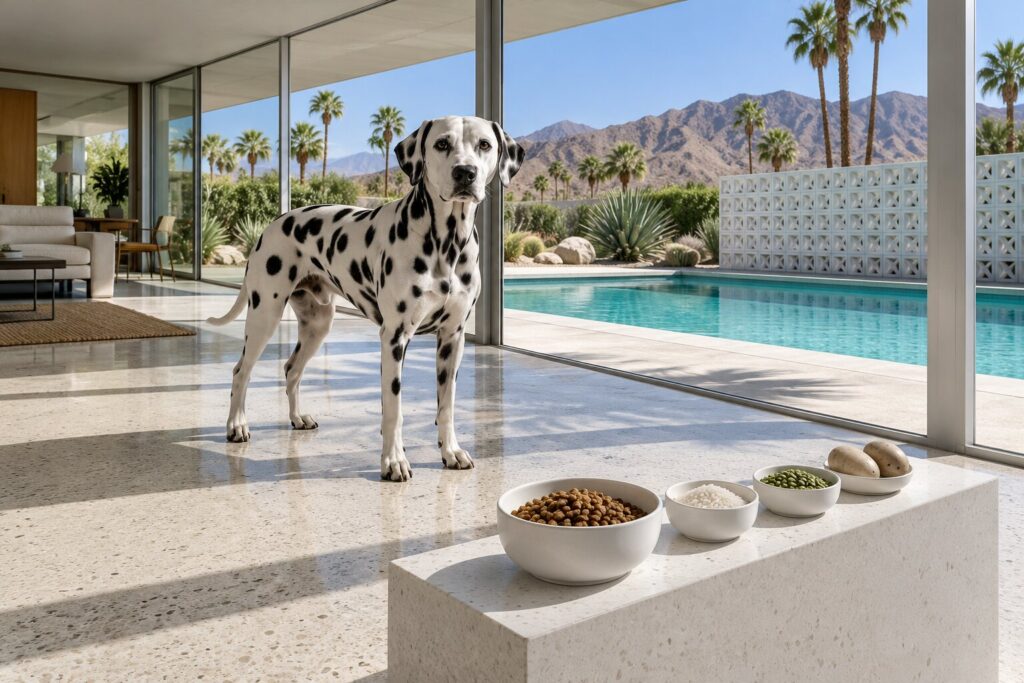
There is a number missing from every dog food bag, and it is usually the biggest one. The guaranteed analysis lists protein, fat, fiber and moisture. It does not list carbohydrate, even though in most dry foods carbohydrate makes up more of the bag than anything else.
You can work it out in about ten seconds, and once you do, a lot of marketing stops making sense.
Finding The Hidden Number
Carbohydrate is what is left once everything else is accounted for. Take 100, subtract protein, fat, fiber and moisture from the guaranteed analysis, then subtract ash, the mineral content. Ash is often not printed. For kibble, assume about 6 to 8%.
A food printing 26% protein, 15% fat, 4% fiber and 10% moisture works out to 100 minus 55 minus about 6 for ash: roughly 39% carbohydrate as fed. On a dry matter basis, dividing by 0.9, that is about 43%.
This is the same estimate we run on every food we index. Across 1,777 dry foods the median is 38% as fed, and nine in ten sit between 29% and 47%. Our method page sets out exactly how it is calculated.
What The Estimate Can And Cannot Tell You
It is an estimate, and it is honest to say where it slips.
- It is not pure starch. The figure also contains sugars and the soluble fibers that the crude fiber test misses, so it runs a few points high, especially in foods with beet pulp, chicory root or legumes.
- The inputs are bounds. Protein and fat are minimums and fiber and moisture are maximums, so the real carbohydrate figure can sit a few points either side.
- Ash varies. Fish based and bone rich formulas carry more ash than the assumption, which pushes the estimate up slightly.
Realistically the estimate is good to within three to five points. That is plenty to tell a 30% food from a 45% food, which is the comparison that matters.
Do Dogs Need Carbohydrates?
Not strictly. AAFCO sets no minimum for carbohydrate, and dogs can make the glucose they need from protein and fat. But dogs are not cats. Over thousands of years alongside people, dogs gained extra copies of the gene for amylase, the enzyme that digests starch, and they digest cooked starch well.
So the useful question is not whether carbohydrate is harmful. It is how much of the bag it takes up, because every point of starch is a point that is not protein or fat, and starch is the cheapest of the three to put in a bag.
Why Kibble Always Has Some
Kibble is made by extrusion: a dough is cooked under pressure and pushed through a die, where it puffs and sets. That only works with a meaningful amount of starch to hold the piece together. This is why truly low carbohydrate kibble is rare and expensive, and why wet, fresh and freeze dried foods are where the lowest carbohydrate figures are found.
Grain-Free Does Not Mean Low-Carb
Taking the grain out of a kibble does not take the starch out. It means replacing rice, corn or barley with peas, lentils, potatoes or tapioca, because the extruder still needs starch.
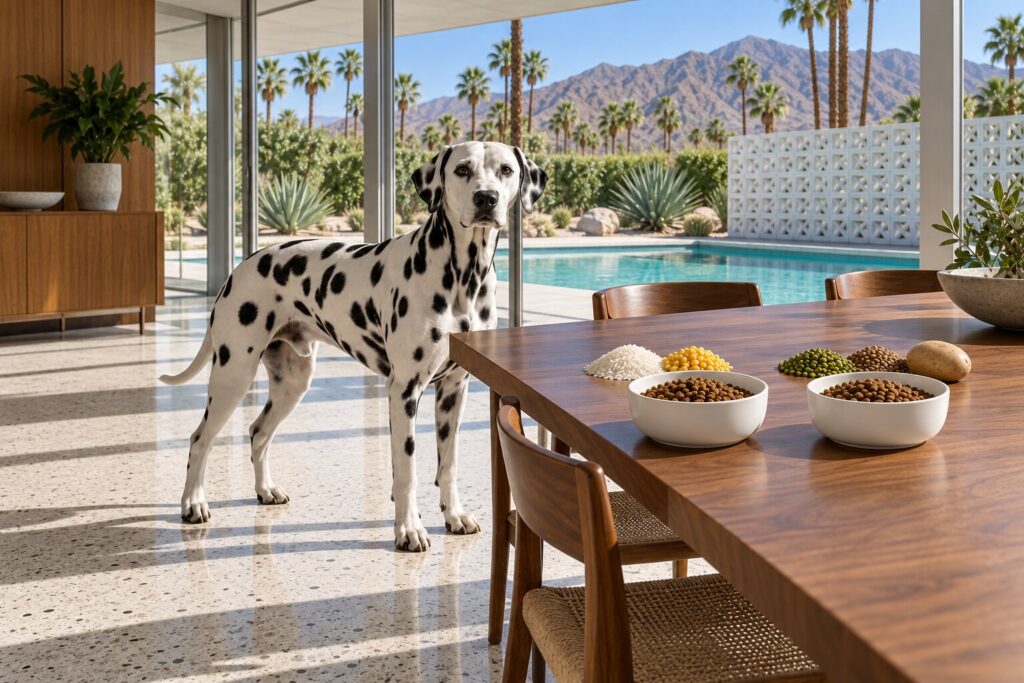
When we ran the numbers on 1,600 dry foods, grain-free foods came out only about five points lower in carbohydrate than foods with grain, and 43% of grain-free foods still reached 40% or more on a dry matter basis. The full figures are in our grain-free study.
Dogs For Whom It Matters More
- Overweight dogs. Lower carbohydrate foods tend to be higher in protein, which helps preserve muscle during weight loss. Total calories still matter most.
- Diabetic dogs. Diet is part of managing diabetes, and the usual approach is consistent meals with moderate starch and more fiber, set by your vet alongside insulin.
- Very active dogs. These dogs can use carbohydrate well for fuel, so a higher figure is less of a concern for them than for a dog on the sofa.
How To Use This
Do the subtraction before you believe the front of the bag. Compare foods on the same basis. Check what the starch sources are, and remember that “grain-free” describes which starch is in the food, not how much.
We show the estimated starch figure on every food in our dog food reviews, already calculated, and the comparison tool puts it side by side for any two bags.
In The Kibble reads labels and publishes what the numbers say. Guides are general information, not veterinary advice. Your vet knows your dog's history and we do not, so take anything here to them before you change how you feed.
Found this useful?
Comments
No comments yet. Tried this with your dog? Tell other readers how it went.