Can Dogs Eat Carrots?
Carrots are cheap, safe and low calorie, which makes them one of the better treats you can hand a dog. The complications are all about texture, not toxicity.
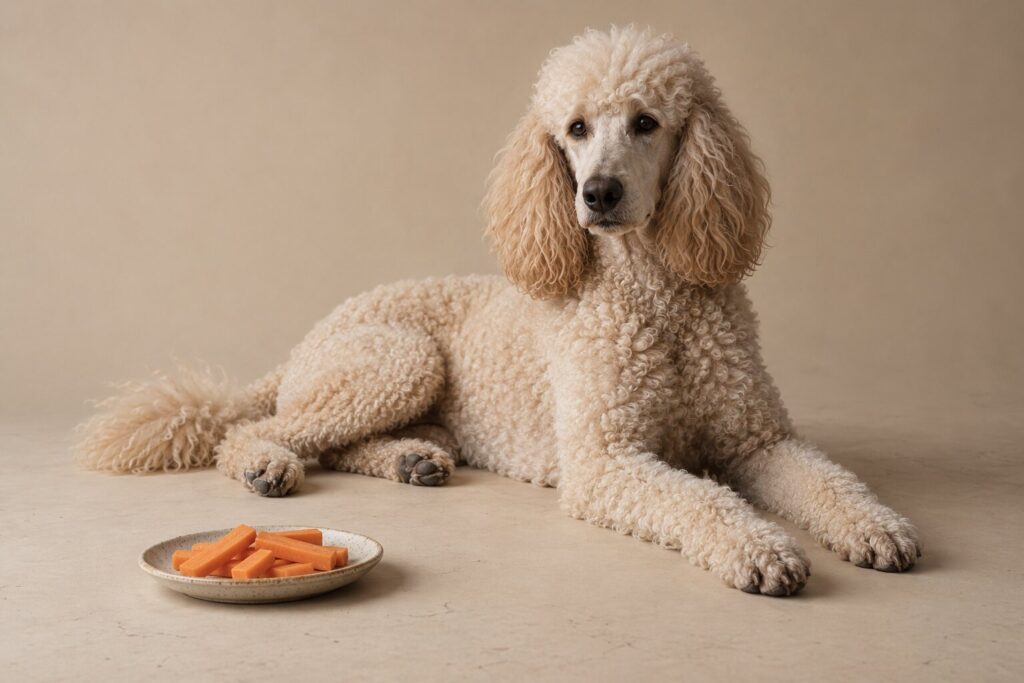
Carrots are one of the few human foods that are genuinely a good fit for dogs. They are safe, they are cheap, they are about 41 calories per 100g, and unlike most treats they are mostly fiber and water rather than fat and sugar. If you are looking for something to hand your dog that will not wreck a calorie budget, this is the answer.
The complications are all about texture, not toxicity.
What A Carrot Actually Provides
Mostly beta carotene, which dogs convert into vitamin A. That conversion is real but inefficient in dogs, so a carrot is a contributor rather than a source. The useful consequence is that beta carotene will not cause vitamin A toxicity the way a supplement or a lot of liver can, because the body only converts what it needs.
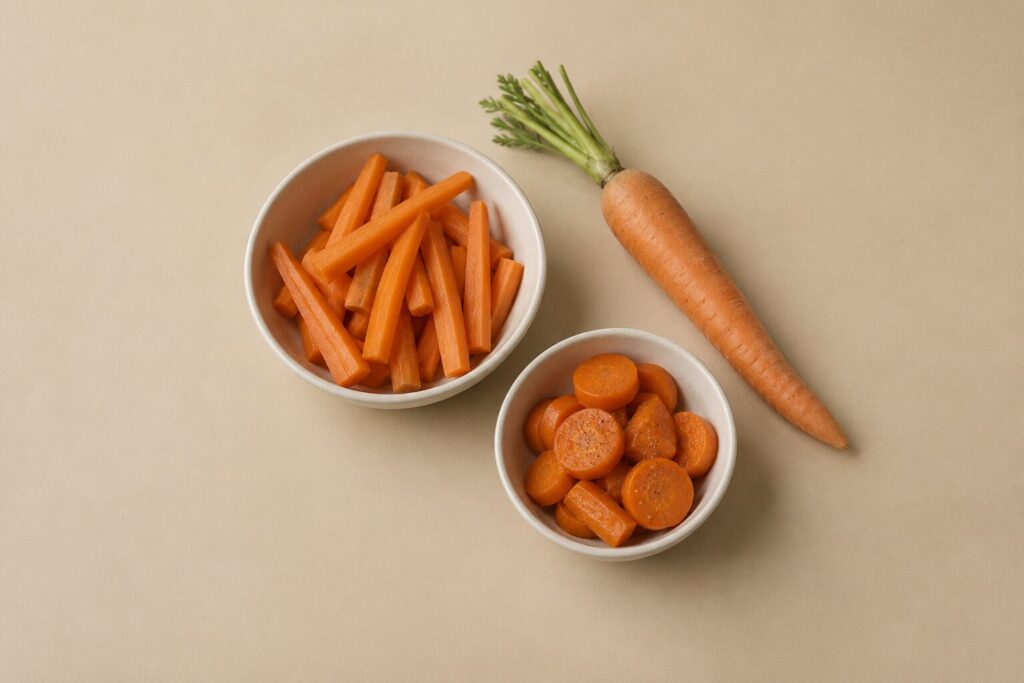
Beyond that: soluble and insoluble fiber, some potassium, some vitamin K, and roughly 88% water. About 4.7g of sugar per 100g, which is higher than people expect from a vegetable but still lower than most fruit.
The practical read is that a carrot is a low calorie, high bulk snack. It is not a supplement and treating it as one overstates the case.
Raw Or Cooked
Both work, and they do different jobs.
Raw gives you crunch and chewing time. That is the main reason to use it: a carrot stick occupies a dog for a while at almost no calorie cost, and the mechanical scraping does a small amount of good for teeth. It is not a substitute for brushing, but it is not nothing either.
Cooked is easier to digest and actually releases more beta carotene, because heat breaks down the cell walls that otherwise pass through a dog intact. Steamed or boiled, with nothing added. No butter, no salt, and above all no onion or garlic, which are toxic to dogs and end up in a lot of vegetable preparations by default.
If your dog has dental problems or a sensitive stomach, cooked is the better call. If your dog is bored and overweight, raw is.
The Two Real Risks
Choking
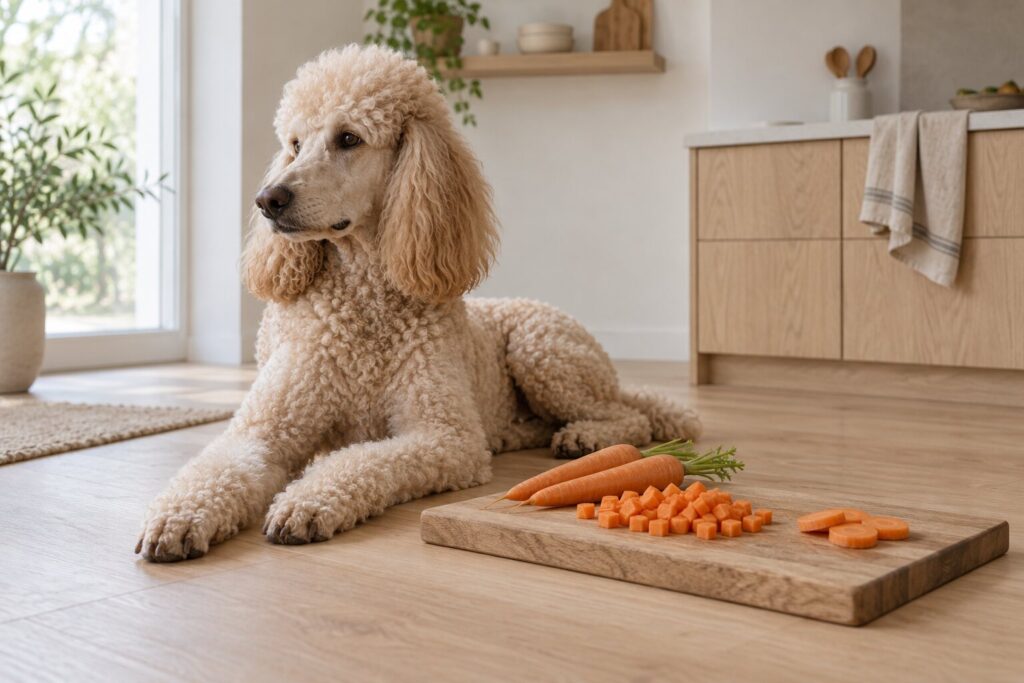
Carrot is hard and it holds its shape. A dog that gulps rather than chews can get a coin shaped slice lodged in the throat, and small dogs are the obvious risk group. Cut carrots into sticks rather than rounds, or dice them small enough to swallow safely. Size the piece to the dog, not to the vegetable.
Teeth
Frozen whole carrots get recommended a lot as a teething aid or a long lasting chew. They are fine for puppies, whose teeth are on the way out anyway. For an adult dog that chews hard, a frozen carrot is a rigid object and slab fractures of the upper carnassial teeth are a real and expensive outcome. If your dog destroys things, give them a fresh carrot rather than a frozen one.
How Much
Treats of all kinds should stay under 10% of daily calories so the complete diet keeps doing its job. Carrots make that easy: a medium carrot is around 25 calories, so most dogs can have one without noticing.
- Small dogs (under 20 lb): a few sticks, or roughly a third of a carrot.
- Medium dogs (20 to 50 lb): half to one carrot.
- Large dogs: one or two, which is still under 5% of the day for most.
The limiting factor is fiber, not calories. Too much at once produces gas and loose stools. Introduce carrots gradually like any other new food.
One harmless thing worth knowing in advance: undigested carrot comes out looking like carrot. Orange flecks in the stool after a carrot heavy day are not a problem.
Carrots In Commercial Dog Food
This is where the picture changes, and it is worth understanding before you pay extra for a food that shows vegetables on the bag.
Carrots appear on ingredient panels in several forms, and the wording tells you something. You will see carrots, dried carrots, dehydrated carrots, and fresh carrots as separate entries, sometimes on the same label.
Two things follow from that. First, ingredient lists are ordered by weight before cooking, so a fresh carrot listed high up loses most of its mass in the extruder and ends up contributing far less to the finished kibble than its position suggests. Dried carrot listed low down may actually be the larger real contribution. Second, in most foods carrots are present in trace quantities regardless: enough to name on the panel and photograph on the front, not enough to matter nutritionally.
That is not a scandal, it is just how the category works. It does mean that a food is not better because it lists carrots, and the figures on the back of the bag are a more reliable guide than the produce on the front. The ingredient wiki covers what each panel entry actually is, including the ones written to sound more substantial than they are.
When To Skip Them
Carrots are safe for almost every dog, but a few situations call for a check first:
- Diabetic dogs. The sugar content is modest but not irrelevant, and treat routines should be agreed with your vet.
- Dogs on a prescription or elimination diet. The point of those diets is that nothing else goes in. A carrot breaks the trial.
- Dogs with a history of GI obstruction, or any dog that reliably swallows food whole without chewing.
The Short Answer
Carrots are a good, boring, useful treat. Cut them to a size your dog cannot inhale, keep them under the 10% line, cook them if digestion is a concern, and do not expect them to fix anything. What your dog is actually living on is the food in the bowl twice a day, and that is a label question. You can see how the foods we index compare on protein, fat and starch in the dog food reviews.
In The Kibble reads labels and publishes what the numbers say. Guides are general information, not veterinary advice. Your vet knows your dog's history and we do not, so take anything here to them before you change how you feed.
Found this useful?
Comments
No comments yet. Tried this with your dog? Tell other readers how it went.