
Ingredient file // Vitamin or mineral
Pork Bone
A mineral source whose dose decides its value
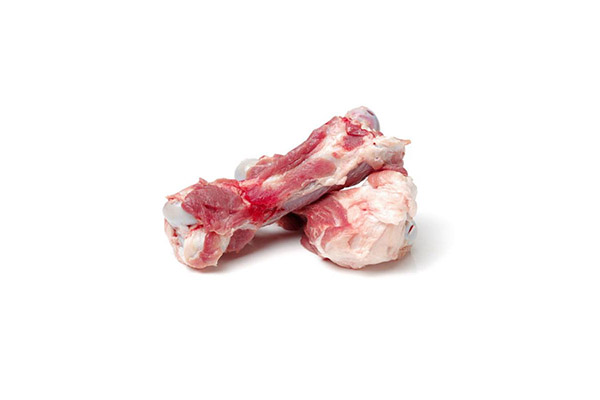
Pork bone is bone from pigs, usually ground into frozen dog food. It supplies calcium and phosphorus to a meat-heavy recipe. The ingredient name cannot tell you whether the finished food has the right mineral amounts for your dog.
- What it is
- Bone from pigs, ground and mixed into dog food as a source of calcium and phosphorus.
- Made from
- Pig bones after meat separation
- Main job
- Calcium and phosphorus
- Typical amount
- Not published
- Watch for
- Calcium balance in the finished food
- Not the same as
- Bone meal
Our read // In our catalog
In 1 of every 631 foods we track
Share of foods that list it
0%
4 of the 2,523 foods with an ingredient list on file, from 1 brand. All frozen dog food.
Each square is 1% of the catalog
Where it sits on the label
Median position 4.5. In the top five of 4 foods, so it is usually a main ingredient.
Above the salt
Almost always listed before the salt, so there is more of it than a pinch.
Who leans on it
100%
of the foods that list it are from Instinct. 1 brand use it in total.
What it is
How it is made
Pork processing leaves bones when meat is separated. Frozen food makers can grind those bones and blend them with meat and organs, using an existing slaughter stream as a source of recipe minerals.4,7,8
- 01 // Source Pig bones Bones remain after meat separation; the amount of attached meat and fat varies.
- 02 // Process Ground The bones are ground so they blend into food rather than being offered as chews.
- 03 // Output Ground pork bone The ground bone enters a frozen pork recipe alongside meat and organs.
What is in it
Composition, dry matter
220
g/kg calcium
Calcium in a single generic raw bone meal sample. It shows bone's mineral role, but it is not a pork bone specification.
Why it is in the bag
What the manufacturer gets
-
01
Supplies recipe minerals
Bone adds calcium and phosphorus to a meat-heavy formula. The maker must balance those minerals across the finished food for its intended life stage.4,6
-
02
Uses separated bones
Meat processing leaves bones after the saleable meat is removed. Grinding gives that slaughter stream a use in pet food and another route for supplying recipe minerals.4,7
-
03
Keeps the pork source
In a pork recipe, ground pork bone supplies some minerals from the same animal as the meat and organs. That sourcing choice says nothing about the finished mineral balance.6,8
How much Ingredient lists do not publish the bone percentage; ask the maker for finished-food calcium and phosphorus values.6,8
Our read // The claims
What the evidence supports
Strong: controlled studies in dogs agree. Some: small or mixed dog data. Thin: mechanism or lab work only. None: nothing, or the evidence points the other way.
-
Brands say
Pork bone supplies calcium and phosphorus
Evidence
- Strong
- Some
- Thin
- None
A generic raw bone meal sample contained 220 g/kg calcium and 100 g/kg phosphorus on a dry basis. Bone's mineral contribution is real, but those figures are not a specification for the pork bone in a particular food.4
-
Brands say
Pork bone has the mineral balance dogs need
Outruns the evidence
Evidence
- Strong
- Some
- Thin
- None
In an assessment of 95 home-prepared raw rations, some had calcium excess from bones, while others fell far short of recommended calcium. The study did not attribute those shortages to bones. Balance belongs to the whole diet.1,6
-
Owners say
Ground bone cleans a dog's teeth
Outruns the evidence
Evidence
- Strong
- Some
- Thin
- None
An 8-dog study found less calculus after dogs chewed whole beef bones. It tested chewing, not ground pork bone mixed into food. Ground bone gives the teeth no comparable surface to scrape against.3
-
Owners say
Adding bone makes raw food complete
Outruns the evidence
Evidence
- Strong
- Some
- Thin
- None
Bone supplies minerals, but completeness depends on the full formula. Researchers measured 33 commercial raw foods labeled complete and found none met every mineral recommendation they applied. They did not isolate bone as the cause.2,6
Straight answers
What owners ask
-
Q01
Is it just filler?
NoBone supplies calcium and phosphorus. Its value depends on how much reaches the finished food, which the ingredient name and list position do not reveal.4,6
-
Q02
Is it the same as bone meal?
NoGround pork bone names the animal part. Bone meal is a processed feed ingredient. Published raw bone meal figures offer a rough comparison, not a guaranteed analysis of ground pork bone.4,7
-
Q03
Does bone make the food balanced?
NoBone contributes minerals, but the whole recipe must meet your dog's life-stage needs. Read the nutritional adequacy statement and ask for the finished food's calcium and phosphorus values.2,6
Who uses it
Brands, best sellers and the company it keeps
Top brands, by foods that list it
Usually listed with, share of the foods that list it
- Rabbit 100%
- Pork Liver 100%
- Pork Heart 100%
- Pork Fat 100%
- Apples 100%
- Carrots 100%
- Yellow Squash 50%
- Ground Miscanthus Grass 50%
- Montmorillonite Clay 50%
- Yeast Culture 50%
- Rabbit Liver 50%
- Butternut Squash 50%
On the shelf
Foods that list it
4 foods in our reviews list it. Here are some of them.
Our read // On the bag
Check the finished minerals, then the bone
Pork bone beside pork meat and organs tells you where some minerals come from, not their dose. Check the food's life-stage adequacy statement and ask the maker for finished-food calcium and phosphorus values. If the food is raw, handle its package and bowl as you would raw meat.
On labels as
Other names for this
Manufacturers do not all use the same wording. These all mean the same thing.
Sources
What we read
Checked October 1, 2026.
- 1 Intake of minerals, trace elements and vitamins in bone and raw food rations in adult dogs
- 2 Assessment of mineral adequacy in preprepared raw dog foods labeled as complete
- 3 Raw beef bones as chewing items to reduce dental calculus in Beagle dogs
- 4 Bone meal
- 5 CVM Issues Assignment to Collect Official Samples of Raw Foods for Dogs or Cats in Interstate Commerce in the United States and Analyze them for Salmonella, Listeria monocytogenes, Escherichia coli O157:H7 and Non O157:H7 Shiga Toxin-Producing Escherichia coli (STEC)
- 6 Reading Labels
- 7 Pet Food Production and Ingredient Analysis
- 8 Pork Patties for Dogs Frozen Raw