Can Dogs Eat Chicken Bones?
Not cooked ones. Cooked bone splinters into sharp shards, and knowing what to do in the next three days matters more than panicking.
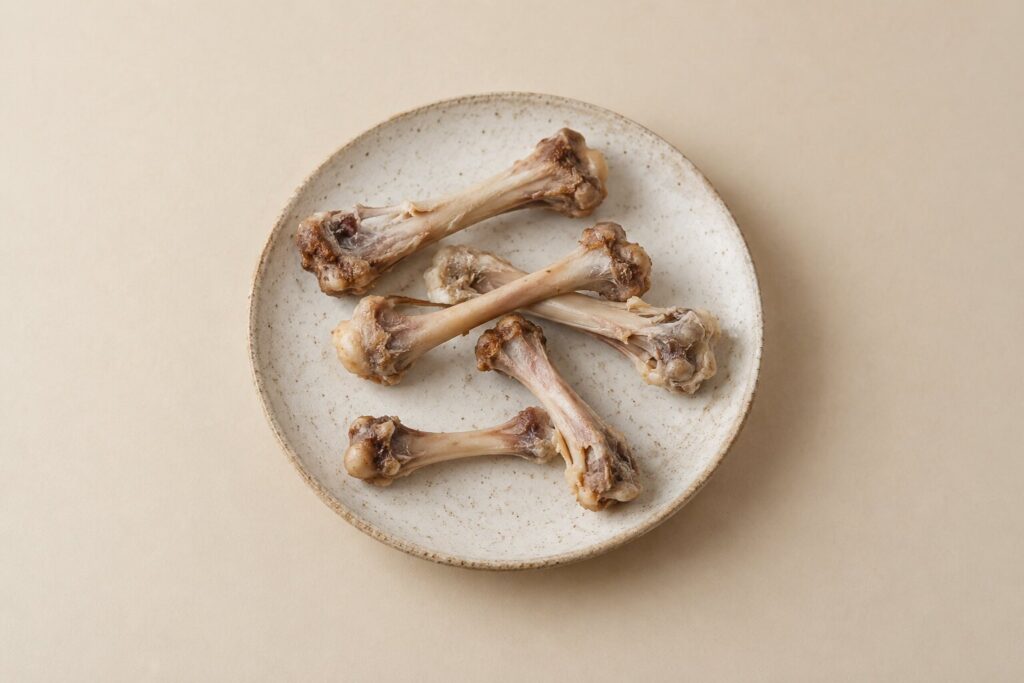
No, not cooked chicken bones, and not cooked bones of any kind. Cooking dries bone out and makes it brittle, so instead of crushing it splinters into hard, sharp shards. Those can cut the mouth and throat, lodge in the esophagus, or pierce or block the stomach and intestines. Poultry bones are the classic case because they are thin and hollow, but cooked rib bones, pork chops, T-bones and turkey legs carry the same risk.
If Your Dog Has Just Eaten A Cooked Bone
First, stay calm: plenty of dogs swallow a chicken bone and pass it without trouble. But call your vet for advice, and follow these rules while you do:

- Do not make your dog vomit. Sharp fragments that went down safely can do damage on the way back up.
- Check the mouth if your dog is pawing at it, gagging or drooling. A bone wedged across the roof of the mouth or between teeth is common and usually needs a vet to remove it.
- Ask before feeding anything. Some vets suggest a meal of soft, bulky food to cushion fragments on the way through; others will want to examine first. Let them decide.
Then watch closely for the next three days.
Warning Signs That Need A Vet Now
- Repeated retching or vomiting, or trying to vomit and bringing nothing up
- Gagging, heavy drooling or difficulty swallowing
- Refusing food, lethargy, hiding
- A swollen, tight or painful belly, or a hunched posture
- Straining to poop, very hard stools, or blood in the stool
- Pale gums or collapse
Blockages and perforations can take a day or more to show. A dog that is quiet and off its food the day after eating a bone should be seen, not watched for another day.
What Can Go Wrong
| Problem | What happens |
|---|---|
| Mouth and tooth injuries | Cuts to the gums and tongue, bone stuck across the palate, broken teeth |
| Choking | A piece lodges in the throat or windpipe |
| Esophageal foreign body | Bone stuck in the food pipe, usually needing removal under anesthesia |
| Stomach or intestinal blockage | Often needs surgery |
| Perforation | A splinter pierces the gut wall, leaking contents into the abdomen. Life threatening |
| Constipation and rectal injury | Bone fragments form hard, painful stools that can bleed on the way out |
What About Raw Bones?
Raw bones are softer and less likely to splinter, which is why raw feeders use them. They are not risk free: they still cause broken teeth and blockages, and raw meat carries bacteria such as Salmonella that affect the people in the house as well as the dog. Whether raw bones are worth it is a decision to make with your vet, not a loophole in the cooked bone rule.
Store-Bought “Bone Treats”
The smoked, baked and dried bones sold as dog treats are processed bone too. In 2017 the FDA warned dog owners about them after receiving reports of illness linked to them, including choking, blockages, vomiting and deaths. Treat them with the same suspicion as a bone from your plate.
How Dogs Get Them
Mostly not from being fed them. They come from the trash, from a plate left on the coffee table, or from a guest at a barbecue who thinks a rib bone is a kindness. Bin lids that lock, clearing plates straight away, and a word with visitors prevent most cases.
Safer Things To Chew
The chewing instinct is real, and it is better redirected than fought. Look for chews sized for your dog that give a little under pressure: a good rule is that if you cannot dent it with a thumbnail, it is hard enough to break a tooth. And the meat itself is fine: plain cooked chicken, taken off the bone, is one of the most useful foods you can give a dog.
For every other leftover question, the food checker has a straight answer on 115 foods.
In The Kibble reads labels and publishes what the numbers say. Guides are general information, not veterinary advice. Your vet knows your dog's history and we do not, so take anything here to them before you change how you feed.
Found this useful?
Comments
No comments yet. Tried this with your dog? Tell other readers how it went.