Can Dogs Eat Chicken?
Plain cooked chicken is excellent for dogs. Nearly every complication comes from the parts around it: the bones, the skin, the breading and the broth.
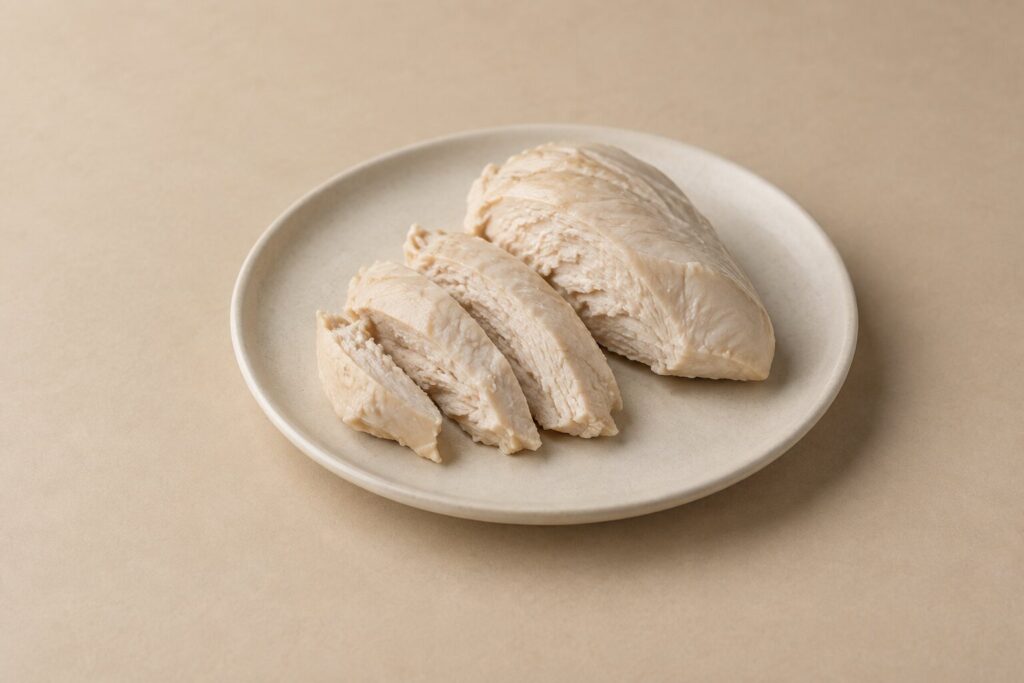
Yes. Plain cooked chicken, off the bone and without the skin, is one of the best things you can give a dog. It is lean, it is close to fully digestible, and it is the protein most vets reach for when a dog needs something gentle.
Almost every complication people run into with chicken comes from the parts around it: the bones, the skin, the breading, the broth, and whether it was cooked at all. This covers each of those separately, because the answers are genuinely different.
Plain Cooked Chicken
Boiled, baked, poached or grilled, with nothing on it. No oil, no salt, no seasoning, and above all no onion or garlic, which are toxic to dogs and end up in most savory cooking by default.
Cooked skinless breast runs roughly 165 calories and 31g of protein per 100g, and dogs digest it at well over 90%. That combination is why it turns up in recovery diets: maximum nutrition, minimum work for the gut.
Portion it against the usual rule. Treats and extras stay under 10% of daily calories, which for a 30 lb dog on about 750 calories a day is roughly one ounce of chicken breast.
Can Dogs Eat Raw Chicken?
This is the one genuinely contested question here, and the honest answer is that the risk is real but often overstated in both directions.
Raw poultry carries salmonella and campylobacter. Dogs have far stronger stomach acid than people and clear most bacterial loads without any sign of illness, which is why plenty of dogs eat raw chicken for years and seem fine. The complication is that a dog can shed those bacteria in its stool and saliva while showing no symptoms at all, which puts anyone else in the house at risk. That is the part that matters in a household with young children, an elderly relative, or anyone immunocompromised.
The AVMA and the FDA both advise against raw meat diets for that reason. If you feed raw anyway, handle it as you would your own raw chicken: separate boards, wash everything, and do not let the dog lick faces afterwards.
For a dog that just wants a treat, cooked is strictly better. It removes the entire question at no nutritional cost.
Can Dogs Eat Chicken Bones?
Never cooked ones. Cooking dries bone out and makes it brittle, and brittle bone does not crush, it splinters. Those shards can lodge in the throat, perforate the stomach or intestine, or cause an obstruction. Poultry bones are the worst offenders because they are thin and hollow.

If your dog has swallowed a cooked bone, call your vet. Do not try to make them vomit, because a sharp fragment does as much damage coming back up as it did going down.
Raw bones are a different physical object: they bend and crush rather than shatter. They are still not risk free, carrying the bacterial question above plus a real risk of fractured teeth and obstruction, and vets are split on them. What is not split is cooked bone. That is a no.
Can Dogs Eat Chicken Skin?
Better not. It is essentially pure fat, and a sudden fat load is the classic trigger for pancreatitis, which is painful, sometimes serious, and reliably fills veterinary clinics the day after major holidays.
Small dogs, overweight dogs, and breeds with a known predisposition such as miniature schnauzers are at higher risk, and a dog that has had pancreatitis once is more likely to get it again. For those dogs, skin is worth ruling out completely rather than moderating.
Can Dogs Eat Chicken Liver?
Yes, and it is genuinely good for them in small amounts. Liver is one of the most nutrient dense foods available: iron, copper, B vitamins, and a great deal of vitamin A.
That last one is the limit. Vitamin A is fat soluble, so it accumulates rather than being flushed out, and chronic oversupply causes bone and joint problems. Keep liver to an occasional treat rather than a daily habit, a rough guide being no more than about 5% of the diet. You can read what liver contributes on the ingredient wiki.
Can Dogs Eat Chicken Feet?
Dehydrated ones, yes. This surprises people, but dehydrated chicken feet are a common commercial dog treat and the drying process leaves the small bones crumbly rather than sharp, so they break down instead of splintering. They are also a decent natural source of glucosamine and chondroitin.
The exception is the one you would expect: do not boil or roast them yourself. Cooking chicken feet gives you exactly the brittle, splintering bone described above. Buy them dehydrated, supervise, and skip them for aggressive gulpers.
Can Dogs Have Chicken Broth?
Only if you read the label. Almost all supermarket broth and stock is made with onion and garlic, both toxic to dogs, and most of it is very high in sodium. “Low sodium” does not mean onion free.

Home made broth with nothing but chicken and water is fine, and is a useful way to get fluid into a dog that is off its food or to make a meal more appealing. Let it cool and skim the fat off first.
Can Dogs Eat Chicken Nuggets And Fried Chicken?
Neither is toxic, and neither is a good idea.
Nuggets are breaded, deep fried, heavily salted, and usually seasoned with onion powder. A single stolen nugget will not hurt a healthy dog, but there is nothing in it worth the calories.
Fried chicken is worse on every axis: more fat, more salt, more seasoning, and bones. If your dog gets into a bucket of it, the bones are the emergency, not the grease.
Chicken And Rice: What It Is Actually For
Boiled chicken with plain white rice, roughly one part chicken to two parts rice, is the standard bland diet for a dog recovering from an upset stomach. It works because both are low fat, low fiber and highly digestible.

Three things about it are worth knowing:
- It is not nutritionally complete. Chicken and rice is short on several minerals and essential fatty acids. Fine for a few days, inadequate as an ongoing diet, and dogs kept on it for weeks develop real deficiencies.
- White rice, not brown. Brown rice carries more fiber, which is the opposite of what an irritated gut wants.
- Three days is the working limit. If your dog is not ready to move back to normal food by then, the problem needs a diagnosis, not more chicken.
There is more on when to use it and when to call a vet in our guide on settling a dog’s upset stomach. The rice guide covers the rice half in more detail, and a spoonful of plain pumpkin is the other common addition for loose stools.
Can Dogs Eat Chicken Every Day?
As a topper or a treat, yes. A little plain cooked chicken on top of a complete food every day is fine, as long as it fits inside the 10% treat budget and comes off the meal rather than on top of it.
As the whole diet, no. Plain chicken on its own is badly short of calcium and several vitamins and minerals, and dogs fed meat alone for long enough develop bone and other problems. A home cooked diet can work, but it needs a recipe balanced by a veterinary nutritionist, not chicken and a guess.
Can Dogs Eat Rotisserie Chicken?
Better not, or only the plain inside meat. Store rotisserie chickens are usually injected with a salty brine and rubbed with seasoning that often includes onion and garlic powder, and the skin carries most of both. If you share any, pull a little white meat from the middle, with no skin, no bones and none of the drippings. Cooking a plain breast yourself is the safer habit.
The Chicken Allergy Question
Chicken is the most commonly reported food allergen in dogs. That fact gets used to argue that chicken is somehow inflammatory or bad, which does not follow.
Food allergies develop through exposure, and chicken is the most heavily fed protein in the category by a wide margin. It tops the list because dogs eat more of it, not because there is anything wrong with it. Beef and dairy sit just behind it for the same reason.
A real food allergy usually shows up as itching, ear infections and paw chewing rather than digestive signs, and confirming it takes a strict elimination diet run for eight to twelve weeks with nothing else fed at all. Over the counter allergy tests are not a substitute for that. If your dog does react to chicken, you need a protein they have genuinely never eaten, which means reading every label including the treats.
Chicken In Commercial Dog Food
Worth understanding, because the panel does not say what people think it says.
Ingredients are listed by weight before cooking, and fresh chicken is roughly 70% water. Almost all of that is driven off during extrusion. So chicken listed first can easily contribute less finished protein to the bag than a rendered meal listed third.
Chicken meal is that same chicken rendered and dried, at roughly 65% protein by weight against about 18% for the fresh version. It looks worse on the panel and is usually contributing more. Chicken fat is a named, good quality fat source, and reads as an unappealing ingredient to people while being a perfectly reasonable one.
The distinction that actually matters is named versus unnamed. “Chicken meal” tells you the species. “Poultry meal” or “meat meal” does not, which means it can vary between batches and cannot be used for an elimination diet.
We convert every guaranteed analysis we index to the same basis so two bags can be compared directly rather than by moisture content. You can browse them in the dog food reviews, and there is more detail in our guide to the best protein sources in dog food.
How To Serve It
- Cook it through. Boiled or baked, no oil.
- Remove every bone and all the skin.
- Plain cooked shrimp and eggs follow the same rules if you want to vary the treat.
- No salt, no seasoning, no sauce, and never anything cooked with onion or garlic.
- Shred or dice it to a size your dog cannot inhale.
- Introduce it in a small amount and give it a day before deciding it agrees with them.
- Keep it under 10% of daily calories, and take those calories off the meal rather than adding them on top.
In The Kibble reads labels and publishes what the numbers say. Guides are general information, not veterinary advice. Your vet knows your dog's history and we do not, so take anything here to them before you change how you feed.
Found this useful?
Comments
No comments yet. Tried this with your dog? Tell other readers how it went.