Can Dogs Eat Cheese?
Usually, in small amounts, and it depends on the cheese and the dog. Cheese is the highest value training treat there is, and also fatty, salty and made of milk.
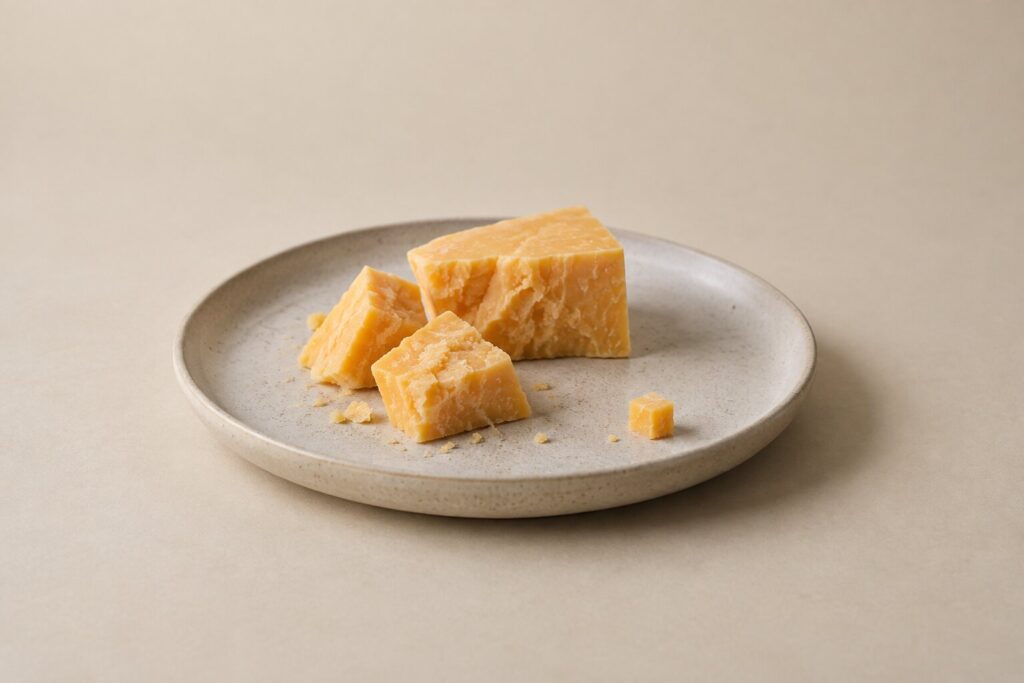
Usually, in small amounts, and it depends heavily on the cheese and the dog. Cheese is not toxic and it is one of the highest value training treats available, because most dogs will do almost anything for it.
It is also fatty, salty, and made of milk, and that combination causes more trouble than people expect.
The Lactose Problem
Puppies produce lactase, the enzyme that breaks down milk sugar. Most dogs produce much less of it as adults, which means a lot of adult dogs are functionally lactose intolerant. The result is gas, loose stools and stomach discomfort a few hours after the cheese.
This varies enormously between individuals. Some dogs handle dairy with no trouble at all; others react to a single cube. You find out by trying a small amount once and watching, not by assuming.
Usefully, cheese is much lower in lactose than milk, because most of it is drained off with the whey. Hard aged cheeses have the least, and fresh soft cheeses have the most.
The Fat Problem
This is the more serious one. Cheddar is roughly 33% fat and about 400 calories per 100g, which is dense enough that a small dog can blow through its entire daily treat allowance on two cubes.
Beyond the calories, a sudden fat load is the classic trigger for pancreatitis, which is painful, sometimes serious, and disproportionately affects small dogs, overweight dogs, and predisposed breeds such as miniature schnauzers. A dog that has had pancreatitis once is more likely to have it again, and for those dogs cheese is worth ruling out entirely rather than moderating.
Which Cheeses Are Better
| Cheese | Verdict | Why |
|---|---|---|
| Cottage cheese | Best option | Low fat, low lactose, high protein. Plain and low sodium versions only. |
| Mozzarella | Good | Lower in fat and salt than most. Use fresh, not heavily processed. |
| Swiss | Reasonable | Very low lactose, though the fat is still there. |
| Cheddar | Small amounts | Moderate lactose, high fat and salt. Fine as an occasional training treat. |
| Cream cheese | Go easy | Very high fat, and flavored versions often contain onion or garlic. |
| Blue cheese | Avoid | See below. This one is a real risk, not a moderation issue. |
| Processed slices | Avoid | Very high sodium, plus emulsifiers and additives that do nothing for a dog. |
Blue Cheese Is Different
Worth calling out separately because it is not a matter of degree. The Penicillium roqueforti culture used in blue cheeses such as Stilton, Roquefort and Gorgonzola can produce roquefortine C, a substance dogs are particularly sensitive to. It can cause vomiting, tremors and seizures.
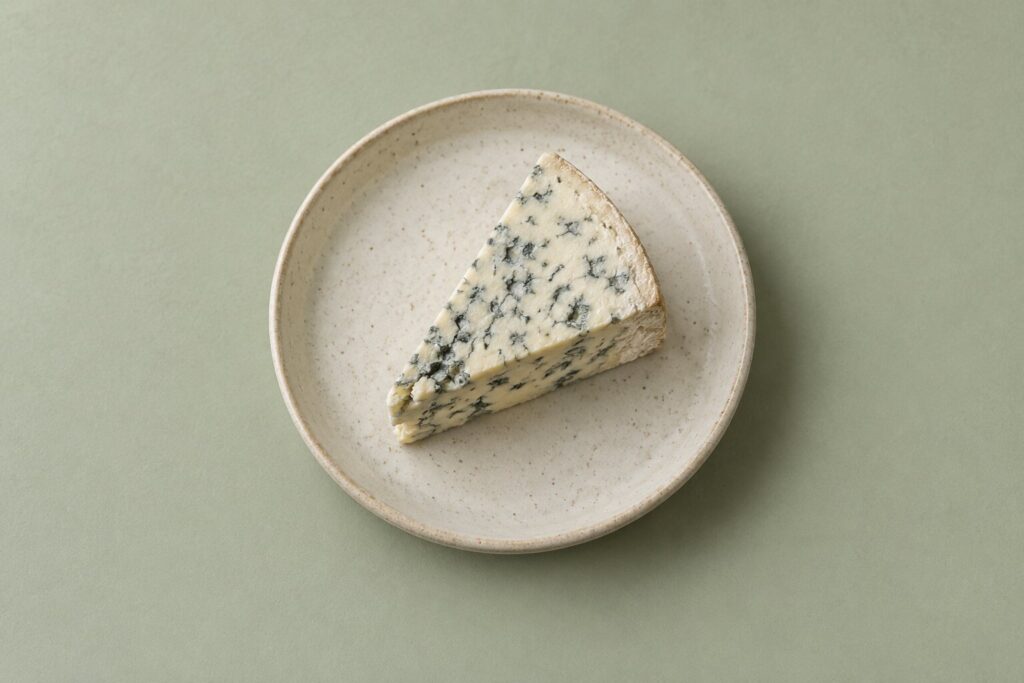
Keep blue cheese away from dogs entirely, and be particularly careful around cheeseboards at holidays, which is when most of these cases actually happen.
How Much Cheese
Treats and extras should stay under 10% of daily calories. Cheese eats that budget fast:
| Dog weight | 10% treat budget | Cheddar equivalent |
|---|---|---|
| 10 lb | ~35 cal | Roughly a third of an ounce, one small cube |
| 30 lb | ~75 cal | Roughly two thirds of an ounce |
| 60 lb | ~125 cal | About one ounce |
Those are ceilings for a day where cheese is the only extra. In practice, use pea sized pieces. A dog values the fact of getting cheese far more than the size of the piece, which is exactly what makes it efficient as a training reward.
What Cheese Is Genuinely Good For
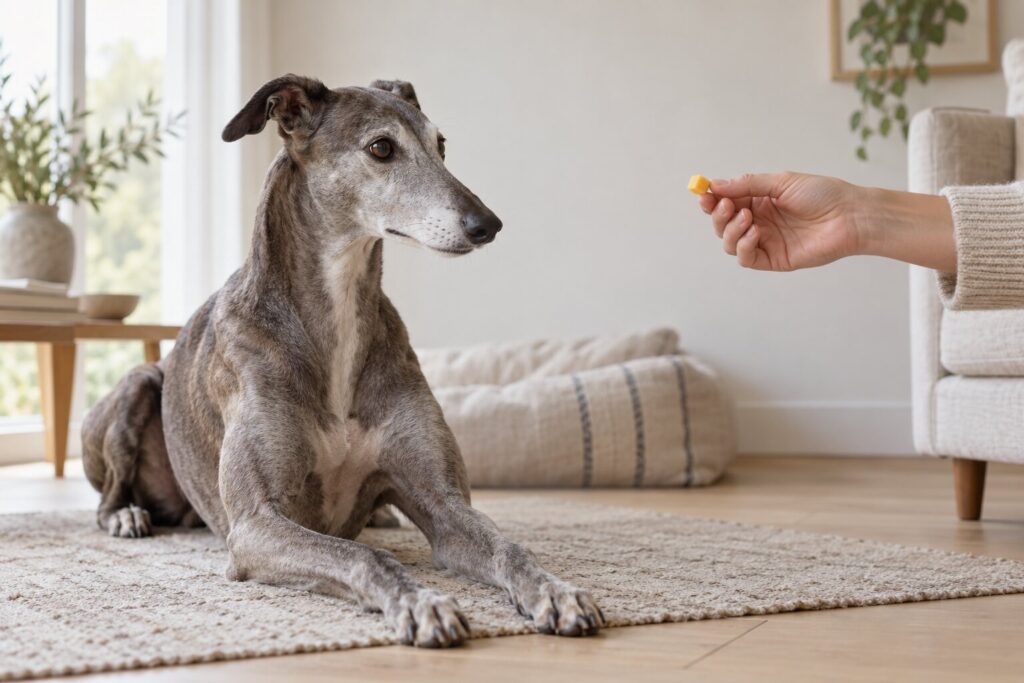
- Hiding pills. The classic use, and it works because the smell overwhelms the tablet. Check first that the medication can be given with food, since some cannot.
- High value training. For recall work or anything where you are competing with a strong distraction, cheese outperforms almost any commercial treat.
- Getting a sick dog to eat. A little grated cheese over food can restart a dog that has gone off its meals, though it is worth reading our guide on when your dog will not eat before making it a habit, since topping the bowl up is also how picky eating gets taught.
Which Dogs Should Skip It
- Any dog with a pancreatitis history, or a breed predisposition to it.
- Overweight dogs. Cheese is one of the least efficient treats per calorie.
- Dogs with a confirmed dairy allergy. Dairy is among the more common food allergens in dogs, behind chicken and beef, and it usually presents as itching and ear trouble rather than digestive signs.
- Dogs on an elimination diet. Nothing but the trial food, or the trial is meaningless.
- Dogs on a low sodium diet for heart or kidney reasons. Cheese is salty.
What To Watch For
Give a small piece and wait a day. Gas, loose stools or obvious discomfort within about twelve hours points at lactose, and the answer is simply to stop. Repeated vomiting, a hunched posture or refusal to eat after a larger fatty portion is a different matter and warrants a call to your vet, since that is the pancreatitis picture.
Where This Sits In The Diet
Cheese is a tool, not nutrition. It buys you attention in training and cooperation at pill time, and it costs calories that have to come off the meal rather than being added to it.
What your dog actually lives on is the bag, and that is worth reading properly: fat level in particular matters for any dog you are worried about on this front. We convert every guaranteed analysis we index to the same basis so two foods can be compared directly rather than by moisture content, which you can browse in the dog food reviews.
In The Kibble reads labels and publishes what the numbers say. Guides are general information, not veterinary advice. Your vet knows your dog's history and we do not, so take anything here to them before you change how you feed.
Found this useful?
Comments
No comments yet. Tried this with your dog? Tell other readers how it went.