When Your Dog Won’t Eat
A dog that will not eat is either telling you something is wrong or telling you that waiting produces something better. The approaches to those two are opposite.
A dog that will not eat is doing one of two things: telling you something is wrong medically, or telling you they have worked out that waiting produces something better. The approaches to those two situations are opposite, so the first job is deciding which one you have.
The distinguishing question is usually simple. A dog that is off its food but bright, playing, drinking and behaving normally is a different case from a dog that is off its food and flat.
When It Is Urgent
Call your vet if any of these apply:
- A puppy has not eaten for 12 hours. Puppies, and toy breeds especially, have very small energy reserves and can become hypoglycemic quickly. This has a much shorter fuse than it does in an adult dog.
- An adult dog has not eaten for 24 hours, or has been eating noticeably less for several days.
- Not eating alongside anything else: vomiting, diarrhea, lethargy, hiding, a hunched posture, or difficulty getting comfortable.
- Not drinking either. Dehydration is the faster problem.
- Your dog is diabetic or on medication that assumes food intake. Insulin dosing depends on eating and skipping a meal changes the calculation.
- Any sudden, total refusal in a dog who normally eats enthusiastically. A dog that has always cleared the bowl and now will not touch it is reporting a change, and that is worth taking at face value.
Refusing food is one of the most common early signs of illness in dogs, precisely because it is nonspecific. It accompanies almost everything.
The Medical Causes Worth Knowing
Dental pain
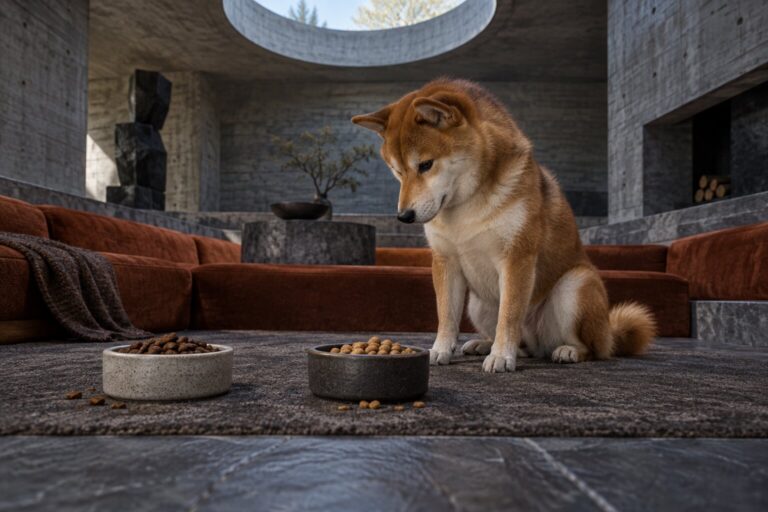
Badly underdiagnosed, and the classic presentation is a dog that approaches the bowl, seems interested, tries, and walks away. Or one that eats soft food happily and refuses kibble. Fractured teeth, periodontal disease and abscesses all hurt more under the pressure of crunching.
Nausea
A nauseated dog often shows lip licking, drooling, or repeated swallowing, and may eat grass. Nausea has many causes, from kidney disease to a simple stomach upset, and the sign matters more than guessing the cause.
Illness and pain generally
Infections, fever, kidney and liver disease, pancreatitis, and pain from anywhere in the body all reduce appetite. So does the discomfort of arthritis in older dogs, sometimes because the bowl is at a height that hurts to reach.
Medication and vaccination
Reduced appetite for a day or two after a vaccination is common and self limiting. Several drug classes, antibiotics and NSAIDs among them, cause nausea. Worth checking against anything recently started.
The Non-Medical Causes
The food has gone off
The one people rarely check. Fat in kibble oxidizes once the bag is opened, and rancid fat smells wrong to a dog long before it does to you. Large bags stored for months, or decanted into a bin and topped up without ever being emptied, are the usual culprits.
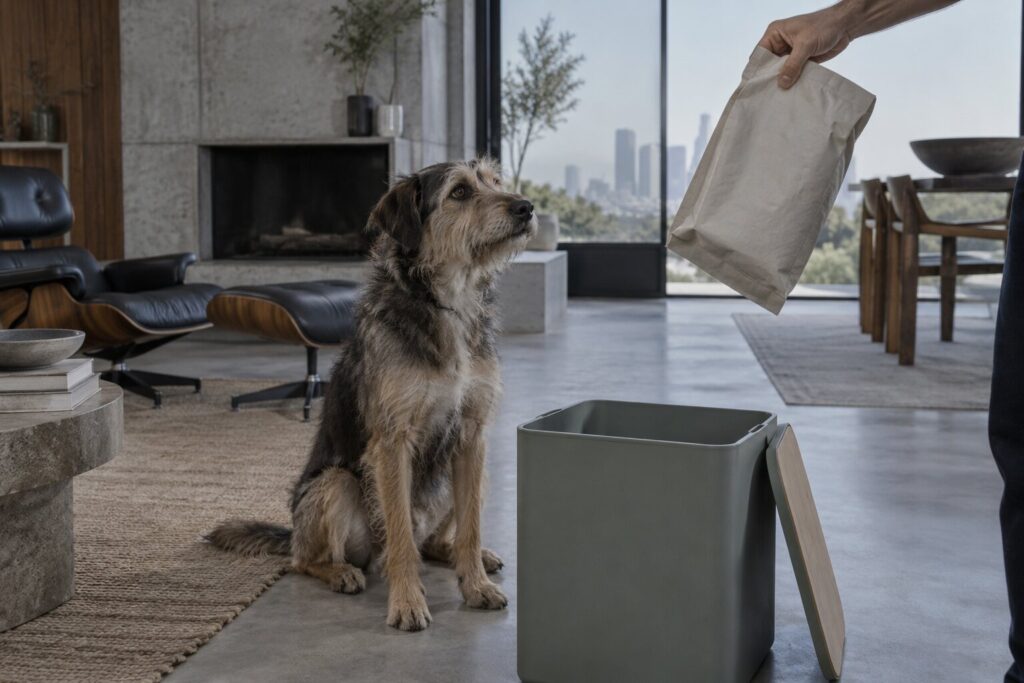
Check the best before date, buy bag sizes your dog will finish within about six weeks, keep the food in its original bag inside a container rather than loose in the container, and store it somewhere cool. If a new bag suddenly gets eaten with enthusiasm, you have your answer.
A formula change
Manufacturers reformulate without changing the packaging. If your dog abruptly rejects a food they have eaten for years, the food may genuinely be different. Comparing the guaranteed analysis on the current bag against the previous one will often show it.
Too many treats
Easy to underestimate. A dog getting training treats, chews, and something from every family member can be meeting a substantial share of its calories before the bowl is filled. Add up everything going in over a full day, including the things other people give, before concluding your dog has a problem with dinner.
Free feeding
If food is available all day, a dog will graze and you lose the ability to tell whether they are eating. It also removes the mild hunger that makes meals appealing. Scheduled meals fix both.
The environment
Some dogs will not eat near another dog, near a noisy appliance, on a slippery floor, or out of a metal bowl whose tags clink against it. Some large or arthritic dogs eat better with the bowl raised. These sound trivial and occasionally solve the whole problem.
Learned pickiness
This is the one people create accidentally. A dog skips a meal, the owner worries and adds chicken, the dog eats. The dog has now learned that not eating produces chicken. Repeat and you get a dog that holds out on purpose. It is straightforward learning and it works exactly as intended.
What To Do About A Genuinely Picky Dog
Only after a vet has ruled out a medical cause. Doing this to a dog that is unwell is unkind and pointless.
- Set meal times. Put the food down for fifteen to twenty minutes, then take it up, eaten or not. No food until the next scheduled meal.
- Stop topping it up. No toppers, no gravy, no chicken added when the bowl is refused. This is the part that actually matters and the part that is hardest to hold.
- Cut treats right back during the reset, so meals are the only calories on offer.
- Measure the portions. A dog leaving food may simply be being overfed. Check the feeding guide against your dog’s actual weight and activity, and remember those guides are generous.
- Add exercise before meals. A walk first genuinely improves appetite.
- Give it several days. A healthy adult dog will not starve itself. They will typically test the new arrangement for two or three days and then eat.
If you want to make the food more appealing without teaching the wrong lesson, warm it slightly to release the aroma, or add a small amount of warm water. Both improve palatability without introducing a separate reward.
The exception is real: puppies and small breeds cannot go without food for long. Do not run a waiting strategy with them without veterinary guidance.
When The Food Is Actually The Problem
Sometimes the answer is that this is not the right food, and the way to tell is by looking at what is in it rather than by trying another bag at random.
Fat content is the strongest driver of palatability in dry food, so a very lean formula genuinely is less appealing to some dogs. Protein source matters if your dog has developed an aversion after being ill on a particular food, which is a real and well documented effect. And a food that has been reformulated is worth confirming against its own label rather than assumed.
We convert every guaranteed analysis we index to the same basis so foods can be compared directly rather than by moisture content, and we estimate the starch left over once everything else is subtracted. You can browse them in the dog food reviews, put two side by side in the comparison tool, or check what a specific panel ingredient is in the ingredient wiki.
Change food gradually when you do change it, over seven to ten days, so you do not add a digestive problem to an appetite one.
In The Kibble reads labels and publishes what the numbers say. Guides are general information, not veterinary advice. Your vet knows your dog's history and we do not, so take anything here to them before you change how you feed.
Found this useful?
Comments
No comments yet. Tried this with your dog? Tell other readers how it went.