Can Dogs Eat Watermelon?
One of the better hot weather treats there is: 92 percent water and about 30 calories per 100g. Two parts need removing first, and the rind is the serious one.
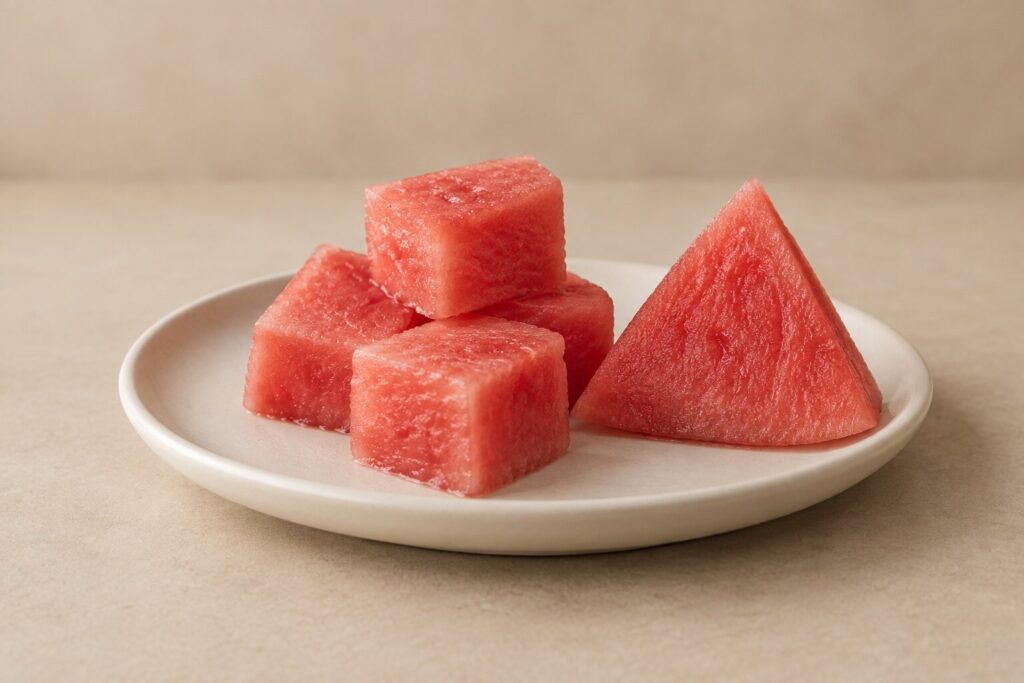
Yes, and it is one of the better hot weather treats there is. Watermelon is about 92% water and roughly 30 calories per 100g, which makes it one of the few things you can hand a dog in real quantity without doing damage to a calorie budget.
Two parts of it need removing first: the seeds and the rind.
The Seeds
Watermelon seeds are not toxic. The concern is mechanical rather than chemical: a mouthful of seeds can cause an intestinal blockage in a small dog, and even in a large one they are indigestible and pass through whole.
A dog that swallows one or two seeds is fine. Deliberately feeding slices full of them is asking for trouble in a terrier. Seedless watermelon removes the question entirely, and the pale immature seeds in seedless varieties are soft and harmless.
The Rind
This is the more serious one. The white flesh and green skin are tough, fibrous and very hard to digest. Dogs commonly vomit them back up, and a large piece swallowed whole is a genuine obstruction risk requiring surgery.
Do not give your dog the rind, and do not leave watermelon halves where a dog can reach them at a barbecue. Cut the flesh off cleanly and bin the rest.
How Much
Treats and extras of every kind should stay under 10% of daily calories, so the complete diet keeps holding the nutritional balance together. Watermelon makes that unusually easy:
| Dog weight | Rough daily calories | 10% budget | Watermelon flesh |
|---|---|---|---|
| 10 lb | ~350 | ~35 cal | About 4 oz, roughly a small cup |
| 30 lb | ~750 | ~75 cal | About 8 oz |
| 60 lb | ~1,250 | ~125 cal | About 14 oz |
Those are ceilings rather than targets, and the practical limit arrives before the calorie one. A large volume of any high water, high fiber fruit in a single sitting produces loose stools. Start with a few cubes.
What It Provides
Vitamin A, vitamin B6, vitamin C, potassium, and lycopene, the pigment that makes it red. It is genuinely nutritious, though a dog on a complete food is already covered on all of those.
The useful property is not the vitamins, it is the water. On a hot day, or for a dog that does not drink enough, watermelon is a way of getting fluid in that most dogs will accept enthusiastically. That said, it is not a substitute for drinking water, and a dog showing real signs of dehydration needs a vet rather than fruit.
Sugar is worth noting at around 6g per 100g. That is lower than banana or apple, but it is not zero, and a diabetic dog’s treats belong in a conversation with your vet.
Good Ways To Serve It
- Cubed and chilled. The simplest version, and hard to improve on.
- Frozen chunks. Last longer and are genuinely cooling. Cut them small for little dogs, since frozen fruit is hard on teeth.
- Blended and frozen in a puzzle toy. Pure watermelon, no additives, frozen into a rubber toy makes a long lasting hot day project.
What to avoid: watermelon juice and anything watermelon flavored, which is sugar with fruit on the label. Watermelon in syrup. And any pre-cut fruit salad, which may contain grapes, and grapes cause kidney failure in dogs at doses that are not predictable from body weight.

Which Dogs Should Go Easy
- Diabetic dogs, because of the sugar, however modest.
- Dogs with a sensitive stomach, since a large volume of water and fiber arriving at once is exactly the combination that loosens stools.
- Small dogs, where portioning matters much more and seeds are a bigger relative risk.
- Any dog that swallows food whole without chewing. Cut it smaller.
Other Melons
Cantaloupe and honeydew are both safe on the same terms: flesh only, no rind, in moderation. Cantaloupe is noticeably sweeter than watermelon, so portions should be smaller. The rind rule applies to all of them and for the same reason.
For another juicy summer fruit, fresh pineapple works too, in smaller amounts since it is sweeter and more acidic.
Where This Sits In The Diet
Watermelon is a snack and a hot day tool, not nutrition. What your dog actually lives on is what is in the bowl, and that is a label question. We convert every guaranteed analysis we index to the same basis so two bags can be compared directly, which you can browse in the dog food reviews.
In The Kibble reads labels and publishes what the numbers say. Guides are general information, not veterinary advice. Your vet knows your dog's history and we do not, so take anything here to them before you change how you feed.
Found this useful?
Comments
No comments yet. Tried this with your dog? Tell other readers how it went.