
Ingredient file // Grain
Feeding Oatmeal
A useful oat milling leftover, mostly starch
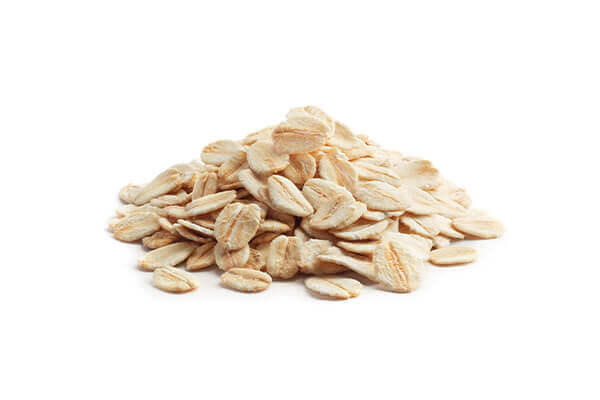
Feeding oatmeal is the broken groats and floury pieces left while mills make rolled oats. It gives kibble digestible starch and some oat fiber; claims about blood sugar or cholesterol borrow too much from studies of other oat ingredients.
- What it is
- Broken oat kernels, chips and floury pieces collected while mills make rolled oats for other uses.
- Made from
- Dehulled oats during rolling
- Main job
- Digestible grain starch
- Typical amount
- Not published
- Watch for
- Fungal toxins in poorly controlled batches
- Not the same as
- Oat mill by-product
Our read // In our catalog
In 1 of every 519 foods we track
Share of foods that list it
0%
5 of the 2,595 foods with an ingredient list on file, from 2 brands. All dry dog food.
Each square is 1% of the catalog
Where it sits on the label
Median position 5. In the top five of 3 foods, so it is usually a main ingredient.
Above the salt
Almost always listed before the salt, so there is more of it than a pinch.
Price per lb
Median of the cheapest bag price across 5 priced foods, 6% below the catalog. The price is the food's, not the ingredient's.
Who leans on it
60%
of the foods that list it are from Nature's Recipe. 2 brands use it in total.
What it is
How it is made
Oat mills make rolled products from dehulled grain. Cutting and rolling leave broken kernels, chips and floury fines. Those pieces become feeding oatmeal, a saleable feed stream from the same crop.6,7
- 01 // Source Whole oats Oats arrive at the mill with an outer hull that is separated from the edible kernel.
- 02 // Process Hulls removed Dehulling leaves oat groats; feeding oatmeal contains only the fine hull particles milling cannot avoid.
- 03 // Process Groats rolled Making rolled oats also produces broken groats, chips and floury pieces that are collected for feed.
- 04 // Output Feeding oatmeal The collected oat pieces are sold as a dry feed ingredient with a limit on crude fiber.
What is in it
Composition, dry matter
61
% starch
Average starch in dehulled oats, the closest published composition proxy. Feeding oatmeal is chiefly an energy ingredient.
Why it is in the bag
What the manufacturer gets
-
01
Supplies cooked starch
The oat pieces bring starch into kibble. Cooking it during extrusion makes that grain energy available to dogs and helps the kibble hold its shape.1,3,5
-
02
Adds some fermentable fiber
Oat kernels carry fiber, including beta-glucan. A related oat groat diet increased fecal fermentation products, though that result does not prove feeding oatmeal improves gut health.2,4
-
03
Sells milling fragments
Broken groats and floury pieces arise while mills make rolled oats. Selling them for feed recovers value from an existing milling stream.7
How much No tested amount was found for feeding oatmeal; related dog diets used 25% ground rolled oats or 40% oat groats.2,3
Our read // The claims
What the evidence supports
Strong: controlled studies in dogs agree. Some: small or mixed dog data. Thin: mechanism or lab work only. None: nothing, or the evidence points the other way.
-
Brands say
Dogs digest feeding oatmeal well
Evidence
- Strong
- Some
- Thin
- None
An adult-beagle study compared 21 plant materials and classed feeding oat meal among the well-digested ones. Its abstract groups energy results across several ingredients, so it gives no precise digestibility figure for feeding oatmeal alone.1
-
Brands say
Oat fiber improves a dog's gut health
Outruns the evidence
Evidence
- Strong
- Some
- Thin
- None
A 10-beagle crossover fed 40% oat groats and found more fecal fermentation products than with rice. That measures bacterial activity, not fewer gut problems, and the tested groats were not feeding oatmeal.2
-
Brands say
Feeding oatmeal lowers dogs' cholesterol
Outruns the evidence
Evidence
- Strong
- Some
- Thin
- None
A 14-dog trial fed purified oat beta-glucan for 71 days and lowered blood cholesterol, but also reduced nutrient digestibility and stool firmness. That extract is a different ingredient; feeding oatmeal has not shown the same effect.4
-
Brands say
Oatmeal keeps blood sugar steady
Outruns the evidence
Evidence
- Strong
- Some
- Thin
- None
Oat groats did not change post-meal glucose versus rice in a 10-beagle trial. In an 18-dog crossover, a diet with 25% oats produced higher total glucose exposure than a wheat diet. Neither supports this promise.2,3
Straight answers
What owners ask
-
Q01
Is it just filler?
NoFeeding oat meal was well digested in a dog study, and its oat-kernel material is rich in starch. It supplies energy plus some fiber. Calling it filler obscures what the ingredient does.1,5
-
Q02
Is it breakfast oatmeal?
Not exactlyIt comes from making rolled oats, but consists of the broken kernels, chips and floury pieces separated during milling. It is also different from oat mill by-product, which contains much more hull material.6,7
-
Q03
How much is in this food?
Not statedThe ingredient list ranks ingredients by weight but does not give their amounts. Its position tells you whether feeding oatmeal outweighs neighboring ingredients, not its exact share or its beta-glucan dose.8
Who uses it
Brands, best sellers and the company it keeps
Top brands, by foods that list it
Usually listed with, share of the foods that list it
- Brown Rice 80%
- Brewers Rice 80%
- Chicken Meal 60%
- Barley 60%
- Canola Meal 60%
- Chicken Fat 60%
- Turkey Meal 60%
- Natural Flavor 60%
- Menhaden Fish Meal 60%
- Chicken 40%
- Salmon 40%
- Rice Bran 40%
On the shelf
Foods that list it
5 foods in our reviews list it. Here are some of them.
Our read // On the bag
Read it as grain, then check the recipe
Find feeding oatmeal on the list and look at the meat and other grains around it. Its position shows relative weight, not a percentage. It is a useful starch ingredient with some fiber. Judge the complete food by its nutritional adequacy statement and analysis, and treat beta-glucan health promises as unproved for this ingredient.
Sources
What we read
Checked October 1, 2026.
- 1 Studies on the digestibility of soya bean products, cereals, cereal and plant by-products in diets of dogs
- 2 Ancient grains as novel dietary carbohydrate sources in canine diets
- 3 Metabolic and hormonal effects of whole grains of rye, oats and wheat in dog food
- 4 Oat beta-glucan as a dietary supplement for dogs
- 5 Oats, dehulled or from hulless or naked genotypes
- 6 Oat hulls and oat mill feed
- 7 Official Feed Terms, Common or Usual Ingredient Names and Ingredient Definitions
- 8 Reading Labels