
Ingredient file // Grain
Rye
Printed as “Organic Rye” on some labels. Same ingredient.
A useful starch grain with modest fiber
Rye is a cereal grain that supplies starch for kibble and energy for dogs, with some fermentable fiber alongside it. Dog studies show it works in food, but claims of steadier blood sugar or better gut health run ahead of the evidence.
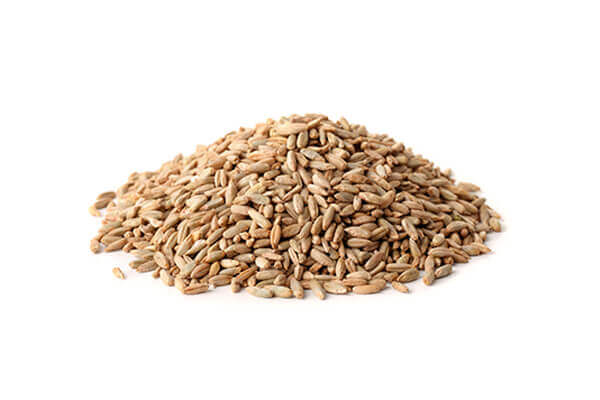
- What it is
- The dry seed of the rye plant, used whole or ground as a cereal ingredient in dog food.
- Made from
- Harvested rye grain
- Main job
- Starch for energy and structure
- Typical amount
- No standard; extruded trials tested 25 to 30%
- Watch for
- Avoid with diagnosed gluten sensitivity
- Not the same as
- Rye bran
Our read // In our catalog
In 1 of every 133 foods we track
Share of foods that list it
1%
19 of the 2,523 foods with an ingredient list on file, from 7 brands. 16 dry dog food, 2 dog food topper, 1 dog treats.
Each square is 1% of the catalog
Where it sits on the label
Median position 4. In the top five of 17 foods, so it is usually a main ingredient.
Above the salt
Almost always listed before the salt, so there is more of it than a pinch.
Price per lb
Median of the cheapest bag price across 15 priced foods, 29% above the catalog. The price is the food's, not the ingredient's.
Who leans on it
32%
of the foods that list it are from Lotus. 7 brands use it in total.
What it is
How it is made
Rye is grown for grain, especially where cold or dry conditions make wheat harder to grow. Unlike bran or distillers grains, rye on a label is the grain itself, prepared for mixing into food.2,5,8
- 01 // Source Rye kernels Mature rye seeds are harvested as grain; the whole kernel contains starch and an outer fiber layer.
- 02 // Process Cleaned grain Grain is sorted for milling, leaving the kernel rather than separating out bran as a milling leftover.
- 03 // Process Ground rye Kernels are ground into meal or whole grain flour so the starch mixes through the recipe.
- 04 // Output Rye grain or meal Dry rye arrives as kernels or ground meal; the kibble plant cooks it with the rest of the mix.
What is in it
Composition, dry matter
62
% starch
The average starch share of rye grain. This is why it earns a place as an energy grain in kibble.
Why it is in the bag
What the manufacturer gets
-
01
Supplies starch energy
Ground rye contributes starch that cooks during extrusion. The finished food gets an energy source and the cooked starch helps hold each kibble together.4,6,7
-
02
Adds fermentable fiber
Rye carries arabinoxylans and fructans. In dog feeding studies its whole grain changed fecal bacteria and raised some fermentation products compared with oats.1,2
-
03
Uses a widely fed crop
Rye tolerates cold, drought and acidic soils where wheat struggles. Feedipedia reports that more than 40% of global rye output went to animal feed in 2007.8
How much No usual inclusion rate is published; controlled extruded dog diets used 25 to 30% rye, while a baked 50% rye diet reduced digestibility.1,2,4
Our read // The claims
What the evidence supports
Strong: controlled studies in dogs agree. Some: small or mixed dog data. Thin: mechanism or lab work only. None: nothing, or the evidence points the other way.
-
Brands say
Rye gives dogs usable carbohydrate energy
Evidence
- Strong
- Some
- Thin
- None
Feedipedia reports about 62% starch on a dry basis. A trial of 8 dogs fed ground rye and found high nutrient digestibility and acceptable stools. That supports rye as a usable energy ingredient.5,7
-
Brands say
Rye fiber improves a dog's gut health
Outruns the evidence
Evidence
- Strong
- Some
- Thin
- None
A crossover trial of 18 dogs found more fecal acetate and propionate with rye than oats, and a trial of 6 dogs shifted Prevotella. Neither measured better health; the diet with more rye also reduced nutrient digestibility.1,2
-
Brands say
Rye gives slow energy and steadier blood sugar
Outruns the evidence
Evidence
- Strong
- Some
- Thin
- None
In a crossover trial of 18 dogs with 25% rye, glucose curves were broadly similar to wheat and oats; fasting insulin was higher after rye. The study does not support a blood sugar benefit.3
-
Owners say
Rye suits dogs that cannot tolerate wheat
Outruns the evidence
Evidence
- Strong
- Some
- Thin
- None
Rye is a different grain, but its secalin proteins are related to wheat gluten. Dogs with diagnosed gluten intolerance are advised to avoid rye along with wheat and barley. Different grain does not mean safe substitute.9
-
Critics say
Rye is just cheap filler
Outruns the evidence
Evidence
- Strong
- Some
- Thin
- None
Rye contains about 62% starch, and dogs accepted a diet with 30% rye in a controlled feeding trial. Whatever its price, the grain supplies energy and is not an empty addition.4,7
Straight answers
What owners ask
-
Q01
Is it just filler?
NoRye supplies digestible starch and some fiber. An extruded diet containing 30% rye produced normal stool scores in a dog trial. It is a grain ingredient with a job; the fair question is how much of the recipe it occupies.4,7
-
Q02
Is rye safe for dogs avoiding wheat?
Depends on diagnosisA dog with diagnosed gluten intolerance should avoid rye because it carries related grain proteins. A suspected reaction to wheat needs a proper diet trial; rye's different name is no guarantee.9
-
Q03
Will rye make stools loose?
Usually noIn a 30% rye trial, stool consistency matched wheat and triticale. Another small trial found wetter feces with rye, but still described the stools as firm and well formed.4,5
-
Q04
Why is rye near the top?
Large shareIngredients are ranked by weight before processing. Rye near the top means a large grain share, but the list alone cannot tell you how well the finished diet feeds your dog. Read the other major ingredients too.11
Who uses it
Brands, best sellers and the company it keeps
Top brands, by foods that list it
Usually listed with, share of the foods that list it
- Barley 58%
- Oatmeal 53%
- Flaxseed 47%
- Chicken Meal 47%
- Natural Flavor 42%
- Chicken Fat 42%
- Pea Fiber 37%
- Chicken 37%
- Oats 37%
- Brown Rice 37%
- Dried Egg 32%
- Peas 26%
On the shelf
Foods that list it
19 foods in our reviews list it. Here are some of them.
Show 11 more
Now Fresh Good Gravy Beef Coated in Bone Broth Dry Dog Food28.9% proteinNow Fresh Good Gravy Premium Quality Salmon Recipe Dog Food Topper28.9% proteinNow Fresh Good Gravy Large Breed Adult Beef Dry Dog Food28.9% proteinNow Fresh Good Gravy Salmon Small Breed Dry Dog Food28.9% proteinNow Fresh Good Gravy Beef Recipe For Seniors Dog Food Topper26.7% proteinOnly Natural Pet Raw Blends Digestive Care for Sensitive Stomachs Dry Dog Food33.3% proteinNulo Challenger Large Breed Puppy Organic Ancient Grains Beef, Lamb & Pork Recipe Dry Dog Food35.6% proteinOnly Natural Pet Raw Blends Skin and Coat Dry Dog Food35.6% proteinEarthborn Holistic Puppy Vantage Dry Dog Food30.0% proteinLotus Oven Baked Small Bites Chicken Recipe Senior Dry Dog Food20.0% proteinLotus Oven Baked Small Bites Chicken Recipe Puppy Dry Dog Food30.0% proteinOur read // On the bag
Read rye as starch, then scan the list
Rye near the top means the recipe leans on grain for energy. Check whether a named animal protein is also prominent and whether other grains crowd the same list. Rye lower down is ordinary. Skip it for diagnosed gluten sensitivity, and ignore promises of steadier blood sugar.
On labels as
Other names for this
Manufacturers do not all use the same wording. These all mean the same thing.
Sources
What we read
Checked October 1, 2026.
- 1 Effects of rye inclusion in dog food on fecal microbiota and short-chain fatty acids
- 2 Effects of whole-grain cereals on fecal microbiota and short-chain fatty acids in dogs: a comparison of rye, oats and wheat
- 3 Metabolic and hormonal effects of whole grains of rye, oats and wheat in dog food
- 4 Effects of wheat, rye, and triticale grains on digestion, fecal quality, and health parameters in dogs
- 5 Nutrient Digestibility of a Vegetarian Diet with or without the Supplementation of Feather Meal and Either Corn Meal, Fermented Rye or Rye and Its Effect on Fecal Quality in Dogs
- 6 The Effect of Increasing Levels of Dehulled Faba Beans (Vicia faba L.) on Extrusion and Product Parameters for Dry Expanded Dog Food
- 7 Rye grain
- 8 Rye grain and by-products
- 9 Health
- 10 Mycotoxins
- 11 What's in the Ingredients List?