
Ingredient file // Preservative
Rosemary Extract
A useful preservative, not a health boost
Rosemary extract concentrates compounds from dried rosemary leaves to slow fat rancidity in dog food. That protects the food a dog eats, but the amount on a label says little about shelf life, and health claims for the dog go beyond the evidence.
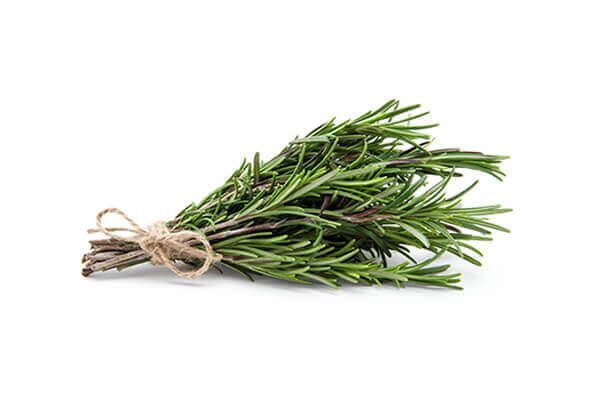
- What it is
- A concentrated rosemary leaf preparation used to slow the oxidation of fats in food.
- Made from
- Dried rosemary leaves
- Main job
- Slows fat rancidity
- Typical amount
- One supplier projected 500 mg/kg finished food
- Watch for
- Do not add concentrated extract at home
- Not the same as
- Rosemary essential oil
Our read // In our catalog
In 1 of every 3 foods we track
Share of foods that list it
40%
1,031 of the 2,595 foods with an ingredient list on file, from 51 brands. 979 dry dog food, 24 wet dog food, 24 dog food topper.
Each square is 1% of the catalog
Where it sits on the label
Median position 32. In the top five of 0 foods, so it is usually a minor ingredient.
Above the salt
Usually listed after the salt, which caps it at roughly 1% of the recipe in 98% of foods.
Price per lb
Median of the cheapest bag price across 800 priced foods, 3% above the catalog. The price is the food's, not the ingredient's.
Who leans on it
12%
of the foods that list it are from Royal Canin. 51 brands use it in total.
The story
How a kitchen herb became a kibble preservative
In Europe, rosemary extract was long sold to food makers labeled as a natural flavor or plain "rosemary extract," with no word on its antioxidant job. In 1996, 3 producers formed the European Rosemary Extracts Manufacturers Group to gather the data regulators needed. EFSA issued its safety opinion in March 2008, and in 2010 the EU listed the extracts as the antioxidant E 392. Carnosic acid and carnosol were named as the compounds doing the work.9
In US dog food, rosemary extract is one of the natural alternatives to ethoxyquin, a synthetic preservative. Starting in 1988, the FDA's Center for Veterinary Medicine received reports from owners and some veterinarians who suspected ethoxyquin of causing problems from skin trouble to organ failure. Those reports were suspicions, not proof. In 1997 the agency asked makers to voluntarily cut the maximum in dog food from 150 to 75 ppm. Whole Dog Journal later steered owners toward tocopherols, citric acid and rosemary extract.8
European regulators later acted on both preservatives. On 7 June 2017 the European Commission suspended ethoxyquin's authorization as a feed additive. In 2022, EFSA assessed two rosemary solvent extracts as antioxidants for cat and dog food. Then Regulation (EU) 2024/1068, dated 12 April 2024, authorized one rosemary extract preparation as an antioxidant, capped at 34 mg of carnosic acid per kg of complete feed for dogs (5 mg/kg for cats). That authorization runs until 5 May 2034.4,10,11
What it is
How it is made
Herb processors make rosemary extract from dried leaves. A solvent draws out antioxidant compounds, and filtration removes the spent leaf material. The concentrated fraction is sold to food makers as a preservative.4,5
- 01 // Source Dried leaves Rosemary leaves are dried and ground so the solvent can reach their antioxidant compounds.
- 02 // Process Extract compounds Food-grade solvents, including ethanol or acetone, draw antioxidant compounds from the ground leaves.
- 03 // Process Separate leaves Filtration removes the leaf solids from the liquid that holds the extracted compounds.
- 04 // Process Remove solvent Evaporation concentrates the extract; further drying or purification depends on the product specification.
- 05 // Output Rosemary extract The finished ingredient arrives as a powder or liquid for blending into food or fats.
What is in it
Composition, dry matter
123-249
g/kg phenols
Total phenols measured across dried research extracts. The range shows how much extraction method changes the material behind one ingredient name.
These figures describe dried research extracts and a commercial powdered oleoresin, not every pet food additive. Solvent choice changes the mix, and carnosic acid can oxidize into carnosol during processing.2
Benefits
What it does for your dog
Each benefit carries the same evidence grade as the claims below.
-
01
Fats in the food stay fresher
Carnosic acid and carnosol interrupt the chain reactions that turn fat rancid. EFSA expects the antioxidant effect seen in human food to carry into pet food, but one long kibble storage test was mixed.1,4,9
- Strong
- Some
- Thin
- None
-
02
Later blood sugar peak after meals
In beagles, rosemary extract postponed the post-meal glucose peak at 1,000 mg/kg, over 3 times the 300 mg/kg safe maximum EFSA set for the extracts it assessed. This study did not test typical food levels.4,12
- Strong
- Some
- Thin
- None
Why it is in the bag
What the manufacturer gets
-
01
Slows fat oxidation
Carnosic acid and carnosol interrupt reactions that make fats rancid. The effect in kibble depends on its fats, its recipe and the rest of its preservation system.1,4
-
02
Protects stored food
Rancidity shortens the time food remains saleable and changes its smell. Protecting fats matters during storage, although one rosemary and tocopherol blend did not reliably extend kibble shelf life.1
-
03
Offers a plant preservative
Brands use rosemary extract as a plant-sourced antioxidant. It is a concentrated additive used in small amounts, giving manufacturers a preservation option without adding much leaf material or flavor.4,5,7
How much One supplier projected 500 mg/kg finished food; EFSA judged 300 mg/kg safe for the specific extracts it assessed in dog feed.4
Our read // The claims
What the evidence supports
Strong: controlled studies in dogs agree. Some: small or mixed dog data. Thin: mechanism or lab work only. None: nothing, or the evidence points the other way.
-
Brands say
Rosemary extract keeps kibble fats fresh
Evidence
- Strong
- Some
- Thin
- None
Its antioxidant compounds have a food-preservation mechanism. In a 15-month kibble study, a 200 ppm blend of rosemary extract and tocopherols did not consistently delay oxidation or extend shelf life. Rosemary was not tested alone.1,4,7
-
Brands say
Its antioxidants protect the dog's cells
Outruns the evidence
Evidence
- Strong
- Some
- Thin
- None
EFSA assessed 2 solvent extracts for use as feed antioxidants, relying on food effects and safety data rather than a dog health trial. Protecting fat in a bag does not demonstrate protection of a dog's cells.4
-
Owners say
Natural rosemary is safer than BHT
Outruns the evidence
Evidence
- Strong
- Some
- Thin
- None
EFSA used a 90-day rat toxicity study to assess the specified rosemary extracts. That assessment did not compare them with BHT in dogs, so it cannot rank the preservatives by safety.4
-
Owners say
Rosemary extract in food triggers seizures
Outruns the evidence
Evidence
- Strong
- Some
- Thin
- None
At its assessed 300 mg/kg dog-feed level, EFSA judged camphor exposure from these extracts below its concern threshold. Rosemary essential oil has a different composition. No controlled dog feeding result here links food-grade extract to seizures.3,4
The research
Studies worth knowing
Published research we read for this page, dog studies first.
-
2024 // Feeding trial plus lab tests
Rosemary extract delayed blood sugar peaks in beagles12
Beagles fed 3 extruded diets; the abstract does not give the dog count
Found. At 1.0 g/kg, rosemary extract did not change total starch digestibility but consistently pushed back the post-meal blood sugar peak on rice, round pea and wrinkled pea diets. It also raised the food's antioxidant capacity.
What it means. A real effect in dogs, but at over 3 times the 300 mg/kg safe maximum EFSA set for 2 Kemin extracts. This study did not test typical food levels.
-
2026 // Storage test, 15 months
Rosemary and vitamin E coating did not reliably slow rancidity1
Coated dry dog food in storage; no dogs were fed
Found. A 200 ppm blend of rosemary extract and mixed tocopherols raised starting vitamin E levels but did not consistently lower rancidity markers or delay failure, defined as a peroxide value of 5 mEq/kg or more.
What it means. The fat type and kibble recipe drove freshness more than this preservative did. Kemin supplied the antioxidant and the lab analyzes.
Straight answers
What owners ask
-
Q01
Is it just filler?
NoIt has a specific job: slowing fat oxidation. The amount used is too small to supply meaningful protein, fiber or calories. Read it as a preservative, not as a nutrient.4,6
-
Q02
Is it rosemary essential oil?
NoPreservative extracts concentrate compounds from leaves with solvents or other extraction methods. Essential oil is commonly made by steam distillation and contains more volatile compounds, including camphor. The names are not interchangeable.3,5
-
Q03
Should seizures make me avoid it?
No evidenceA rosemary extract listing does not identify a seizure trigger. EFSA found camphor exposure from its assessed extracts below its concern level, though it had no dog tolerance study. Keep the full ingredient list if you suspect a reaction.4
Who uses it
Brands, best sellers and the company it keeps
Top brands, by foods that list it
Plus 41 more brands.
Amazon best sellers that list it
- #10 Iams Proactive Health MiniChunks Chicken & Whole Grains Dry Dog Food
- #25 Instinct Raw Boost Mixers Gut Health Freeze-Dried Dog Food Topper
- #28 Nature’s Recipe Grain-Free Easy to Digest Salmon, Sweet Potato, & Pumpkin Recipe Dry Dog Food
- #29 Royal Canin Small Adult Dry Dog Food
- #31 Open Farm Wild Caught Salmon with Ancient Grains Dry Dog Food
- #32 Natural Balance L.I.D. Limited Ingredient Diets Grain-Free Salmon & Sweet Potato Dry Dog Food
- #34 Rachael Ray Nutrish Real Chicken & Veggies Recipe Dry Dog Food
- #37 Rachael Ray Nutrish Real Beef, Pea & Brown Rice Recipe Dry Dog Food
Rank on Amazon's dog food best seller list, checked October 2026.
Usually listed with, share of the foods that list it
- Chicken Fat 56%
- Natural Flavor 46%
- Chicken Meal 36%
- Flaxseed 34%
- Chicken 32%
- Peas 31%
- Dried Plain Beet Pulp 29%
- Brown Rice 27%
- Brewers Rice 20%
- Oatmeal 19%
- Barley 19%
- Turkey Meal 18%
Our read // On the bag
Read it as part of preservation
Rosemary extract near the end of a list, especially beside a fat or tocopherols, signals a small preservation ingredient. Its presence does not tell you how long the food will stay fresh. Use food within its stated shelf life, keep the package sealed and discard food that smells rancid.
Sources
What we read
Checked September 1, 2026.
- 1 Lipid source and kibble matrix determine oxidative stability and n-3 fatty acid loss in coated extruded dog food
- 2 Selective recovery of rosmarinic and carnosic acids from rosemary leaves under ultrasound- and microwave-assisted extraction procedures
- 3 Antioxidant activity of hydro distillation water residues from Rosmarinus officinalis L. leaves determined by DPPH assays
- 4 Safety and efficacy of two solvent extracts of rosemary (Rosmarinus officinalis L.) when used as feed additive for cats and dogs (Kemin Nutrisurance Europe SRL)
- 5 Rosemary Extract
- 6 What’s in the Ingredients List?
- 7 Front Range Grain-Free RawMix for Dogs
- 8 Problems With Artificial Preservatives in Dog Food
- 9 Rosemary extracts get final EU approval for food preservation
- 10 Commission Implementing Regulation (EU) 2017/962 of 7 June 2017 suspending the authorisation of ethoxyquin as a feed additive
- 11 Commission Implementing Regulation (EU) 2024/1068 of 12 April 2024 concerning the authorisation of a preparation of rosemary extract as a feed additive for cats and dogs
- 12 Effects of rosemary extract addition on starch bioavailability and antioxidant properties of extruded pet foods