
Ingredient file // Fiber
Soybean Hulls
Useful soy fiber with a calorie tradeoff
Soybean hulls are the seed coats removed while soybeans are processed for oil. In kibble, they add stool bulk and lower available calories when they replace more digestible ingredients. The small dog studies do not show that they improve gut health or cause weight loss.
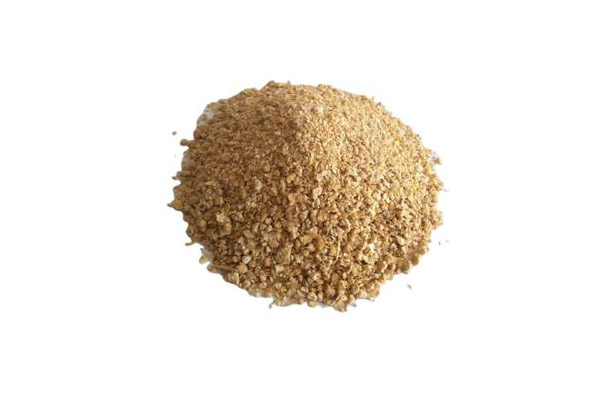
- What it is
- The cleaned, heat-treated outer coats separated from soybeans at an oil mill.
- Made from
- Soybean seed coats
- Main job
- Fiber for stool bulk
- Typical amount
- Not published
- Watch for
- High amounts lower diet digestibility
- Not the same as
- Soybean meal
Our read // In our catalog
In 1 of every 649 foods we track
Share of foods that list it
0%
4 of the 2,595 foods with an ingredient list on file, from 1 brand. All dry dog food.
Each square is 1% of the catalog
Where it sits on the label
Median position 9.5. In the top five of 0 foods, so it is usually a supporting ingredient.
Above the salt
Almost always listed before the salt, so there is more of it than a pinch.
Price per lb
Median of the cheapest bag price across 4 priced foods, 59% below the catalog. The price is the food's, not the ingredient's.
Who leans on it
100%
of the foods that list it are from Purina. 1 brand use it in total.
What it is
How it is made
Soy oil mills crack beans and remove their thin coats before oil extraction. The coats are a bulky leftover that mills sieve, heat and sometimes pellet for use in animal feed.7
- 01 // Source Cleaned soybeans The oil mill screens harvested beans to remove damaged beans and foreign material.
- 02 // Process Cracked and separated Cracking loosens the seed coats, which are removed before the beans continue through oil processing.
- 03 // Process Sieved and toasted Sieving removes seed pieces, and toasting lowers the activity of an enzyme present in raw hulls.
- 04 // Output Soybean hulls The light coats are milled or pelleted to make the bulky material easier to handle and ship.
What is in it
Composition, dry matter
39
% crude fiber
Feedipedia's average for soybean hulls. Fiber is their main contribution to kibble, though seed pieces left in a batch change its makeup.
Cleaner hulls contain more fiber. Batches with seed pieces contain more protein and less fiber, so products sold under similar soy milling names do not always have the same composition.7
Why it is in the bag
What the manufacturer gets
-
01
Adds stool bulk
The fiber increases fecal output. In an 8-dog comparison, the hull diet produced about half again as much feces as the diet without added fiber, while stools remained formed.2
-
02
Dilutes recipe calories
Replacing a more digestible ingredient with hulls lowers the energy dogs obtain from the finished diet. Controlled dog studies found less available energy as hull inclusion rose.1,3
-
03
Uses an inexpensive leftover
Oil mills produce hulls while making soybean oil and meal. Feedipedia describes a broad supply, and an ADM supplier bulletin markets hulls as cheaper than beet pulp.7,10
How much Dog studies tested diets containing 3 to 16% soybean hulls; those trial amounts do not tell you how much a particular bag contains.1,3,4
Our read // The claims
What the evidence supports
Strong: controlled studies in dogs agree. Some: small or mixed dog data. Thin: mechanism or lab work only. None: nothing, or the evidence points the other way.
-
Brands say
Soybean hulls lower a food's calorie density
Evidence
- Strong
- Some
- Thin
- None
In controlled dog diets, available energy fell as hull inclusion rose from 3 to 9%. A separate 12-dog comparison also found less metabolizable energy with 15% hulls. This is an effect of the tested recipes, not a calorie figure for every food.1,3
-
Brands say
Soybean hulls feed healthy gut bacteria
Outruns the evidence
Evidence
- Strong
- Some
- Thin
- None
At 5.6% hulls, a 4-dog trial found changes in fecal bacterial groups and fermentation products versus cellulose. An 8-dog trial also found higher fecal short-chain fatty acids versus no added fiber. Neither showed better health.2,5
-
Brands say
Soybean hulls keep stools firm
Outruns the evidence
Evidence
- Strong
- Some
- Thin
- None
In an 8-dog trial, hull stools scored 2.3 on a 5-point scale, in the formed range, while cellulose stools were firmer at 2.0. A 12-dog trial at 15% hulls found no change in consistency. Stools stay formed; no trial shows hulls firming them.2,3
-
Brands say
Soybean hulls make dogs full and lose weight
Outruns the evidence
Evidence
- Strong
- Some
- Thin
- None
An 8-dog trial with 16% hulls found no reduction in food eaten by weight or change in observed behavior. In a 12-dog, 56-day comparison, weight loss did not differ from the control diet.4,6
-
Critics say
Soybean hulls are just cheap filler
Outruns the evidence
Evidence
- Strong
- Some
- Thin
- None
An ADM bulletin promotes their low cost, but the ingredient has a measurable job. In an 8-dog trial, hulls increased fecal output and fermentation products while maintaining formed stools. Higher fiber also reduced diet digestibility.1,2,10
Straight answers
What owners ask
-
Q01
Is it just filler?
NoIt adds stool bulk and lowers the energy available from a recipe when it replaces a more digestible ingredient. Cost also matters to manufacturers. Both the fiber job and the economic reason belong in the judgment.1,2,10
-
Q02
Is it soybean meal?
NoHulls are mainly the bean's outer coat and serve as fiber. Soybean meal comes from the oil processing stream and serves a different role. Read each soy ingredient separately on the label.7
-
Q03
Is it better than beet pulp?
No proofIn dog comparisons, hull and beet pulp diets had similar digestibility and stool scores. The 8-dog study placed their fecal short-chain fatty acid results in the same statistical group. Neither has a demonstrated health advantage for a healthy dog.1,2
Who uses it
Brands, best sellers and the company it keeps
Top brands, by foods that list it
Amazon best sellers that list it
Rank on Amazon's dog food best seller list, checked October 2026.
Usually listed with, share of the foods that list it
- Soybean Meal 100%
- Corn Protein Meal 75%
- Whole Grain Wheat 75%
- Chicken 75%
- Chicken By-Product Meal 75%
- Whole Grain Corn 75%
- Oat Meal 50%
- Beef Fat 50%
- Rice 50%
- Egg and Chicken Flavor 50%
- Beef 25%
- Chicken Meal 25%
Our read // On the bag
Read it as fiber, then check calories
Look at where hulls sit beside the named proteins and other soy ingredients. Far down the list, they are doing a modest fiber job. If they sit high, check the finished food's calories and fiber level against your dog's needs. Skip claims that hulls alone deliver gut health or weight loss.
Sources
What we read
Checked October 1, 2026.
- 1 Soybean hulls as a dietary fiber source for dogs
- 2 Effects of high inclusion of soybean hulls on apparent total tract macronutrient digestibility, fecal quality, and fecal fermentative end-product concentrations in extruded diets of adult dogs
- 3 Período de adaptação a dietas com baixa ou alta fibra sobre a digestibilidade e as características fecais em cães
- 4 Effect of feeding frequency of a diet containing soya hulls on the food intake and behaviour of dogs
- 5 Effect of soybean husk supplementation on the fecal fermentation metabolites and microbiota of dogs
- 6 Body condition of dogs fed diets containing soya hulls
- 7 Soybean hulls
- 8 Chemical Contaminants
- 9 Cooking Up a Food Allergy: Conducting a Diagnostic Food Trial
- 10 Soybean Hulls: An Alternative Fiber Source for Dogs