
Ingredient file // Grain
Whole Brown Rice
Useful starch, with modest whole grain extras
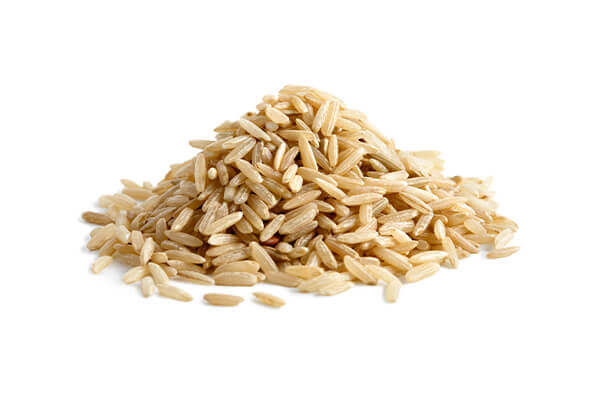
Whole brown rice has its hull removed but keeps its bran and germ. In kibble it mainly supplies digestible starch for energy and helps the pieces hold together. Its extra fiber does not prove a slower energy release.
- What it is
- Rice with its hard outer hull removed and its bran, germ and starchy center retained.
- Made from
- Harvested rice grain
- Main job
- Digestible starch for energy
- Typical amount
- Dog trials tested 15 to 30%
- Watch for
- Arsenic testing in rice-led foods
- Not the same as
- Brewers rice
Our read // In our catalog
In 1 of every 421 foods we track
Share of foods that list it
0%
6 of the 2,523 foods with an ingredient list on file, from 3 brands. All dry dog food.
Each square is 1% of the catalog
Where it sits on the label
Median position 3. In the top five of 5 foods, so it is usually a main ingredient.
Above the salt
Almost always listed before the salt, so there is more of it than a pinch.
Price per lb
Median of the cheapest bag price across 6 priced foods, 11% above the catalog. The price is the food's, not the ingredient's.
Who leans on it
50%
of the foods that list it are from Go! Solutions. 3 brands use it in total.
What it is
How it is made
Rice mills remove the hard hull from harvested grain to make brown rice. Further polishing removes the bran and germ to make white rice. Brown rice keeps those grain parts together for use in food.7,9
- 01 // Source Harvested rice Grain arrives at the mill inside a hard outer hull.
- 02 // Process Hull removed Milling takes off the hull while leaving the bran and germ on the grain.
- 03 // Process Ground if needed The grain may be ground for mixing while retaining its bran, germ and starchy center.
- 04 // Output Whole brown rice The dehulled grain, whole or ground, is ready to supply starch to a dog food recipe.
What is in it
Composition, dry matter
87
% starch
The feed-table average for dry brown rice. Starch, rather than fiber or protein, is its main contribution to kibble.
Why it is in the bag
What the manufacturer gets
-
01
Supplies usable energy
Cooking makes rice starch available to dogs. In one diet comparison, dogs digested the brown rice diet well; the study also tested a separate ingredient labeled only as rice.1,4
-
02
Holds kibble together
Starch swells during cooking and helps the food bind and expand into dry pieces. Brown rice supplies that starch while retaining its bran and germ.1,4,9
-
03
Available at scale
An industry ingredient survey records substantial brown rice use in pet food. It gives manufacturers a grain starch source they can purchase in large volumes.10
How much A controlled trial fed diets containing 15 or 30% brown rice, on an as-fed basis, to 6 dogs.2
Our read // The claims
What the evidence supports
Strong: controlled studies in dogs agree. Some: small or mixed dog data. Thin: mechanism or lab work only. None: nothing, or the evidence points the other way.
-
Brands say
Brown rice supplies dogs with usable energy
Evidence
- Strong
- Some
- Thin
- None
In an 8-dog comparison, the brown rice diet reached 91.61% dry matter digestibility and 95.56% nitrogen-free extract digestibility. A separate 6-dog trial tested diets containing brown rice. These results support its use as an energy source.1,2
-
Brands say
Brown rice has more fiber and magnesium than white rice
Evidence
- Strong
- Some
- Thin
- None
Feed-table averages show 2.4% crude fiber in dry brown rice against 0.6% in polished broken rice; magnesium averages 1.4 against 1.1 g/kg. Those are ingredient averages, not proof of a health benefit from a finished food.4,5
-
Brands say
Brown rice gives dogs slower, steadier energy
Outruns the evidence
Evidence
- Strong
- Some
- Thin
- None
The 8-dog brown rice comparison measured digestibility through fecal collection, not blood glucose after meals. Retaining the bran does not by itself show that a finished dog food releases energy more slowly.1,4
-
Owners say
Rice-based food poisons dogs with arsenic
Outruns the evidence
Evidence
- Strong
- Some
- Thin
- None
In a 16-dog observational study, dogs eating rice-based diets had higher hair inorganic arsenic than dogs eating no rice. The researchers measured exposure, not illness, and said the measured levels did not indicate toxicity.3
-
Critics say
Brown rice is just filler
Outruns the evidence
Evidence
- Strong
- Some
- Thin
- None
Brown rice averages about 87% starch on a dry matter basis, and dogs digested a brown rice diet well in an 8-dog comparison. It supplies energy and helps form kibble; its amount in the recipe still matters.1,4
Straight answers
What owners ask
-
Q01
Is it just filler?
NoBrown rice supplies digestible energy and starch that helps form kibble. High on an ingredient list, it is a major starch source. Its position alone cannot tell you whether the complete food meets your dog's needs.1,4,8
-
Q02
Is brown rice better than white?
Not automaticallyFeed-table averages give brown rice more fiber and slightly more magnesium than polished broken rice. The dog digestibility study compared brown rice with an ingredient labeled only as rice, so it cannot settle whether brown is better than white.1,4,5
-
Q03
Does whole mean intact kernels?
NoWhole describes the grain parts retained, not the shape of each piece. Brown rice keeps its bran and germ after the hull is removed, and it may be ground before mixing into dog food.7,9
Who uses it
Brands, best sellers and the company it keeps
Top brands, by foods that list it
Usually listed with, share of the foods that list it
- Chicken 50%
- Oatmeal 50%
- Chicken Meal 50%
- Chicken Fat 50%
- Lamb Meal 50%
- Canola Oil 33%
- Salmon Oil 33%
- Salmon Meal 33%
- Flaxseed 33%
- Natural Flavor 33%
- Brewers Rice 33%
- Chicken Liver 17%
On the shelf
Foods that list it
6 foods in our reviews list it. Here are some of them.
Our read // On the bag
Read it as a major starch source
If whole brown rice sits high on the list, expect it to supply a substantial share of the food's starch and calories. Check the named protein sources around it and the nutritional adequacy statement. Treat whole as a description of the grain, not a promise of slower energy or better health.
Sources
What we read
Checked October 1, 2026.
- 1 Nutritional value of common carbohydrate sources used in pet foods
- 2 Nutrient Digestibility, Palatability and Stool Quality of Canine Food Including Brown Rice
- 3 Hair arsenic level in rice-based diet-fed Staffordshire bull terriers
- 4 Rice, brown
- 5 Rice, polished, broken
- 6 FDA Makes Available Results from Testing of Infant Rice Cereal for Inorganic Arsenic
- 7 Draft Guidance for Industry and FDA Staff: Whole Grain Label Statements
- 8 Ingredients - Making Pet Food
- 9 Types of Rice
- 10 Pet Food Production and Ingredient Analysis: 2025 Update