
Ingredient file // Other
Yucca Schidigera Extract
A small odor additive with mixed dog evidence
Yucca schidigera extract concentrates compounds from a desert plant and goes into dog food in small amounts. Some dog trials found less fecal ammonia or odor; another found no ammonia change. It is not proven joint care.
- What it is
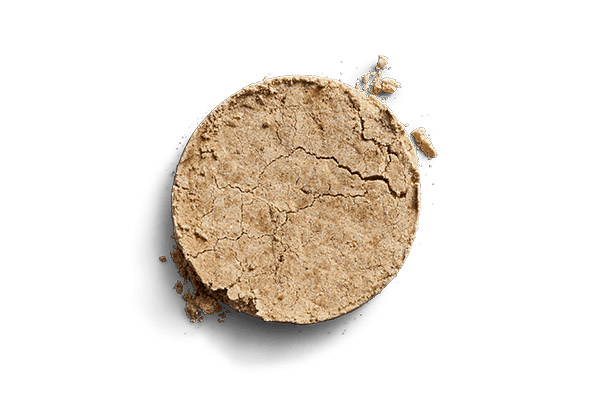
- A liquid or powdered extract of Mojave yucca plant material, added chiefly for stool odor control.
- Made from
- Mojave yucca stems or aerial parts
- Main job
- Stool odor control
- Typical amount
- Dog trials used 125 to 750 mg/kg of food
- Watch for
- High doses changed a liver blood marker
- Not the same as
- Ground yucca stem
Our read // In our catalog
In 1 of every 4 foods we track
Share of foods that list it
24%
611 of the 2,595 foods with an ingredient list on file, from 39 brands. 560 dry dog food, 45 wet dog food, 6 dog food topper.
Each square is 1% of the catalog
Where it sits on the label
Median position 32. In the top five of 0 foods, so it is usually a minor ingredient.
Above the salt
Usually listed after the salt, which caps it at roughly 1% of the recipe in 99% of foods.
Price per lb
Median of the cheapest bag price across 456 priced foods, 10% below the catalog. The price is the food's, not the ingredient's.
Who leans on it
19%
of the foods that list it are from Blue. 39 brands use it in total.
The story
From desert washing root to dog food odor additive
Mojave yucca is a slow-growing desert plant native to the southwestern United States and northern Mexico. Long before feed mills, Native Americans in the region scraped its roots and mixed the shavings with water for washing. They also roasted its fruits, gathered in April or May. That washing use points to saponins, the surface-active compounds extract makers now concentrate and sell.7,15
A USDA Forest Service review lists the plant in soft drinks as a flavoring and foaming agent, in cosmetics and in crop fertilizer. FDA rules name Mohave yucca among natural flavoring substances allowed in food. Feed use followed: extract added to pig feed lowered ammonia and hydrogen sulfide in barn air. Harvesting drew criticism. As of 1980, southern California let cutters take trunks at ground level, though the plant grows about 1 cm a year and may need 150 years to reach legal size.7,15,16
What it is
How it is made
Suppliers make yucca extract specifically for feed and pet food. Products take different routes: one documented liquid starts with pressed stem juice, while a powdered product uses ethanol and water to extract aerial plant parts.7,8
- 01 // Source Aerial yucca parts The powder supplier starts with cleaned aboveground parts of Yucca schidigera.
- 02 // Process Extract with solvent Food-grade ethanol and water draw saponins from the prepared plant material.
- 03 // Process Filter and concentrate Fibers are filtered out, then the liquid is concentrated under vacuum.
- 04 // Process Spray dry The concentrated extract is spray-dried and milled into a powder.
- 05 // Output Standardized extract The supplier sells powders with different stated saponin strengths for blending into feed.
What is in it
Composition, dry matter
17-39
% saponins
Two supplier powder specifications span this range after moisture is removed. The ingredient name alone does not tell you its strength.
Benefits
What it does for your dog
Each benefit carries the same evidence grade as the claims below.
-
01
Less offensive stool smell
A 1997 human panel judged dog and cat stool aroma milder with yucca, and lab work suggested it might bind odor compounds. One Beagle trial found less odor only at 500 mg/kg in a higher protein diet.1,11,12
- Strong
- Some
- Thin
- None
-
02
Milder smelling gas
In stool lab tests, yucca cut hydrogen sulfide, the main cause of foul dog gas, by 38%. Dogs ate it only mixed with charcoal and zinc, never alone.13
- Strong
- Some
- Thin
- None
Why it is in the bag
What the manufacturer gets
-
01
Targets stool odor
Yucca is sold to reduce ammonia and other odor compounds in waste. Dog trials found some reductions, although the result depends on the extract and diet.1,2,3,8
-
02
Adds a small-dose feature
Tested amounts are a fraction of a gram per kilogram of food. That lets manufacturers add an odor-control claim without replacing much of the recipe's main ingredients.1,4
-
03
Supplied in bulk
Suppliers offer liquid products and powdered extracts at different strengths. Manufacturers can choose a form that fits their mixing process and target dose.7,8,9
How much Dog trials tested 125 to 750 mg/kg of food; the highest tested dose in one trial raised a liver blood marker.1,4
Our read // The claims
What the evidence supports
Strong: controlled studies in dogs agree. Some: small or mixed dog data. Thin: mechanism or lab work only. None: nothing, or the evidence points the other way.
-
Brands say
It lowers ammonia in dog feces
Evidence
- Strong
- Some
- Thin
- None
A 20-Beagle trial found lower fecal ammonia, and an 18-Beagle trial found the same after 20 days. A separate 15-dog comparison found no significant ammonia difference. The effect is plausible, but these short trials do not agree.1,2,3
-
Brands say
It makes dog poop smell less
Outruns the evidence
Evidence
- Strong
- Some
- Thin
- None
The 20-Beagle trial found less odor at 500 mg/kg only with the higher-protein diet. A 15-dog comparison found that extract source mattered, while another trial favored zeolite over yucca for odor. A less smelly yard is not assured.1,3,4
-
Brands say
It improves digestion and stool quality
Outruns the evidence
Evidence
- Strong
- Some
- Thin
- None
In a 21-dog trial, all 3 yucca doses produced significantly higher stool consistency scores than control. A 20-Beagle trial found no stool consistency benefit, and dog trials did not find better nutrient digestibility. Firmer stool is possible; improved digestion is unsupported.1,4,5
-
Brands say
Its antioxidants protect your dog's health
Outruns the evidence
Evidence
- Strong
- Some
- Thin
- None
An 18-Beagle trial lasting 20 days found lower lipid peroxidation and higher catalase activity. Those are measured blood markers. The study did not show that yucca prevents disease or improves a dog's long-term health.2
-
Brands say
Yucca eases sore joints
Outruns the evidence
Evidence
- Strong
- Some
- Thin
- None
A 2006 review traced the joint claim to older human reports and laboratory mechanisms. It identified no controlled joint trial in dogs. The review's lead author consulted for a yucca supplier, and food-label amounts are not proven pain treatment.6
The research
Studies worth knowing
Published research we read for this page, dog studies first.
-
2001 // Lab test, then feeding trial
A yucca, charcoal and zinc mix cut foul gas13
8 adult dogs
Found. In stool cultures, yucca alone cut hydrogen sulfide by 38%. Dogs fed yucca with charcoal and zinc acetate had 86% fewer bad or unbearable gas episodes, but gas frequency did not change.
What it means. Yucca adds to milder gas at best. This trial cannot separate its effect from the charcoal and zinc in the mix.
-
2019 // Lab test, dog stool
Yucca barely changed fermentation in dog stool samples14
Stool from dogs on low or high protein diets
Found. Researchers added 4 g of yucca powder per liter to dog stool cultures for 24 hours. Yucca lowered the ratio of ammonia to short chain fatty acids, but the authors judged its effects minor next to inulin.
What it means. Outside the dog, yucca did little to gut fermentation. Expect a modest effect from the small amount in a food.
Straight answers
What owners ask
-
Q01
Is it just filler?
NoTrials fed fractions of a gram per kilogram of food, too little to provide meaningful bulk or nutrition. Manufacturers add it for a targeted odor effect. Whether that effect is noticeable in your dog is less certain.1,4
-
Q02
Why is it near the end?
Tiny doseDog trials used small amounts, and labels rank ingredients by weight. A late position fits an extract used as an additive. It tells you little about the amounts or quality of the main ingredients.1,4,10
-
Q03
Will it help my dog's joints?
No proofYucca has a history in joint supplements, but the published rationale comes from older human reports and laboratory work. No controlled dog trial shows this extract relieving joint pain at food-label amounts.6
Who uses it
Brands, best sellers and the company it keeps
Top brands, by foods that list it
Plus 29 more brands.
Amazon best sellers that list it
- #1 Blue Life Protection Formula Adult Chicken and Brown Rice Recipe Dry Dog Food
- #5 Blue Life Protection Formula Adult Small Breed Chicken and Brown Rice Recipe Dry Dog Food
- #17 Taste of the Wild High Prairie Canine Recipe with Roasted Bison & Roasted Venison Dry Dog Food
- #27 Blue Life Protection Formula Senior Chicken and Brown Rice Recipe Dry Dog Food
- #30 Blue Life Protection Formula Puppy Chicken and Brown Rice Recipe Dry Dog Food
- #35 Blue Life Protection Formula Small Breed Senior Chicken and Brown Rice Recipe Dry Dog Food
- #51 Blue Wilderness Adult Chicken plus Grains Recipe Dry Dog Food
- #57 Wellness Complete Health Deboned Chicken & Oatmeal Dry Dog Food
Rank on Amazon's dog food best seller list, checked October 2026.
Usually listed with, share of the foods that list it
- Chicken Fat 53%
- Chicken Meal 47%
- Peas 47%
- Flaxseed 38%
- Natural Flavor 38%
- Oatmeal 32%
- Chicken 32%
- Brown Rice 30%
- Dried Plain Beet Pulp 27%
- Barley 24%
- Potatoes 23%
- Pea Starch 17%
Our read // On the bag
Treat it as a minor odor additive
Yucca extract near the end of a list is an odor additive, not a measure of food quality. Read the main ingredients and nutritional analysis first. Expect a possible odor change, with mixed evidence for ammonia and stool firmness. Do not count it as joint care.
Sources
What we read
Checked September 1, 2026.
- 1 Inclusion of Yucca schidigera extract in diets with different protein levels for dogs
- 2 Dietary supplementation of Yucca schidigera and Gleditsia amorphoides modulates gut fermentation metabolites, antioxidant status, and inflammatory markers in adult dogs
- 3 Avaliação das características fecais de cães suplementados com diferentes fontes e níveis de extrato de yucca
- 4 Zeolites and Yucca schidigera in commercial ration for dogs: palatability, digestibility and reduction of fecal odors
- 5 Inclusion of Yucca schidigera extract and zeolite in the diet and its relationship to the apparent digestibility of nutrients and urinary pH in adult dogs
- 6 Anti-inflammatory and anti-arthritic effects of yucca schidigera: A review
- 7 Steroidal Saponins with Plant Growth Stimulation Effects; Yucca schidigera as a Commercial Source
- 8 Yucca Extract
- 9 Yucca Schidigera Extract Manufacturer | Bulk Saponin Powder
- 10 Animal Food Labeling and Pet Food Claims
- 11 The ameliorating effect of Yucca schidigera extract on canine and feline faecal aroma
- 12 The effect of Yucca schidigera extract on canine and feline faecal volatiles occurring concurrently with faecal aroma amelioration
- 13 Administration of charcoal, Yucca schidigera, and zinc acetate to reduce malodorous flatulence in dogs
- 14 In vitro evaluation of the effects of Yucca schidigera and inulin on the fermentation potential of the faecal microbiota of dogs fed diets with low or high protein concentrations
- 15 Yucca schidigera (Fire Effects Information System)
- 16 21 CFR 172.510 Natural flavoring substances and natural substances used in conjunction with flavors