Can Dogs Eat Beef? Yes, Plain, Cooked And Lean, Plus Liver, Tripe And Broth
Yes. Plain, cooked, lean beef is a safe treat for dogs. Trim the fat, skip seasoning and cooked bones, and keep liver to small amounts.
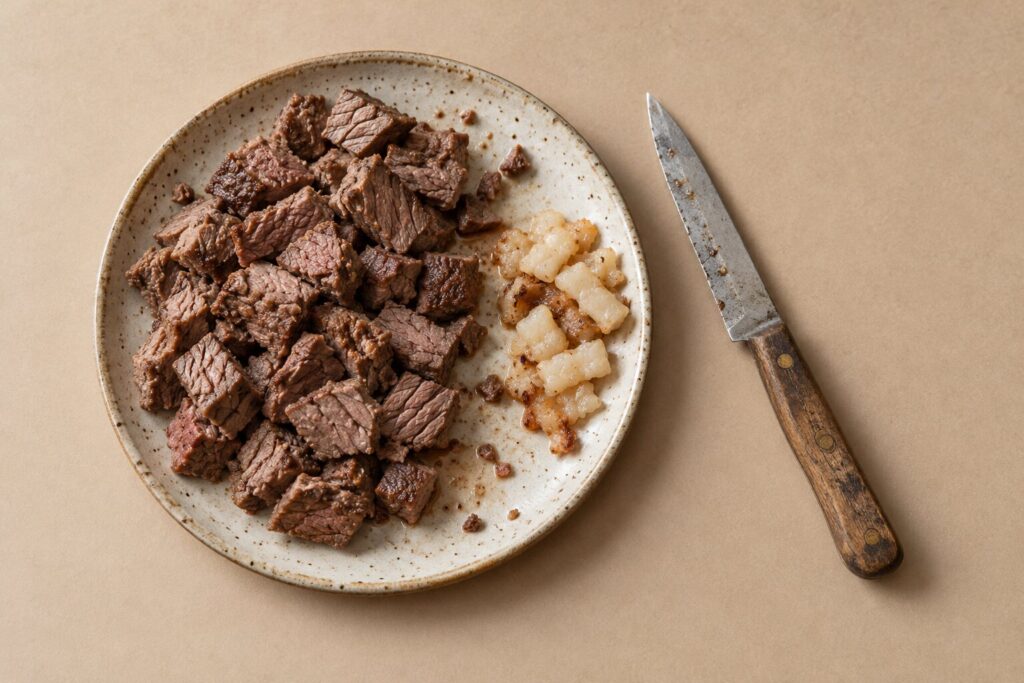
Yes. Plain, cooked, lean beef is safe for most dogs and makes an excellent high protein treat. Trim the fat, drain the grease, leave out the seasoning, and never give cooked beef bones. Organ meats like liver are good too, in small amounts.
Beef Prepared Different Ways, Ranked
| Beef | Verdict | Why |
|---|---|---|
| Plain cooked lean ground beef, fat drained | Best option | Easy to portion, easy to digest, nothing added |
| Plain cooked steak or roast, fat trimmed | Fine | Cut into small pieces. No rub, butter or garlic |
| Cooked beef heart | Fine | Really a lean muscle, and rich in protein and iron |
| Cooked beef liver or kidney | Small amounts | Very nutrient dense. Too much causes loose stools, and too much liver over time can cause vitamin A excess |
| Cooked tripe, or cooked commercial tripe products | Fine in moderation | Plain, chewy protein that most dogs love |
| Raw green tripe, including freeze dried raw | Not recommended | Carries the same bacteria risk as raw beef |
| Plain, low sodium beef broth | Fine | Only without onion and garlic |
| Raw beef | Not recommended | Risk of Salmonella, E. coli and Listeria for the dog and your household |
| Fat trimmings and pan drippings | Avoid | A common trigger for vomiting, diarrhea and pancreatitis |
| Burgers, meatballs, chili, taco meat | Avoid | Usually made with onion, garlic and heavy seasoning |
| Jerky, corned beef, hot dogs, deli roast beef | Avoid | Very salty and often seasoned with garlic or onion powder |
| Cooked beef bones | Never | Can splinter, crack teeth or cause a blockage |
Cooked 90% lean ground beef is about 215 calories per 100g, roughly 60 calories per ounce. An 80/20 blend is closer to 270, which is why draining and choosing lean matters.
Is Beef Liver Good For Dogs?
Yes, in small amounts. Beef liver is one of the richest food sources of vitamin A, and it also supplies iron, copper, folate and vitamin B12. Most dogs find it irresistible, which makes cooked, diced liver a great training treat.
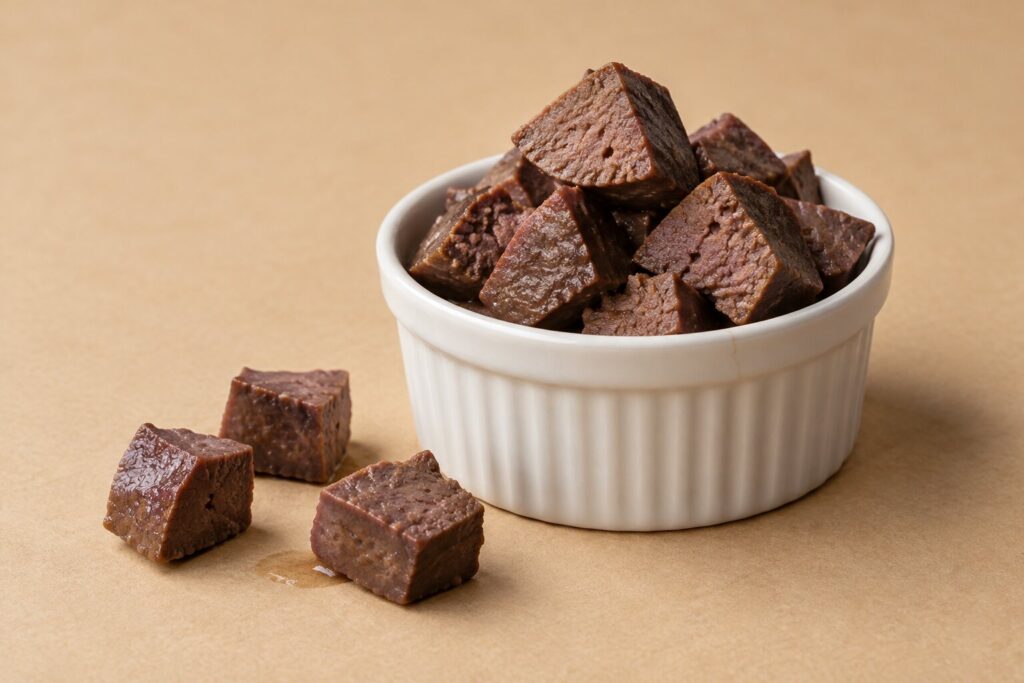
The catch is that vitamin A builds up in the body. Liver fed in large amounts, day after day, can lead to vitamin A excess, which affects the bones and joints. A large helping at once more often causes loose stools. A common guideline in homemade feeding is to keep liver to about 5% of the diet, so think of it as a few small pieces, not a meal.
Is beef liver good for puppies? A few tiny pieces as a training reward are fine. A growing puppy needs a complete puppy food to keep its minerals in balance, so do not add liver in large amounts.
Are Beef Kidneys Good For Dogs?
They are nutritious, with protein, B vitamins, iron and selenium, and they can be fed cooked in small amounts like liver. They have far less vitamin A than liver, but they are rich in purines, so dogs prone to urate bladder stones should skip them.
Is Beef Tripe Good For Dogs?
Tripe is cattle stomach. Supermarket tripe is cleaned and bleached and is basically plain, chewy protein. “Green” tripe is unbleached, usually sold raw, frozen or freeze dried as a pet food, and dogs adore its smell. You will read that green tripe is full of probiotics and digestive enzymes. There is little good evidence for that.
Cooked tripe is a fine, palatable protein in moderation. Raw green tripe, freeze dried raw included, carries the same bacteria risk as raw beef, so we do not recommend it, and if you do feed it, wash your hands and surfaces afterward.
Is Beef Fat Good For Dogs?
Not as scraps. Fat trimmings, steak edges and pan drippings are among the most common causes of vomiting and diarrhea after a family meal, and a big fatty meal can trigger pancreatitis, which can be serious. Fat in a complete dog food is different: it is measured into the recipe as an energy source, not dumped in all at once.
Can I Put Beef Broth On My Dog’s Food?
Yes, if it is plain. Most store bought broth contains onion or garlic, both toxic to dogs (see our guide to onions and garlic), and plenty of salt. Look for a broth made for dogs, or simmer beef with water only, strain out every bone, chill it and lift off the fat. A few spoonfuls over kibble can tempt a picky or recovering dog.
At parties and cookouts, chili, meatballs and sliders are usually loaded with onion and garlic, so keep those out of reach.
Can Dogs Eat Beef Bones?
Not cooked ones. Cooking makes bones brittle, and pieces can crack teeth or lodge in the esophagus or gut. Raw marrow bones do not splinter like cooked bones, but they are very hard, often break teeth, can get stuck around the lower jaw, and carry bacteria and rich marrow fat. The same warning signs apply as with chicken bones.
If your dog swallowed a cooked bone or ate onion or garlic seasoned beef, call your vet or the ASPCA Animal Poison Control Center at (888) 426-4435 (a consultation fee applies). Do not make your dog vomit unless a vet tells you to. Watch for vomiting, straining, a swollen belly or lethargy.
How Much Beef
Treats, beef included, should stay under about 10% of your dog’s daily calories. These amounts of cooked lean ground beef assume no other treats that day. Check your dog’s daily calorie needs by weight for a closer figure.

| Dog weight | Cooked lean beef per day |
|---|---|
| Under 10 lb | About 1 tablespoon |
| 10 to 25 lb | 1 to 2 tablespoons |
| 25 to 50 lb | 2 to 4 tablespoons |
| Over 50 lb | About 1/4 cup |
Liver portions should be much smaller, a few pea to thumbnail sized pieces depending on the dog.
Which Dogs Should Skip It
- Dogs with a beef allergy: beef is one of the most commonly reported food allergens in dogs, usually showing up as itchy skin, ear infections or soft stools
- Dogs with a history of pancreatitis: lean only, tiny amounts, and only with your vet’s approval
- Dogs with kidney disease: they are often on a controlled protein and phosphorus diet, so ask first
- Dogs prone to urate stones, including many Dalmatians: skip organ meats
- Dogs with copper storage disease, seen in breeds such as Bedlington Terriers and some Labradors: skip liver, which is high in copper
- Dogs on an elimination diet: nothing outside the plan
If beef leaves your dog with a mild upset stomach, see our guide to easing an upset stomach.
Beef In Dog Food
Beef is a mainstay of commercial dog food. Of the 3,128 published US dog foods in our catalog, 718 list beef as an ingredient. The brands with the most are Purina (126), Merrick (44), Blue and Instinct (37 each) and Stella & Chewy’s (29). On labels you will also see beef liver, beef meal, beef fat and beef tallow. See what each adds on our beef ingredient page, and compare foods in our dog food reviews.
A beef name on the front does not always mean beef leads the recipe, so read the ingredient list, especially if your dog is allergic to chicken or beef. For any other food, check the food checker.
In The Kibble reads labels and publishes what the numbers say. Guides are general information, not veterinary advice. Your vet knows your dog's history and we do not, so take anything here to them before you change how you feed.
Found this useful?
Comments
No comments yet. Tried this with your dog? Tell other readers how it went.