
Ingredient file // Fiber
Soybean Mill Run
Cheap soybean fiber with a useful job
Soybean mill run is mostly the hulls removed while making soybean meal, with some bean pieces still attached. In dog food it adds fiber and lowers the recipe's calorie density. Dog studies tested closely related soybean hulls, not mill run itself.
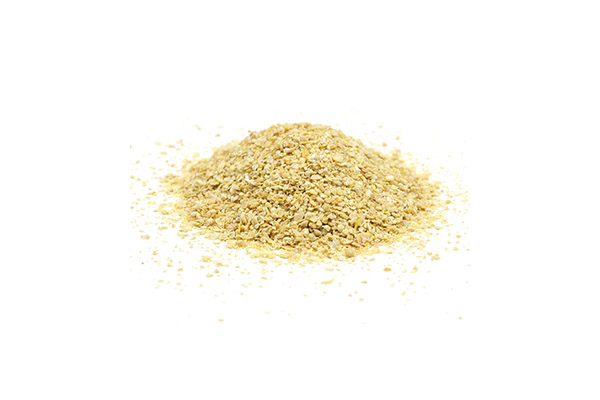
- What it is
- Soybean hulls with attached bean pieces, separated while processors make dehulled soybean meal.
- Made from
- Soybean hulls and attached bean pieces
- Main job
- Fiber for stool bulk
- Typical amount
- Not published
- Watch for
- A diagnosed soy allergy
- Not the same as
- Soybean meal
Our read // In our catalog
In 1 of every 519 foods we track
Share of foods that list it
0%
5 of the 2,595 foods with an ingredient list on file, from 1 brand. All dry dog food.
Each square is 1% of the catalog
Where it sits on the label
Median position 9. In the top five of 0 foods, so it is usually a supporting ingredient.
Above the salt
Almost always listed before the salt, so there is more of it than a pinch.
Price per lb
Median of the cheapest bag price across 3 priced foods, 7% above the catalog. The price is the food's, not the ingredient's.
Who leans on it
100%
of the foods that list it are from Hill's. 1 brand use it in total.
What it is
How it is made
Soy processors remove hulls to make soybean meal more concentrated in protein. Hulls with bean pieces still attached become a separate feed ingredient instead of returning to the meal.5,6,7
- 01 // Source Whole soybeans Beans enter the processing plant before their outer hulls are separated from the inner pieces.
- 02 // Process Cracked and separated Rollers crack the beans, and moving air separates the lighter hulls from most inner pieces.
- 03 // Process Heated and milled The hull fraction is heated and milled for feed use; some bean pieces remain attached.
- 04 // Output Soybean mill run The hull-heavy material is sold as a separate feed ingredient, distinct from protein-rich soybean meal.
What is in it
Composition, dry matter
39
% crude fiber
The average for measured soybean hulls, used here as a rough guide. Mill run also contains bean pieces.
Why it is in the bag
What the manufacturer gets
-
01
Adds dietary fiber
The hull fraction supplies fiber. In dog trials, adding more soybean hulls reduced energy digestibility without reducing protein or fat digestibility.1,5
-
02
Lowers calorie density
Replacing corn with soybean hulls lowered the energy delivered by an experimental dog food while leaving the amount of food fed similar.2
-
03
Offers a cheaper fiber
Hulls come off during large-scale soybean processing. An ingredient supplier markets them as cheaper than beet pulp, giving manufacturers a lower-cost fiber option.7,8
How much Dog trials tested soybean hulls at 3 to 9% of diet dry matter; those rates are not tested mill run doses.1
Our read // The claims
What the evidence supports
Strong: controlled studies in dogs agree. Some: small or mixed dog data. Thin: mechanism or lab work only. None: nothing, or the evidence points the other way.
-
Brands say
It adds useful fiber to dog food
Evidence
- Strong
- Some
- Thin
- None
In diets with 3 to 9% soybean hulls, calculated energy fell as inclusion rose. That supports a fiber job for hull-containing mill run, but no dog trial tested mill run itself.1,6
-
Owners say
Soy can trigger food allergies in dogs
Evidence
- Strong
- Some
- Thin
- None
A review counted soy as a trigger in 18 of 297 dogs with food reactions identified by challenge. Avoid mill run after a soy diagnosis; that count does not show soy is a common problem in all dogs.4,6
-
Brands say
Its fermentation improves a dog's gut health
Outruns the evidence
Evidence
- Strong
- Some
- Thin
- None
Four dogs fed 5.6% soybean husk had higher fecal fermentation markers than dogs fed cellulose. The study tested husk, not mill run, and did not measure a clinical gut-health benefit.3
-
Brands say
It makes dogs lose weight
Outruns the evidence
Evidence
- Strong
- Some
- Thin
- None
A 12-dog trial replaced corn with 16% soybean hulls for 56 days. The food delivered less energy, but weight and body-condition changes did not differ. Mill run was not tested.2
-
Critics say
It is worthless filler
Outruns the evidence
Evidence
- Strong
- Some
- Thin
- None
Dog diets with 3 to 9% soybean hulls delivered less usable energy as inclusion rose. That is a real fiber job, even though mill run is a low-cost ingredient and supplies modest protein.1,5,8
Straight answers
What owners ask
-
Q01
Is it just filler?
NoIt chiefly adds fiber, which gives the recipe bulk and lowers its calorie density. That is a useful job. It should not be counted on as the food's main protein source.1,2,5
-
Q02
Does mill run mean sweepings?
NoThe US feed definition describes hulls with bean pieces still attached after soybean meal production. It does not describe floor sweepings or a general mix of soybean processing waste.6
-
Q03
Is it the same as soybean meal?
NoSoybean meal is the protein-rich material made from the inner bean. Mill run is the hull-heavy fraction separated during that process, so its main role in dog food is fiber.5,6,7
-
Q04
Should I avoid it for allergies?
If diagnosedA dog with a diagnosed soy allergy should avoid soybean mill run because bean pieces remain in it. For other dogs, the ingredient name alone is not evidence of an allergy problem.4,6
Who uses it
Brands, best sellers and the company it keeps
Top brands, by foods that list it
Usually listed with, share of the foods that list it
- Whole Grain Wheat 80%
- Whole Grain Corn 80%
- Chicken Meal 60%
- Cracked Pearled Barley 60%
- Brown Rice 60%
- Powdered Cellulose 60%
- Natural Chicken Liver Flavor 60%
- Brewers Rice 40%
- Chicken Fat 40%
- Whole Grain Sorghum 40%
- Chicken By-Product Meal 40%
- Pork Fat 40%
Our read // On the bag
Read it as fiber, then judge the food
On a bag, treat soybean mill run as a fiber ingredient with a little protein. Check the food's total fiber and calories alongside its main protein sources. Skip it for a dog with a diagnosed soy allergy; otherwise, judge the complete food.
Sources
What we read
Checked October 1, 2026.
- 1 Soybean hulls as a dietary fiber source for dogs
- 2 Body condition of dogs fed diets containing soya hulls
- 3 Effect of soybean husk supplementation on the fecal fermentation metabolites and microbiota of dogs
- 4 Critically appraised topic on adverse food reactions of companion animals (2): common food allergen sources in dogs and cats
- 5 Soybean hulls
- 6 Official Names and Definitions of Feed Ingredients
- 7 Soybean Processing
- 8 Perception Is Not Reality: Soybean Hulls