Can Dogs Eat Nutmeg? Why This Fall Spice Is A Never Food
No. Nutmeg contains myristicin, which can cause disorientation, a racing heart and seizures in dogs. A pinch in pie is rarely serious, but the jar is.
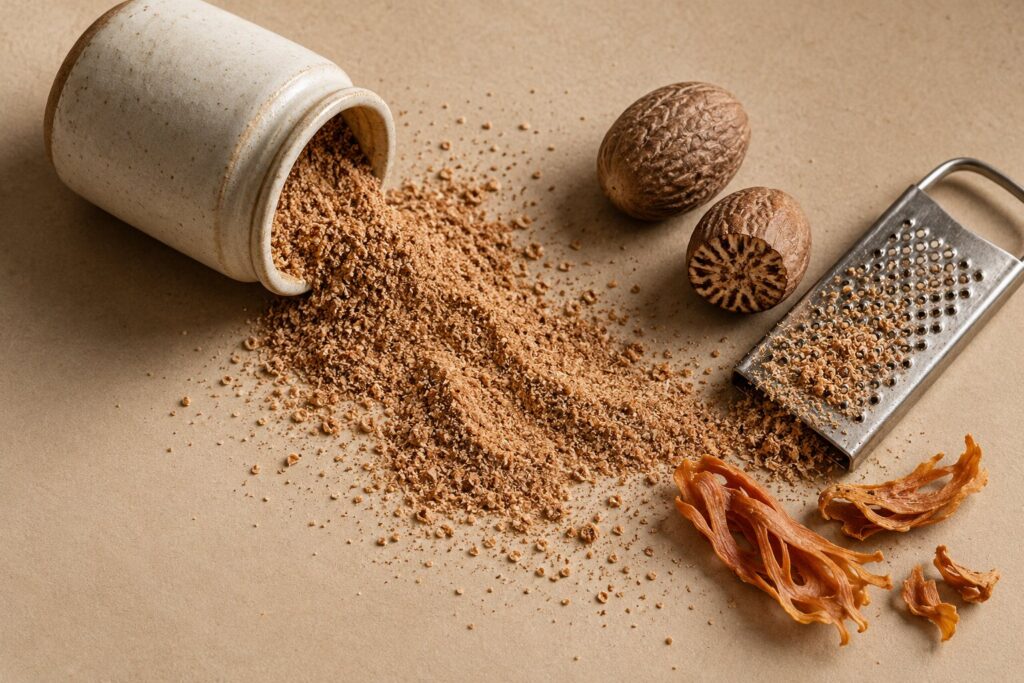
No. Nutmeg contains myristicin, a compound that can cause disorientation, a racing heart and high blood pressure in dogs, and seizures in large amounts. There is some reassurance here: the light dusting in a slice of pie or a cookie is unlikely to cause serious poisoning. The real danger is a dog that gets into the spice jar, chews a whole nutmeg or eats a heavily spiced dish.
If Your Dog Has Just Eaten Nutmeg
If your dog got into ground nutmeg from the jar or ate a whole nutmeg, or if it is acting strangely after eating anything spiced, call your vet now or one of the US animal poison lines (both charge a consultation fee):
- ASPCA Animal Poison Control: (888) 426-4435
- Pet Poison Helpline: (855) 764-7661
Keep the jar or package handy, and have a rough idea of how much is missing and when it happened. Do not make your dog vomit unless a vet tells you to. A dog that is already disoriented or shaky can inhale vomit into its lungs. Never use salt to cause vomiting, and do not give hydrogen peroxide or any home remedy without a vet’s instructions.
If your dog licked a bit of pumpkin pie or ate one spiced cookie, it will most likely be fine. Watch for the signs below over the next day, and call if any of them appear. Also check what else was in the food. Raisins, chocolate and xylitol are much bigger worries than the spice.
Why Nutmeg Is Toxic To Dogs
Nutmeg is the seed of the Myristica fragrans tree. Its oil contains myristicin, along with smaller amounts of related compounds such as elemicin and safrole. Myristicin acts on the nervous system, and it is the same compound behind nutmeg’s reputation for causing hallucinations in people who eat large amounts.
Mace, the lacy red covering around the seed, comes from the same plant and contains the same compounds. Treat it exactly like nutmeg.
How Much Nutmeg Is Dangerous?
There is no well established toxic dose for dogs, and we are not going to invent one. What poison centers agree on is the general pattern: the small amounts used in baking rarely cause trouble, while larger amounts, such as a spilled or chewed jar of ground nutmeg or one or more whole nutmegs, can cause real poisoning.
Size matters. A small dog is at more risk from the same amount than a large one. A whole nutmeg is also a hard, round seed, so a small dog that swallows one could choke on it or get it stuck in the gut.
Nutmeg Foods, Ranked
Nutmeg itself is always a Never food. The ratings below reflect how much nutmeg each food contains, and what else comes with it.
| Food | Verdict | Why |
|---|---|---|
| Nutmeg essential oil | Never, call now | The most concentrated form of myristicin |
| Whole nutmeg | Never, call now | A concentrated dose, plus a choking and blockage risk |
| Ground nutmeg from the jar | Never, call now | A dog licking up a spill can take in a large amount fast |
| Mace | Never | Same plant, same compounds |
| Pumpkin spice and apple pie spice blends | Never | Nutmeg is a standard part of the mix |
| Eggnog | Never | Nutmeg plus sugar, fat and dairy, and often alcohol |
| Pumpkin spice latte | Avoid | The spice is a minor issue next to the caffeine |
| Pumpkin pie, spice cake, cookies | Avoid | Little nutmeg, but sugar and fat, and some recipes add raisins, chocolate or xylitol |
| A lick of a baked good with a pinch of nutmeg | Unlikely to harm | Not a treat, but rarely a reason to panic |
If the latte is what went missing, the caffeine is the bigger concern. Our guide to coffee and tea explains why.
Signs Of Nutmeg Poisoning
- Disorientation, confusion or acting as if seeing things that are not there
- A fast heart rate and high blood pressure
- Restlessness, agitation or, in some dogs, unusual drowsiness
- Dry mouth, vomiting and belly pain
- Tremors and, with large amounts, seizures
Signs usually start within a few hours of eating and can last up to about 48 hours. Any of them after a known exposure is a reason to call your vet.
What The Vet Will Do
There is no antidote for myristicin, so treatment is about clearing what is left and supporting the dog until it wears off. If the exposure was recent and your dog is still acting normally, the vet may make it vomit and give activated charcoal. A dog already showing signs may need sedation for agitation, medication for tremors or seizures, IV fluids and monitoring of its heart rate and blood pressure. With prompt care, most dogs recover well.
Where Dogs Find Nutmeg
Mid October is peak nutmeg season. Halloween baking, pumpkin spice everything and, soon, Thanksgiving pies and holiday eggnog all bring it out of the cupboard. Common sources:

- Spice jars on low shelves or left open on the counter during baking
- Whole nutmegs and a grater left out after use
- Raw batter, pie filling and spiced cookie dough
- Mulled cider and mulled wine, which also bring sugar or alcohol
- Potpourri and scented crafts made with whole spices
If you want to share the season with your dog, plain canned pumpkin is safe. Make sure it is pure pumpkin, not pie filling, which is already spiced. Check sweetened baked goods for xylitol, raisins and chocolate, which are all more dangerous than a pinch of spice.
Which Dogs Should Skip It
No dog should be given nutmeg on purpose. These dogs are at more risk if they find it:
- Small breeds and puppies, because the same amount means a bigger dose for them
- Dogs with heart disease or high blood pressure, since myristicin raises both heart rate and blood pressure
- Dogs with epilepsy or a history of seizures
- Senior dogs and dogs with liver or kidney disease
- Known counter surfers and trash raiders, which find the jar long before you notice
Nutmeg In Dog Food
You will not find it in a complete diet. Of the 3,117 published US dog foods in our catalog, not one lists nutmeg as an ingredient.
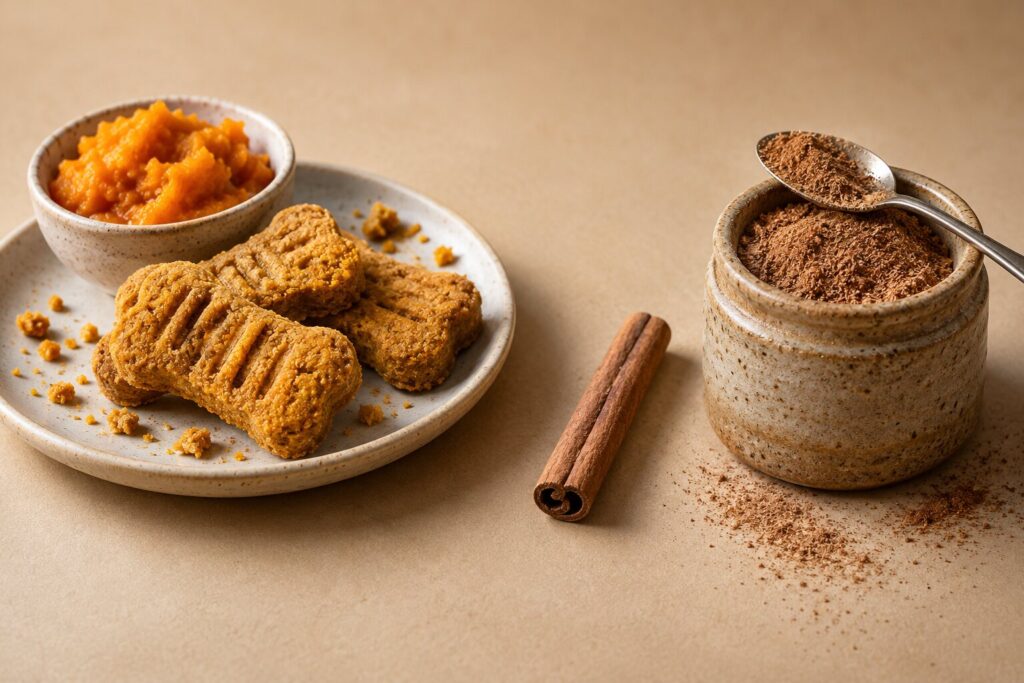
Seasonal “pumpkin spice” dog treats are a different story, because they are made to sound like the human version. Most use pumpkin with cinnamon or ginger, but read the ingredient list. If you see nutmeg or mace, choose another treat. Our dog food reviews go through what is actually in the bag.
Want to test what you know? Try the Safe or Never food quiz, and before you share anything else from the kitchen, look it up in the food checker.
In The Kibble reads labels and publishes what the numbers say. Guides are general information, not veterinary advice. Your vet knows your dog's history and we do not, so take anything here to them before you change how you feed.
Found this useful?
Comments
No comments yet. Tried this with your dog? Tell other readers how it went.