Can Dogs Eat Corn? Kernels Yes, Cobs Never
Plain corn kernels are fine. Corn on the cob is a leading cause of intestinal blockage, and a dog that ate one needs a vet call now.
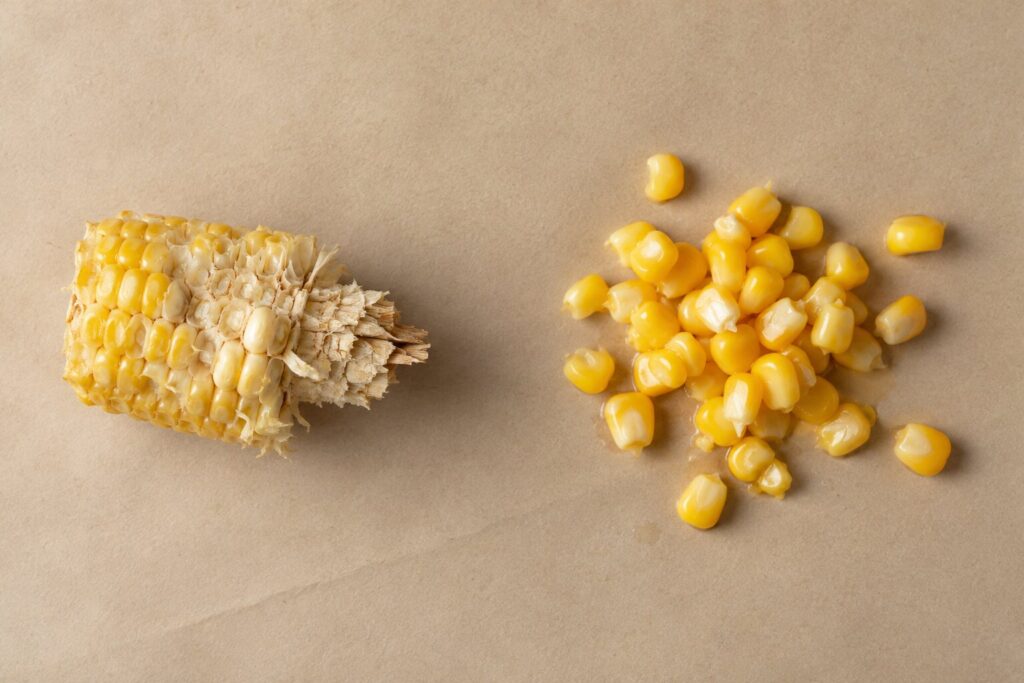
Corn kernels, yes. Corn on the cob, never. Plain cooked kernels are digestible and corn is one of the most common ingredients in dog food. The cob is one of the most common reasons dogs need surgery to remove a blockage, because it is the perfect size and shape to stick in the intestine and it does not break down.
If Your Dog Has Just Eaten A Corn Cob
Call your vet now, even if your dog seems fine. Do not try to make it vomit at home: a cob can get stuck in the esophagus on the way back up.
A cob can sit in the stomach for a day or more before moving into the intestine and getting stuck, so a dog that looks normal tonight can be very sick tomorrow. Your vet may want an X-ray, and if the cob is still in the stomach, they can sometimes remove it with an endoscope, without surgery. Waiting for signs takes that option away.
Signs Of A Blockage
- Vomiting, especially repeated vomiting or bringing up water
- Refusing food
- A painful or tense belly, or a hunched posture
- Straining to pass stool, or no stool at all
- Lethargy and weakness
These can show up within hours or take a few days. Any of them after a dog has eaten a cob is an emergency.
Why The Cob Is So Dangerous
Cobs are fibrous and absorbent, so they do not break down in the stomach, and they swell a little as they soak up fluid. Even a short piece is wide enough to lodge in a medium dog’s intestine. Dogs also tend to gulp cobs in big pieces because they are covered in butter and salt. Cutting a cob into small pieces does not make it safe.
The real risk is the trash. Put cobs straight into a bin the dog cannot reach, or take them outside, and keep them off plates at barbecues where guests may hand one down.
Corn Kernels Are Fine
Plain cooked corn kernels, off the cob, with no butter or salt, are safe for dogs in small amounts. They are mostly starch with some fiber and a little protein. A tablespoon or two for a medium dog is plenty. Some kernels may pass through undigested, which is normal and harmless.

Corn Foods, Ranked
| Food | Verdict | Why |
|---|---|---|
| Plain cooked kernels, fresh or frozen | Fine, in small amounts | Digestible starch |
| Canned corn | Occasionally | Rinse it. Often salted |
| Buttered, salted corn | Avoid | Fat and salt |
| Corn on the cob, or any piece of cob | Never | A leading cause of intestinal blockage |
| Corn husks and silk | Avoid | Indigestible and can cause a blockage too |
| Plain air-popped popcorn | Fine | See the popcorn guide |
| Cornbread and corn muffins | Avoid | Sugar, butter, and sometimes jalapeños or onion |
| Tortilla and corn chips | Avoid | Salt and oil; flavored ones often contain onion and garlic |
| Creamed corn | Avoid | Sugar, cream and salt |
Is Corn In Dog Food Bad?
Corn has a poor reputation in dog food, much of it from marketing. Properly cooked and ground, as it is in kibble, it is a digestible source of energy, and corn gluten meal is a concentrated plant protein. Corn allergy is real but uncommon; beef, dairy and chicken are reported far more often.
The fair criticism is different. Corn ingredients, like rice, potatoes, peas and other starches, add carbohydrate, and a food heavy in starch has less room for meat. What matters is how much of the food is starch overall, not whether that starch came from corn. You will see corn on labels as whole grain corn, ground yellow corn and corn meal, and as corn gluten meal or corn protein meal, which are concentrated protein. Our study of 1,600 dry foods found that dropping grains like corn cuts carbohydrates by only about 5 points on average, because peas and lentils usually take their place.
For other plain starches dogs can share, see rice, sweet potato and potatoes. For any other food, check the food checker.
In The Kibble reads labels and publishes what the numbers say. Guides are general information, not veterinary advice. Your vet knows your dog's history and we do not, so take anything here to them before you change how you feed.
Found this useful?
Comments
No comments yet. Tried this with your dog? Tell other readers how it went.