Can Dogs Eat Grapes or Raisins?
No. Grapes and raisins can cause sudden kidney failure, and there is no amount that is known to be safe for every dog.
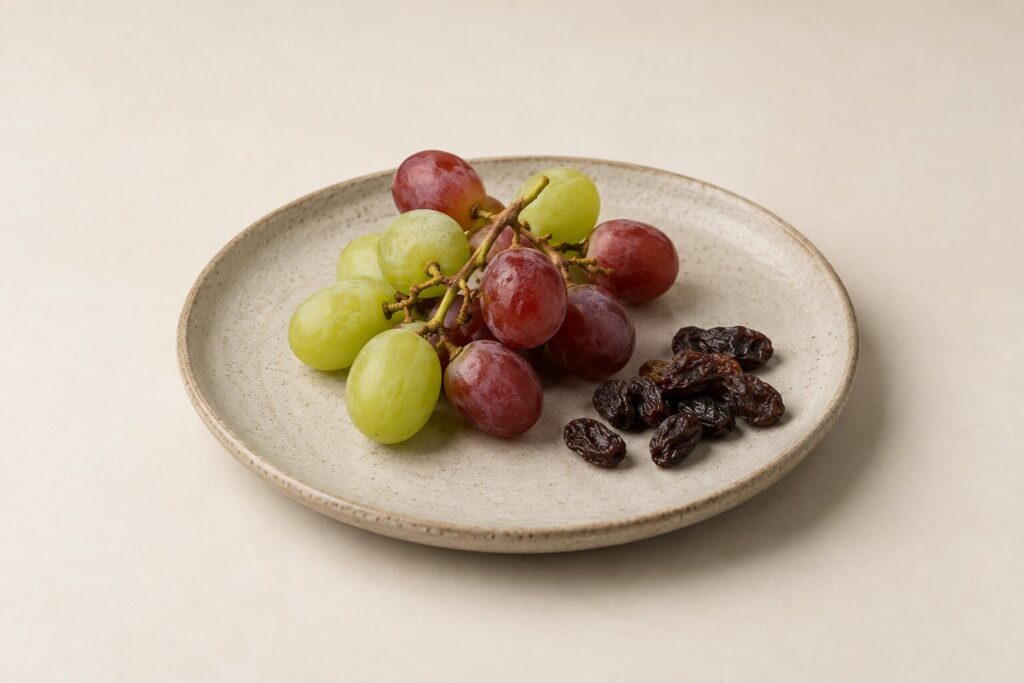
No, and this is one where “a few won’t hurt” is genuinely dangerous advice. Grapes and raisins can cause sudden kidney failure in dogs, and unlike chocolate there is no reliable safe amount: some dogs eat a bunch with no effect, others have been badly poisoned by a handful. Because nobody can tell in advance which dog is which, vets treat every exposure as a potential emergency.
If Your Dog Has Just Eaten Grapes Or Raisins
Call your vet now, or one of the US animal poison lines (both charge a consultation fee):

- ASPCA Animal Poison Control: (888) 426-4435
- Pet Poison Helpline: (855) 764-7661
Do not wait for symptoms. By the time a dog stops producing urine, the kidneys are already badly damaged, and the whole point of early treatment is to stop that happening. Early decontamination and IV fluids are far more effective, and far cheaper, than treating kidney failure after it arrives.
What Makes Them Toxic
For decades the cause was a mystery, which is why the advice has always been “any amount, any grape”. Since 2021 the leading explanation has been tartaric acid, which grapes contain in varying amounts, and which dogs appear unusually sensitive to. It fits a lot of what vets had seen: the toxicity varies between grapes and batches, and poison centers have linked similar kidney injuries in dogs to cream of tartar (in homemade play dough) and tamarind, both rich in tartaric acid.
It is still a working explanation rather than a settled one, and it does not give you a safe dose. The advice has not changed.
Every Kind Counts
- Red, green and black grapes, seeded and seedless, organic or not
- Raisins, sultanas and Zante currants, which are small dried grapes, and more concentrated by weight
- Foods made with them: raisin bread and bagels, trail mix, granola, oatmeal raisin cookies, cinnamon raisin bread, fruitcake and cereal bars
- Grape juice and grape jelly. Many vets treat these as a risk too, given what is now suspected about the cause
Signs Of Grape Or Raisin Poisoning
- Within about 6 to 24 hours: vomiting, often with pieces of grape or raisin in it, then diarrhea, loss of appetite and lethargy.
- Over the next one to three days: belly pain, weakness, heavy thirst, bad breath, and then the serious sign: little or no urine. That means the kidneys are failing.
Some dogs show nothing at all for the first day, which is exactly why the call has to happen at the point of eating, not the point of symptoms.
How Many Raisins Are Toxic?
There is no number, and that is the honest answer rather than a dodge. Poison centers have seen kidney injury in dogs after small amounts, while other dogs have eaten far more and stayed well. Raisins are concentrated, so a handful of raisins counts for much more than a handful of grapes, and a small dog is at more risk from the same amount than a big one. Because nobody can tell in advance which dog will react, one raisin is treated as a reason to call.
What The Vet Will Do
If it was recent, the vet will usually make your dog vomit and may give activated charcoal. Many vets then recommend 48 to 72 hours on IV fluids to support the kidneys, with blood tests to check kidney values before and after. Dogs treated early usually do well. Dogs that reach the stage of producing no urine have a much harder course, and some do not survive, which is the whole case for acting early.
Why Some Dogs Seem Fine
You will meet people whose dogs have eaten grapes for years. That is real, and it is not evidence of safety. The toxin content of grapes varies, individual dogs vary, and a dog that got away with it once has not been shown to be immune. A food with an unpredictable, potentially fatal outcome and no benefit a dog cannot get elsewhere is simply not worth the gamble.
Safer Fruit To Give Instead
If your dog likes something sweet and juicy, blueberries, seedless watermelon apple slices, fresh pineapple and a little banana are all safe in sensible amounts and scratch the same itch. For anything else, check the food checker first.
In The Kibble reads labels and publishes what the numbers say. Guides are general information, not veterinary advice. Your vet knows your dog's history and we do not, so take anything here to them before you change how you feed.
Found this useful?
Comments
No comments yet. Tried this with your dog? Tell other readers how it went.