Can Dogs Eat Raw Yeast Dough? Why Bread Dough Is A Never Food
No. Raw yeast dough keeps rising in a dog's stomach and ferments into alcohol, so any amount is a reason to call your vet right away.
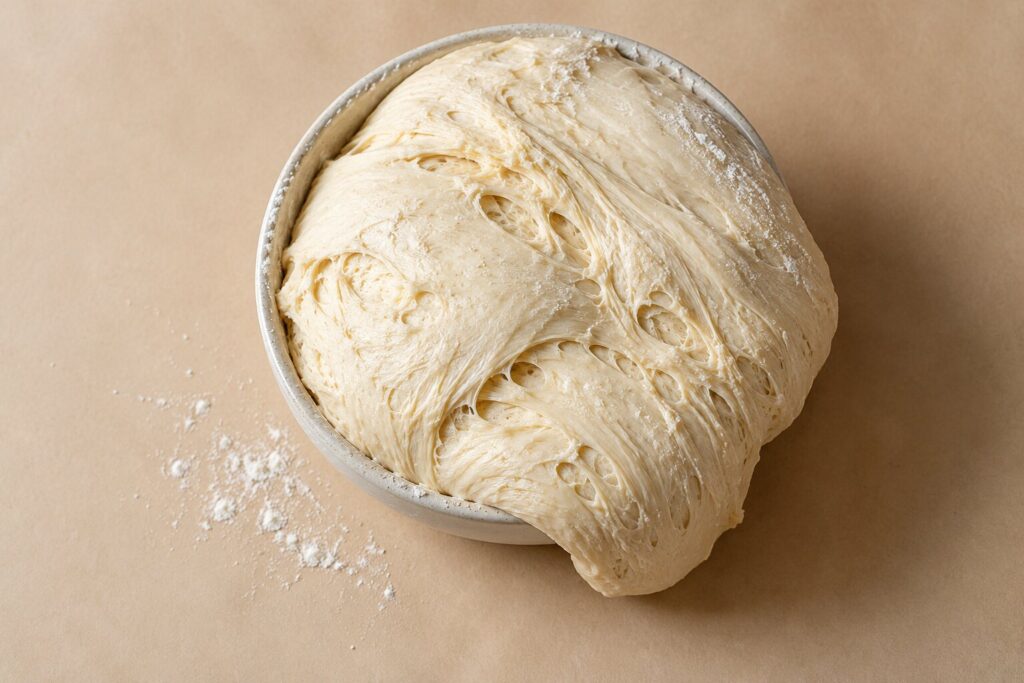
No. Raw yeast dough is a real emergency for dogs, for two reasons at once: it keeps rising in the warm, wet stomach, and the yeast ferments sugars into alcohol that passes into the bloodstream. If your dog steals a ball of pizza or bread dough off the counter, call the vet right away, even if your dog seems fine.
If Your Dog Has Just Eaten Raw Dough
Call your vet now, or one of the US animal poison lines (both charge a consultation fee):
- ASPCA Animal Poison Control: (888) 426-4435
- Pet Poison Helpline: (855) 764-7661
What not to do:
- Do not make your dog vomit unless a vet tells you to. Dough is sticky and swelling, and home remedies like hydrogen peroxide or salt can cause harm of their own.
- Do not wait for the belly to swell. The dough keeps rising and alcohol keeps building over the next few hours.
- Do not let a wobbly, sleepy dog “sleep it off”. After eating dough, that dog may be drunk, and it needs treatment.
Have the recipe or package handy. Tell the vet roughly how much dough, when it was eaten, and whether it had raisins, chocolate, nutmeg or a sugar-free sweetener in it. Raisins, chocolate and xylitol are each toxic on their own, and they change what the vet needs to do.
Why Raw Dough Is Dangerous For Dogs
The first problem is physical. A dog’s stomach is warm and moist, which is close to ideal for rising dough. The dough keeps expanding after it is swallowed and stretches the stomach. A swollen stomach can press on the diaphragm and major blood vessels, and in some dogs it can twist. That twist is gastric dilatation and volvulus (GDV, or bloat), and it is fatal without surgery.
The second problem is chemical. As the yeast ferments, it makes ethanol, the same alcohol found in beer. The ethanol is absorbed into the blood and can cause alcohol poisoning: low blood sugar, low body temperature, acid buildup in the blood (metabolic acidosis), and in severe cases seizures, coma and breathing failure. Dogs handle alcohol far worse than people do.
How Much Raw Dough Is Dangerous?
There is no established safe amount, and no reliable number to measure against. What matters is the size of the dog, how much dough it ate, how active the yeast was, and how long ago it happened. A small dog can be in trouble from a piece a big dog would barely notice, because the dough expands relative to a small stomach. Treat any amount of raw yeast dough as a reason to call.
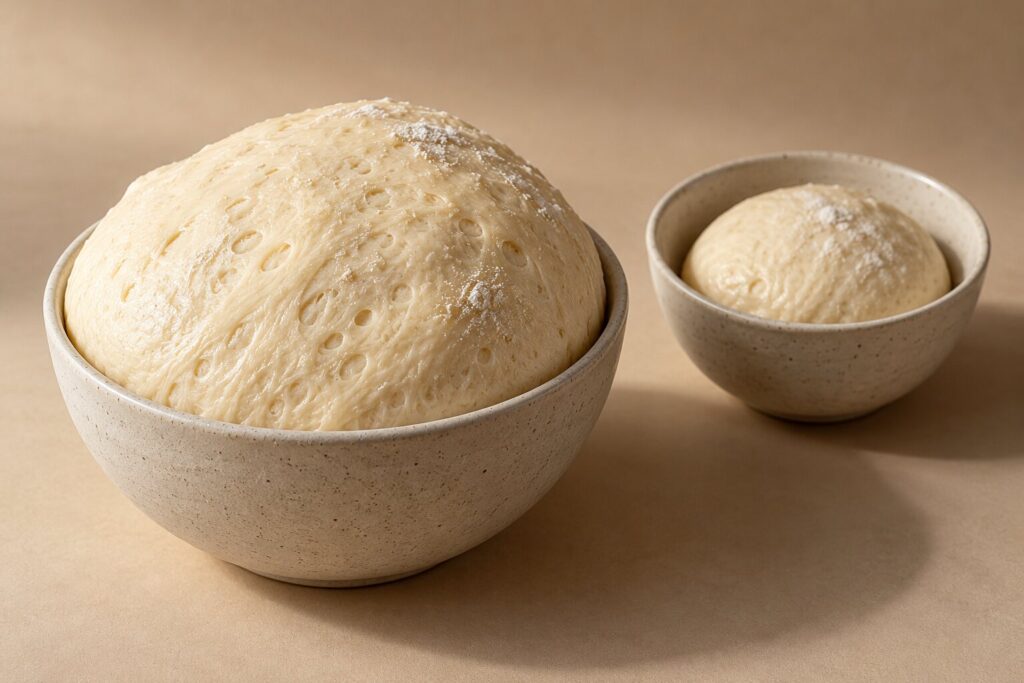
Raw Dough And Bread, Ranked
| Raw dough and bread | Verdict | Why |
|---|---|---|
| Raw bread, pizza or roll dough | Never | Live yeast keeps rising and makes alcohol in the stomach |
| Frozen dough rolls thawing on the counter | Never | The same live yeast, and dogs often eat several at once |
| Sourdough starter or discard | Never | A live culture of yeast and bacteria that ferments and makes alcohol |
| Baked bread with raisins, garlic, onion or chocolate | Never | The yeast is dead, but the add-ins are toxic |
| Dry or fresh yeast on its own | Call your vet | Less studied than dough, but it is still live yeast that can ferment in the gut |
| Raw cookie dough or cake batter | Avoid | No yeast, but raw flour can carry E. coli, plus raw egg, sugar, fat and sometimes chocolate |
| Plain baked bread | Small bites only | Baking kills the yeast. Fine as a rare scrap, but it is empty calories |
The oven is the dividing line. Once bread is baked, the yeast is dead and cannot rise or ferment, so a bite of a plain dinner roll is a minor matter. The same roll an hour earlier, still rising on the counter, is a vet call.
Signs Of Raw Dough Poisoning
- Stomach signs, often within an hour or two: a swollen, tight belly, retching with little or nothing coming up, drooling, restlessness, pacing and signs of pain.
- Alcohol signs, as fermentation goes on: wobbly walking, confusion, unusual sleepiness, weakness, vomiting, slow breathing, feeling cold to the touch, and in severe cases seizures or collapse.
Retching that brings nothing up, combined with a swollen belly, is an emergency whatever the cause. Go straight to an emergency vet.
What The Vet Will Do
Treatment depends on how long ago it happened and how your dog is doing. If it was very recent and the dog has no signs, the vet may try to make it vomit, though sticky dough does not always come up. Some vets flush the stomach with cold water, which slows the yeast and helps break up the mass. Dogs showing alcohol signs usually need IV fluids, support for blood sugar and body temperature, and monitoring until the alcohol clears. A large dough mass or a twisted stomach may need surgery.
Dogs treated early usually do well, which is the whole case for calling before signs appear.
Where Dogs Find It
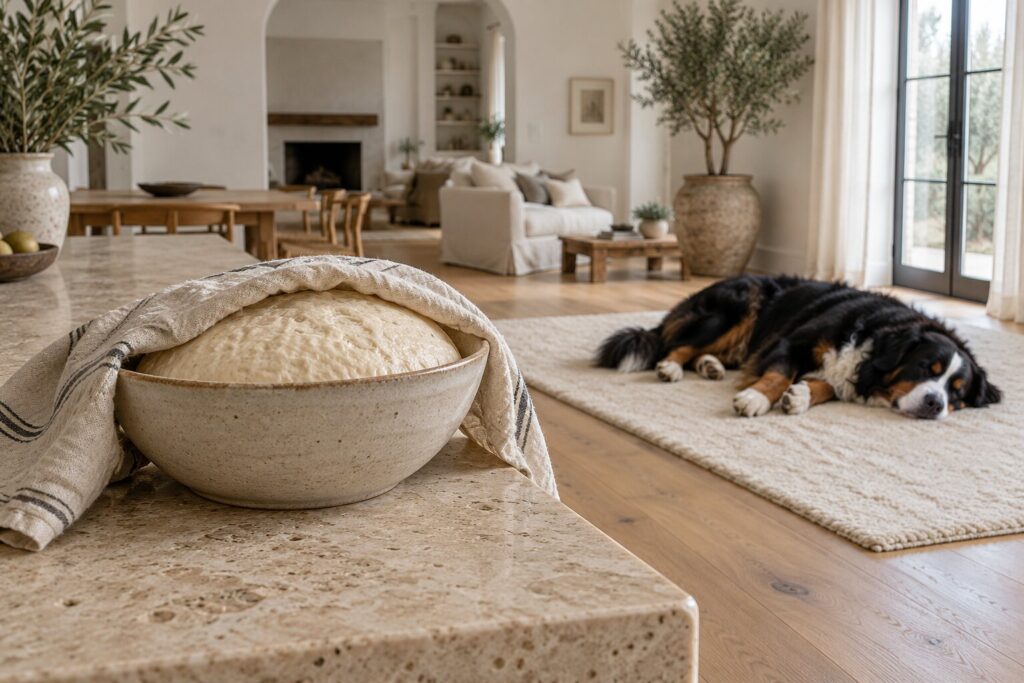
- Bread or pizza dough rising on the counter, often in a warm spot a dog can reach
- Frozen rolls set out to thaw before dinner
- Sourdough starter jars and discard
- Scraps dropped while baking with children
- Trash cans holding leftover dough
This time of year makes it more likely. Halloween party baking, breadstick “bones”, mummy pizzas and then Thanksgiving rolls all put rising dough at nose height. Let dough rise inside a turned-off oven or microwave, or behind a closed door.
Which Dogs Should Skip It
Every dog should skip raw yeast dough. These dogs are at the most risk if they get into it:
- Small dogs and puppies, where a little dough is a lot for their size
- Large, deep-chested breeds such as Great Danes, German Shepherds, Standard Poodles and Weimaraners, which are already prone to bloat
- Dogs with diabetes, liver disease or a history of seizures, which cope poorly with alcohol and low blood sugar
- Senior dogs and dogs with heart disease
- Known counter surfers. If your dog has stolen food before, assume it will find the dough
Raw Dough In Dog Food
You will not find raw yeast dough in commercial dog food. Of the 3,091 published US dog foods in our catalog, 0 list it as an ingredient. What you may see on a label is brewers dried yeast or another dried yeast. These yeasts are inactive by the time they reach the bag, so they cannot rise or make alcohol. They are added for flavor and B vitamins, and they are a different thing from the live yeast in a ball of dough.
Baked dog biscuits are safe on this count too, since baking kills any yeast. If you want to see what is actually in your dog’s food, our dog food reviews go through labels ingredient by ingredient.
Want to test what you know? Try our Safe or Never food quiz, and for any other food, check the food checker.
In The Kibble reads labels and publishes what the numbers say. Guides are general information, not veterinary advice. Your vet knows your dog's history and we do not, so take anything here to them before you change how you feed.
Found this useful?
Comments
No comments yet. Tried this with your dog? Tell other readers how it went.