Can Dogs Eat Ham?
A bite will not poison a dog, but ham is salty, fatty and often glazed, and the holiday ham bone is a real hazard.
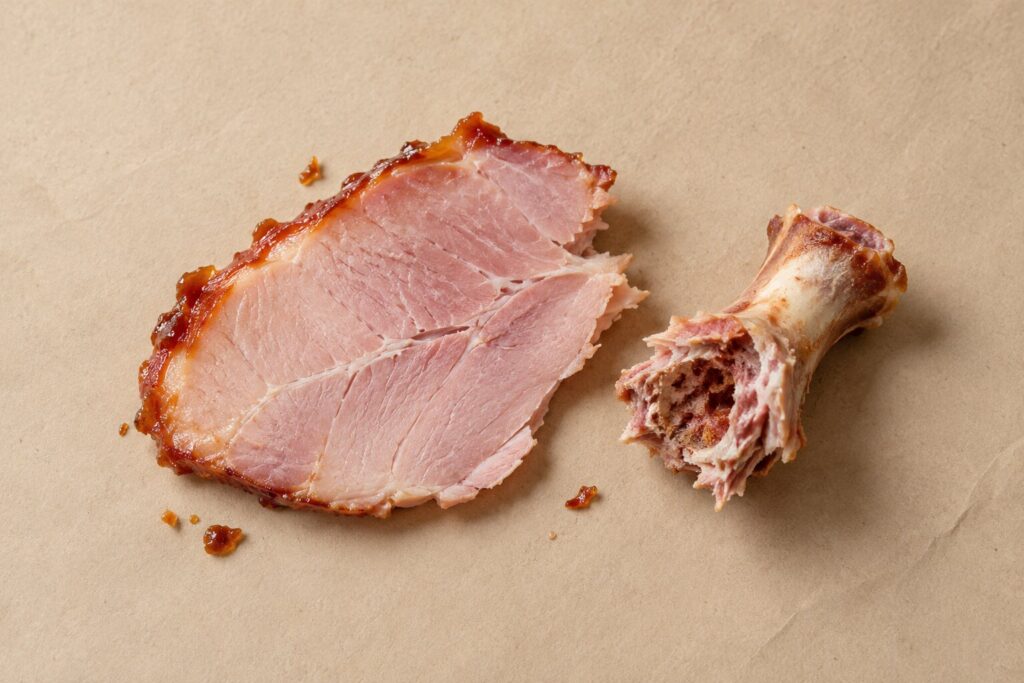
A small piece of ham will not poison a dog, but it is one of the worst everyday meats to share. Ham is cured in salt, often glazed with sugar, and fatty, and the bone from a holiday ham is a real hazard. Plain cooked turkey or chicken does everything ham does for a dog with none of the downsides.
Why Ham Is A Poor Treat
- Salt. Cured ham carries roughly 1,000 to 1,500mg of sodium per 100g, many times what plain cooked meat has. A big share makes dogs very thirsty and can bring vomiting and diarrhea.
- Fat. Holiday hams and fatty trimmings are a classic trigger for pancreatitis, the painful inflammation that fills emergency vets after big meals.
- Glazes and rubs. Honey, brown sugar, and spice rubs that may include garlic or onion powder.
- Curing agents. Nitrites and nitrates are fine in the amounts people eat, but they are one more reason ham is not a food to feed often.
Ham Products, Ranked
| Ham | Verdict | Why |
|---|---|---|
| A small piece of lean ham, fat trimmed | Occasionally | Salty, but a bite will not hurt a healthy dog |
| Deli ham slices | Avoid as a habit | Very high in sodium for their size |
| Glazed holiday ham | Avoid | Sugar, salt, fat, and sometimes garlic in the glaze |
| Ham fat and trimmings | Avoid | Pure fat. A pancreatitis risk |
| Ham bone, cooked or smoked | Never | Splinters and can block or tear the gut |
| Prosciutto and other dry cured ham | Avoid | Even saltier than cooked ham |
| Ham in split pea or bean soup | Avoid | Salt, plus onion and garlic in the soup |
Ham Bones
The holiday ham bone is the part that most often turns a snack into a vet visit. Cooked and smoked bones are hard and brittle. They can break teeth, splinter into sharp pieces, or get stuck in the throat, stomach or intestines. Pet stores sell smoked ham bones as chews, and the FDA has collected reports of illness and deaths linked to these and other processed bone treats.
If your dog swallowed a ham bone or a large piece of one, do not try to make it vomit. Call your vet, and watch for retching, drooling, a painful belly, refusing food, straining or blood in the stool over the next few days. The same applies to other cooked bones, as our chicken bones guide explains.
Salt Poisoning
A slice of ham will not cause salt poisoning. A dog that eats a whole ham, a pack of deli meat, or ham plus other salty leftovers can drink a lot of water, vomit, have diarrhea, and in serious cases become wobbly or confused. Keep fresh water out, and call your vet if your dog ate a large amount, especially a small dog, or if you see anything beyond an upset stomach.
If Your Dog Stole The Holiday Ham
- Check whether the bone is missing. That is the most urgent part.
- Make sure fresh water is available.
- Watch for the pancreatitis signs over the next day or two: repeated vomiting, a hunched or “praying” posture, belly pain and refusing food.
- Call your vet for any of those, for a small dog that ate a lot, or if the glaze or rub contained garlic or onion.
Better Holiday Meat For Dogs
Plain cooked turkey breast or chicken, with no skin, bones or seasoning, is the easy swap. Set a few pieces aside before the bird is seasoned. Bacon belongs with ham: fatty, salty and best skipped.

Which Dogs Should Never Get Ham
- Dogs with a pancreatitis history, or a breed prone to it.
- Dogs with heart or kidney disease on a low sodium diet.
- Overweight dogs. Ham is calorie dense for the little it offers.
- Dogs with a pork allergy, or on an elimination diet.
Pork In Dog Food
Plain pork is a perfectly good protein, and it appears in commercial food as pork or pork meal. The trouble with ham is not the pig, it is the curing, the salt and the fat. For any other food question, check the food checker.
In The Kibble reads labels and publishes what the numbers say. Guides are general information, not veterinary advice. Your vet knows your dog's history and we do not, so take anything here to them before you change how you feed.
Found this useful?
Comments
No comments yet. Tried this with your dog? Tell other readers how it went.