
Ingredient file // Grain
Whole Wheat
A useful starch from the entire wheat kernel
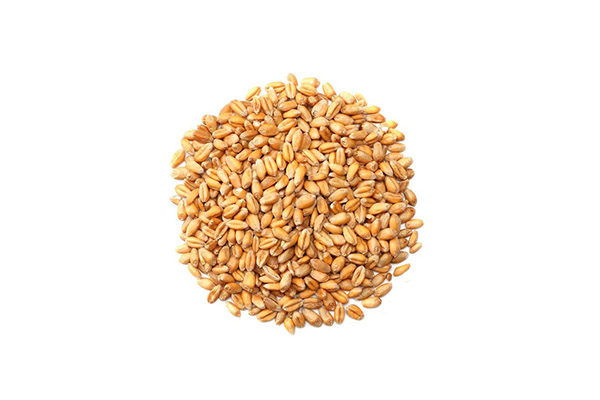
Whole wheat is wheat with its bran, germ and starchy center retained. In kibble, cooked starch gives dogs energy and helps the pieces hold together. Its extra fiber has no proven special health effect in dogs.
- What it is
- Wheat kernels used whole or ground, with the bran, germ and starchy center retained.
- Made from
- Mature wheat kernels
- Main job
- Starch for energy and structure
- Typical amount
- Varies; a dog trial fed 25% as fed
- Watch for
- Wheat reactions and grain mycotoxins
- Not the same as
- Wheat middlings
Our read // In our catalog
In 1 of every 507 foods we track
Share of foods that list it
0%
5 of the 2,533 foods with an ingredient list on file, from 1 brand. All dry dog food.
Each square is 1% of the catalog
Where it sits on the label
Median position 4. In the top five of 5 foods, so it is usually a main ingredient.
Above the salt
Almost always listed before the salt, so there is more of it than a pinch.
Price per lb
Median of the cheapest bag price across 5 priced foods, 77% below the catalog. The price is the food's, not the ingredient's.
Who leans on it
100%
of the foods that list it are from Kibbles n Bits. 1 brand use it in total.
What it is
How it is made
Wheat is a major food and feed grain. To make whole wheat meal, millers grind the kernel while retaining its bran and germ. White flour production separates those parts from the starchy center.5,7,12
- 01 // Source Wheat kernels Mature wheat seeds contain a starchy center, outer bran and oily germ.
- 02 // Process Threshed and cleaned Threshing sheds the loose husk; cleaning removes field material before the grain is milled.
- 03 // Process Whole grain milled The kernel is ground while its bran, germ and starchy center stay together.
- 04 // Output Whole wheat Whole kernels or ground meal enter the kibble recipe, where heat and moisture cook the starch.
What is in it
Composition, dry matter
69
% starch
The average dry wheat grain is mostly starch, so this ingredient supplies energy even though it retains the bran.
Why it is in the bag
What the manufacturer gets
-
01
Feeds and forms kibble
Heat and moisture swell wheat starch during extrusion. That helps the kibble expand and hold together while giving the dog digestible carbohydrate energy.5
-
02
Adds bran fiber
Keeping the bran raises fiber and magnesium compared with refined flour. Its contribution depends on the complete recipe; whole wheat is not a gut treatment by itself.1,11,12
-
03
Flexible grain supply
Wheat is a widely traded feed grain. Formulators can choose it when price and availability favor wheat over other grains, using its starch without buying a specialty ingredient.7
How much An 18-dog crossover trial fed a complete extruded diet containing 25% whole wheat flour as fed for at least 4 weeks per diet.1
Our read // The claims
What the evidence supports
Strong: controlled studies in dogs agree. Some: small or mixed dog data. Thin: mechanism or lab work only. None: nothing, or the evidence points the other way.
-
Brands say
Whole wheat has more fiber than white flour
Evidence
- Strong
- Some
- Thin
- None
USDA tables list 12.2 g of fiber per 100 g of whole wheat flour versus 2.7 g in enriched white flour; magnesium is higher too. Extra nutrients in flour do not prove a health benefit in dogs.11
-
Brands say
Whole wheat keeps dogs' guts healthier
Outruns the evidence
Evidence
- Strong
- Some
- Thin
- None
In an 18-dog crossover trial, the wheat diet produced more microbial diversity than rye, but no direct gut health outcome was measured. A separate wheat feeding trial found similar stool quality across grains. Healthier is unproven.1,3
-
Owners say
Wheat commonly causes food allergies in dogs
Outruns the evidence
Evidence
- Strong
- Some
- Thin
- None
A review found wheat reactions in 38 of 297 dogs already diagnosed with food reactions. Wheat is a real trigger for some dogs, but this selected group cannot tell us how often wheat troubles dogs generally.4
-
Brands say
Whole wheat prevents blood sugar spikes
Outruns the evidence
Evidence
- Strong
- Some
- Thin
- None
In a 4-week crossover study of 18 healthy dogs, blood glucose response curves did not differ among whole wheat, oat and rye diets. No refined wheat comparison or diabetes outcome was tested, so prevention is unsupported.2
-
Critics say
Wheat is just filler dogs cannot digest
Outruns the evidence
Evidence
- Strong
- Some
- Thin
- None
Starch supplies energy and gives kibble structure. In a trial feeding diets with 30% wheat, rye or triticale, stool consistency was similar across grains. The study does not support calling wheat unusable filler.3,5
Straight answers
What owners ask
-
Q01
Is it just filler?
NoIts starch supplies energy and helps kibble hold together, while the bran adds fiber. Ingredient lists rank inputs by weight, not by their protein contribution, so this label term cannot judge the finished food.5,6,10,12
-
Q02
Is it wheat middlings?
NoWhole wheat retains the kernel's bran, germ and starchy center. Wheat middlings are a variable collection of materials left from milling flour, so the two names describe different ingredients.8,12
-
Q03
Can dogs digest whole wheat?
YesA diet with 25% whole wheat flour was fed in an 18-dog crossover trial. Another trial fed 30% wheat grain without poorer stool consistency than diets using other grains. Dogs can use cooked wheat.1,3
Who uses it
Brands, best sellers and the company it keeps
Top brands, by foods that list it
Amazon best sellers that list it
- #55 Kibbles n Bits Small Breed Mini Bits Savory Beef & Chicken Flavors Dry Dog Food
- #59 Kibbles n Bits Original Savory Beef & Chicken Flavors Dry Dog Food
Rank on Amazon's dog food best seller list, checked October 2026.
Usually listed with, share of the foods that list it
- Soybean Meal 100%
- Animal Fat 100%
- Wheat Middlings 100%
- Corn Syrup 100%
- Water 100%
- Propylene Glycol 100%
- Natural Flavor 80%
- Beef 20%
On the shelf
Foods that list it
5 foods in our reviews list it. Here are some of them.
Our read // On the bag
Read it as starch, then check the protein
If whole wheat sits near the top, expect it to supply a meaningful share of the recipe's starch. Look for a named animal protein and fat around it, and judge the finished food's nutrient analysis rather than the word whole. Skip it for a diagnosed wheat reaction.
Sources
What we read
Checked October 1, 2026.
- 1 Effects of whole-grain cereals on fecal microbiota and short-chain fatty acids in dogs: a comparison of rye, oats and wheat
- 2 Metabolic and hormonal effects of whole grains of rye, oats and wheat in dog food
- 3 Effects of wheat, rye, and triticale grains on digestion, fecal quality, and health parameters in dogs
- 4 Critically appraised topic on adverse food reactions of companion animals (2): common food allergen sources in dogs and cats
- 5 The role of carbohydrates in canine and feline nutrition
- 6 Wheat grain
- 7 Wheat grain
- 8 Wheat middlings
- 9 Chemical Contaminants
- 10 Reading Labels
- 11 Dietary Guidelines for Americans, 2005
- 12 Wheat