Can Dogs Eat Tomatoes?
Ripe red tomatoes are fine in small amounts. Green tomatoes, the plant, and sauces made with onion and garlic are the risks.
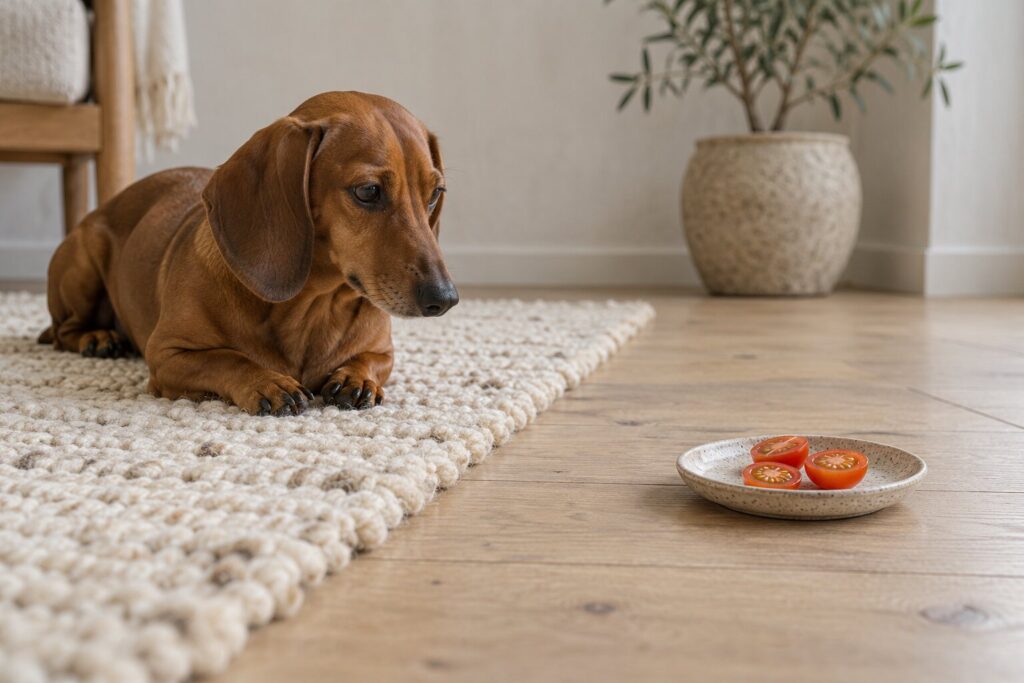
Ripe red tomatoes are fine for dogs in small amounts. The parts to worry about are the green ones: unripe tomatoes, and the leaves, stems and vines of the tomato plant, which contain compounds that can upset a dog’s stomach and, in large amounts, its nervous system. Most real risk comes from the garden, or from tomato sauces made with onion and garlic.
Ripe Tomatoes
The ripe red fruit is low in calories, about 18 per 100g, and mostly water, with a little fiber, vitamin C, potassium and lycopene, the red pigment. A few slices or a halved cherry tomato is a reasonable treat for a dog that likes them. Many dogs do not, and that is fine.
Wash it, cut it into bite sized pieces, and remove the green stem cap. Cut cherry tomatoes in half or quarters for small dogs, since a whole one is the right size and shape to choke on.
Why The Green Parts Are The Problem
Tomato plants belong to the nightshade family, along with potatoes and eggplant. Their green tissue contains glycoalkaloids, mainly tomatine, a close relative of the solanine found in green potatoes. Levels are highest in the leaves, stems and vines, still significant in small green tomatoes, and very low by the time the fruit has turned red.
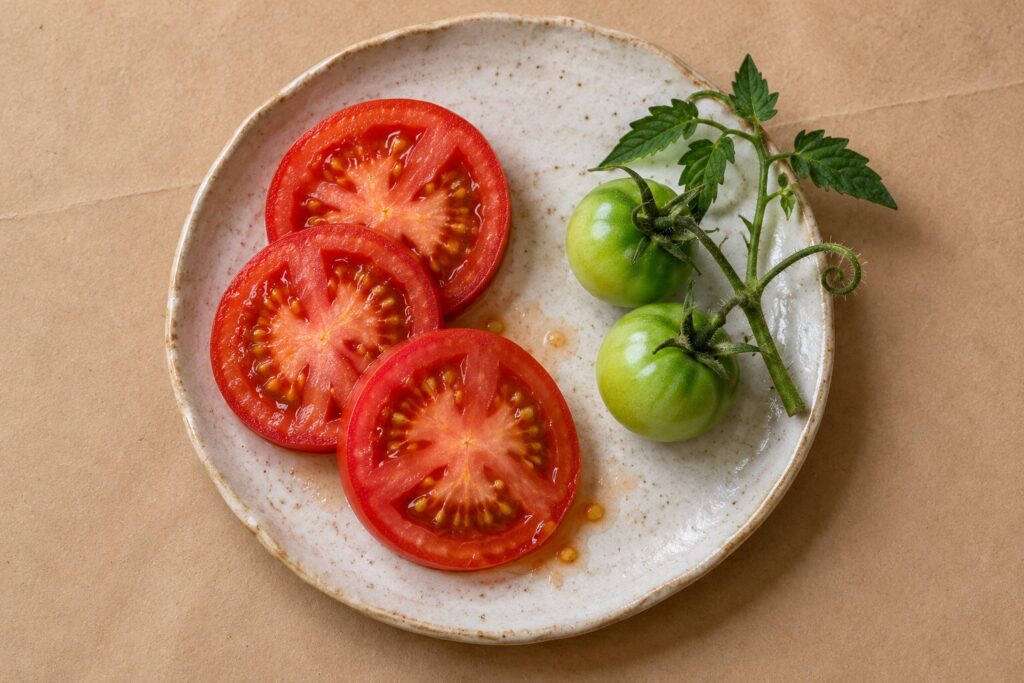
Serious poisoning from tomato plants is rare in dogs, because they would need to chew a fair amount of the plant. When it does happen, signs include:
- Vomiting, diarrhea and drooling
- Lethargy and weakness
- Wobbliness or confusion
- A slow heart rate, tremors or seizures in severe cases
If your dog has chewed through a tomato plant or eaten a lot of green tomatoes and shows any of these, call your vet or one of the US animal poison lines: ASPCA Animal Poison Control at (888) 426-4435 or Pet Poison Helpline at (855) 764-7661 (both charge a consultation fee).
Tomato Foods, Ranked
| Tomato | Verdict | Why |
|---|---|---|
| Ripe red tomato, plain | Fine, in small amounts | Low calorie, mostly water |
| Cherry and grape tomatoes | Fine, cut up | Whole ones are a choking hazard for small dogs |
| Cooked plain tomato | Fine | No added salt, oil or seasoning |
| Green, unripe tomatoes | Avoid | Higher in tomatine |
| Leaves, stems and vines | Never | The most concentrated source of tomatine |
| Pasta and pizza sauce | Avoid | Almost always made with onion and garlic, plus salt and sugar |
| Ketchup | Avoid | Sugar, salt and onion powder. A lick will not hurt; a habit is not good |
| Salsa and bruschetta | Never | Raw onion and garlic, and sometimes hot peppers |
| Tomato soup and juice | Avoid | Salt, and soups often contain onion, garlic or cream |
| Sun-dried tomatoes | Avoid | Concentrated, often salted and packed in oil with garlic |
The pattern is the same as with most human food: the tomato is rarely the issue, what is cooked with it is. Onion and garlic in any form damage a dog’s red blood cells, and a spoonful of sauce every day adds up. Our onions and garlic guide covers how much is dangerous.
Dogs In The Vegetable Garden
Gardens are where most tomato plant exposures happen, usually with puppies and dogs that like to dig or chew. A few practical steps:
- Fence off tomato beds, or grow tomatoes in raised beds or pots out of reach.
- Pick up fallen green fruit.
- Do not leave vines and leaves in a compost pile the dog can get into. Compost brings its own risk from moldy food.
- The same goes for potato and eggplant plants, which are relatives.
How Much Tomato
Keep treats under 10% of daily calories. Tomatoes are so light that calories are not the limit; the acid is. Too much can cause an upset stomach in some dogs.
| Dog weight | Sensible portion |
|---|---|
| Under 20 lb | One cherry tomato, cut up, or a thin slice |
| 20 to 50 lb | Two or three slices |
| Over 50 lb | Half a medium tomato |
Which Dogs Should Skip Them
- Dogs with a sensitive stomach or acid reflux. The acidity can make things worse.
- Dogs on an elimination diet. Nothing but the trial food.
- Dogs that chew plants. If your dog has a taste for greenery, keep it away from the tomato patch entirely.
Tomato In Dog Food
You will often see tomato pomace on dog food labels. It is what is left after tomatoes are pressed for juice and sauce: dried skins, seeds and pulp. It is made from ripe fruit, so it does not carry the green plant concern, and it is there as a source of fiber, with a little lycopene. Some foods list whole tomatoes instead. Either way it is a small part of the recipe.
For other vegetables dogs can share, plain pumpkin, carrots and cooked potatoes are all good options. Potatoes follow the same rule as tomatoes: green parts and raw potato are the risk. For any other food, check the food checker.
In The Kibble reads labels and publishes what the numbers say. Guides are general information, not veterinary advice. Your vet knows your dog's history and we do not, so take anything here to them before you change how you feed.
Found this useful?
Comments
No comments yet. Tried this with your dog? Tell other readers how it went.