Can Dogs Eat Turkey?
Plain cooked turkey meat, yes. Skin, bones, stuffing and gravy are the holiday risks, item by item, plus a dog-friendly Thanksgiving plate.
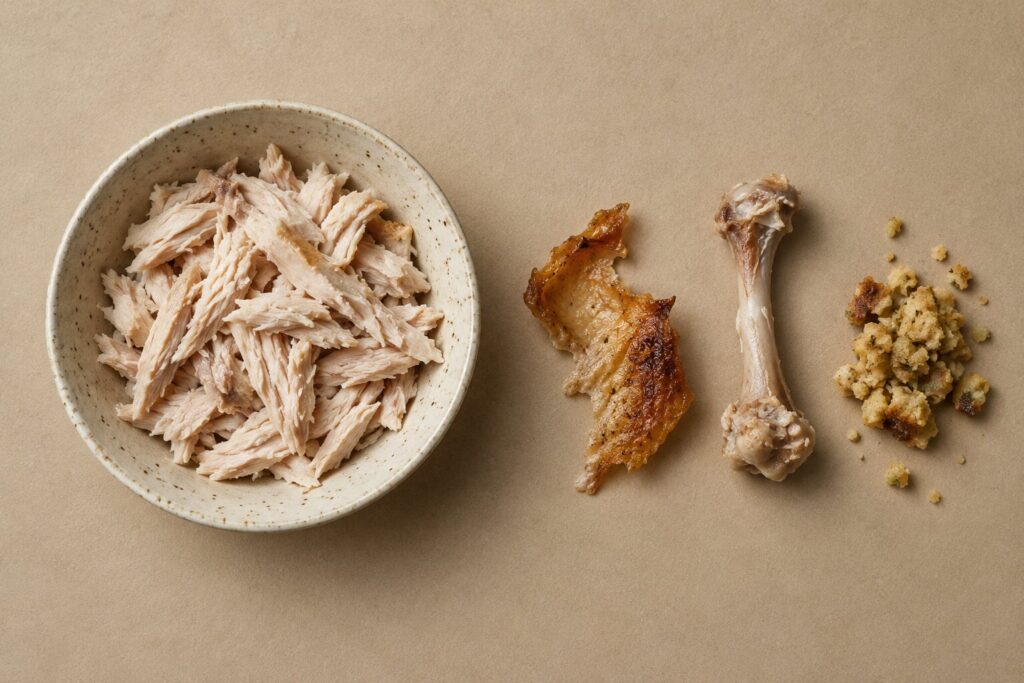
Plain cooked turkey meat, with no skin, bones or seasoning, is a good lean protein for dogs. The holiday version is a different story. Roast turkey comes with buttery skin, brittle bones, and stuffing and gravy that are usually made with onion and garlic, and the days after Thanksgiving are among the busiest of the year at emergency vets.
The Version That Is Fine
White or dark meat, fully cooked, pulled off the bone, with the skin removed and nothing on it. Plain cooked turkey breast is about 150 calories and 30g of protein per 100g, close to chicken, and most dogs digest it easily. It is a common protein in dog food for the same reason.
Cut it into small pieces and share a little. If you are feeding it as a treat, it comes out of the same 10% of daily calories as every other extra.
The Holiday Plate, Item By Item
| Food | Verdict | Why |
|---|---|---|
| Plain turkey meat, no skin | Fine | Lean protein. Small pieces only |
| Turkey skin | Avoid | Fat, butter and seasoning. A classic pancreatitis trigger |
| Turkey bones, including the wishbone | Never | Cooked bones splinter. Poultry bones are the worst |
| Stuffing | Never | Onion, garlic, leeks or chives in nearly every recipe, and sometimes raisins |
| Gravy | Avoid | Fat, salt, and usually onion or garlic from the stock |
| Turkey drippings poured over food | Avoid | Pure fat and salt |
| Cranberry sauce | Avoid | Very sugary, and some recipes add grapes or raisins |
| Plain cranberries | Fine | Safe, though most dogs find them too sour |
| Mashed potatoes | Avoid | Butter, milk, salt and often garlic |
| Sweet potato casserole | Avoid | Sugar, butter and marshmallows. Plain sweet potato is fine |
| Green bean casserole | Avoid | Fried onions and creamy soup. Plain green beans are fine |
| Pumpkin pie | Avoid | Sugar and spices. Plain canned pumpkin is fine |
| Bread rolls and raw dough | Avoid / Never | Baked rolls are just calories. Raw yeast dough can expand in the stomach and produce alcohol |
Why Turkey Bones Are A Real Emergency
Cooked poultry bones are thin and hollow, and cooking makes them brittle, so they splinter into sharp shards instead of crushing. Those can lodge in the throat, puncture the gut or cause a blockage. The carcass in the kitchen trash is the most common way dogs get them, so take the bag straight outside.
If your dog swallowed a turkey bone, do not try to make it vomit. Call your vet, and watch for 72 hours for retching, drooling, a painful belly, refusing food, straining or blood in the stool. Our chicken bones guide covers what to watch for in detail; turkey bones carry the same risks.
Skin, Fat And Pancreatitis
The biggest holiday risk is not toxic at all: it is fat. Turkey skin, drippings and buttery sides add up to a sudden fat load, and that is the classic trigger for pancreatitis, a painful inflammation that can need days in hospital. Small dogs, overweight dogs and breeds such as miniature schnauzers are most at risk, and a dog that has had it once is more likely to get it again.
Signs usually show within a day or two: repeated vomiting, a hunched back or “praying” posture, belly pain, refusing food and lethargy. Any of those after a holiday meal is a reason to call your vet.
Onion And Garlic Hide In The Sides
Stuffing, gravy, green bean casserole and the turkey rub itself usually contain onion, garlic, leeks or chives, often as powder. All of them damage a dog’s red blood cells, and the signs can take a few days to show up. A big plate of scraps on the day, or leftovers over several days, can both add up. The onions and garlic guide explains how much is dangerous.
A Dog-Friendly Thanksgiving Plate
If you want your dog to join in, set aside a small plate before anything is seasoned:
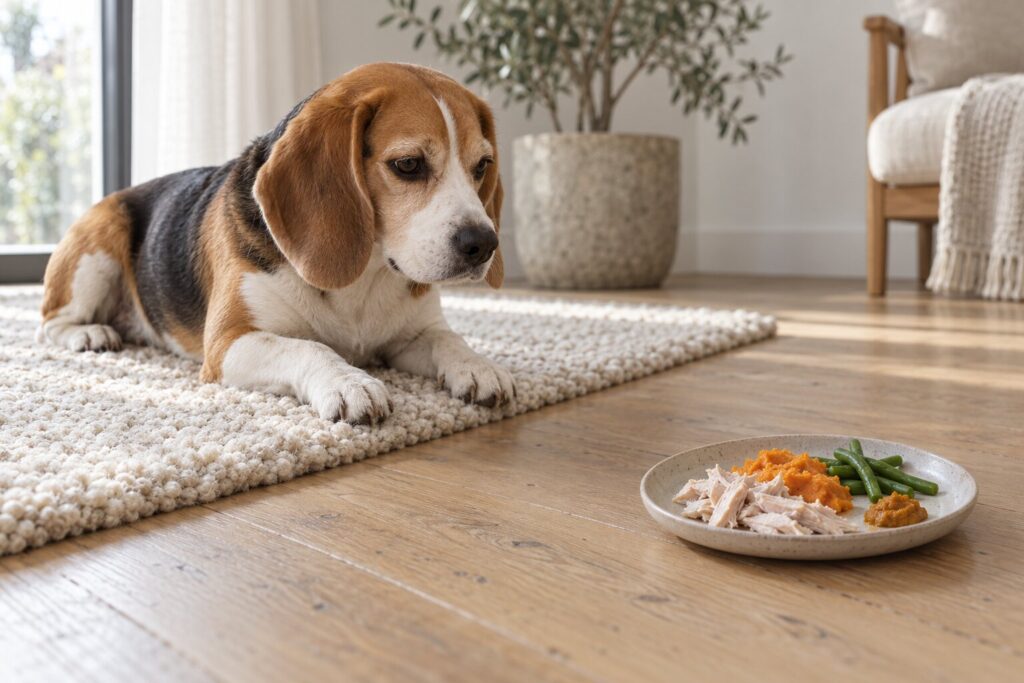
- A few pieces of plain turkey breast, no skin
- A spoonful of plain cooked sweet potato
- A few plain cooked green beans
- A teaspoon of plain canned pumpkin
Keep the whole plate small, about the size of one treat portion, and take a little off the dog’s dinner that day. Ask guests not to slip scraps under the table, and keep counters and trash bags out of reach.
Turkey In Dog Food
Turkey is a common protein in commercial food, listed as turkey (fresh meat, mostly water before cooking) or turkey meal (rendered and dried, so far more concentrated). It is a reasonable choice for a dog that does not do well on chicken, though dogs with a true chicken allergy sometimes react to other poultry too, so check with your vet before switching.
For the other holiday meats, see the ham guide, and for any other food, check the food checker.
In The Kibble reads labels and publishes what the numbers say. Guides are general information, not veterinary advice. Your vet knows your dog's history and we do not, so take anything here to them before you change how you feed.
Found this useful?
Comments
No comments yet. Tried this with your dog? Tell other readers how it went.