Can Dogs Eat Sweet Potato?
Yes. Cooked, plain sweet potato is one of the better vegetables to share. Raw sweet potato, casseroles and fries are the ones to skip.
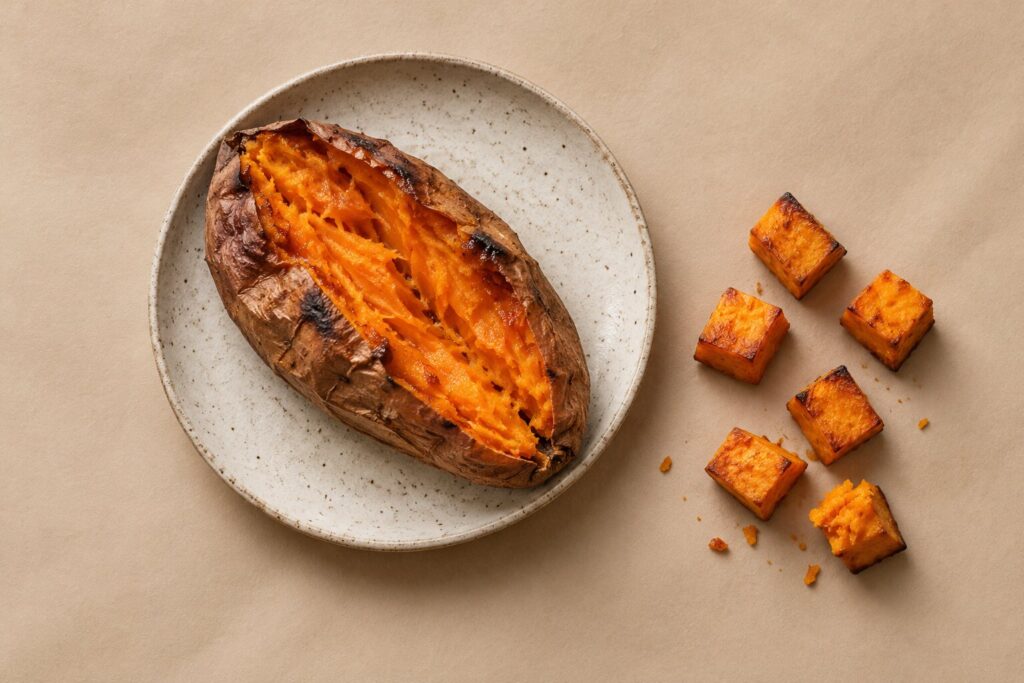
Yes. Cooked, plain sweet potato is safe for dogs and one of the more useful vegetables to share: soft, naturally sweet, and full of fiber and beta carotene. The things to watch are raw sweet potato, the sugary holiday versions, and portion size, because it carries more starch and calories than most people expect.
The Version That Is Fine
Baked, boiled or steamed until soft, peeled, and served plain or mashed with nothing added. Cooked sweet potato is about 90 calories per 100g, with around 3g of fiber and a lot of beta carotene, which the body turns into vitamin A.
Raw sweet potato is not toxic, but it is hard and difficult to digest, and chunks can be a choking or blockage risk. Cook it first.
Sweet Potato Foods, Ranked
| Food | Verdict | Why |
|---|---|---|
| Plain baked, boiled or steamed | Fine | The best option |
| Plain mashed | Fine | Good for stuffing toys or hiding pills |
| Dehydrated sweet potato chews | Fine, in moderation | Choose plain ones and watch for gulpers; hard chews can be swallowed whole |
| Skin | Better off | Not toxic, but tough to digest |
| Raw sweet potato | Avoid | Hard to digest and a choking risk in chunks |
| Sweet potato fries | Avoid | Oil and salt |
| Sweet potato casserole and pie | Avoid | Sugar, butter, marshmallows, spices |
| Candied yams | Avoid | Mostly sugar and butter |
Sweet Potato Or Potato?
They are not related. Ordinary potatoes are nightshades, and raw or green potatoes contain solanine, which is why plain potato has to be cooked and the green parts cut away, as our potatoes guide explains. Sweet potato has no solanine. It is also higher in fiber and beta carotene, which makes it the better pick of the two, though both are mostly starch. “Yams” in US stores are nearly always sweet potatoes too.
How Much Sweet Potato
Treats and extras should stay under 10% of daily calories so the complete food keeps doing its job:
| Dog weight | 10% treat budget | Cooked sweet potato |
|---|---|---|
| 10 lb | ~35 cal | About 1 tablespoon |
| 30 lb | ~75 cal | About 2 to 3 tablespoons |
| 60 lb | ~125 cal | About a quarter cup |
Start small. A sudden jump in fiber can give a dog gas or loose stools for a day.
Good Ways To Serve It
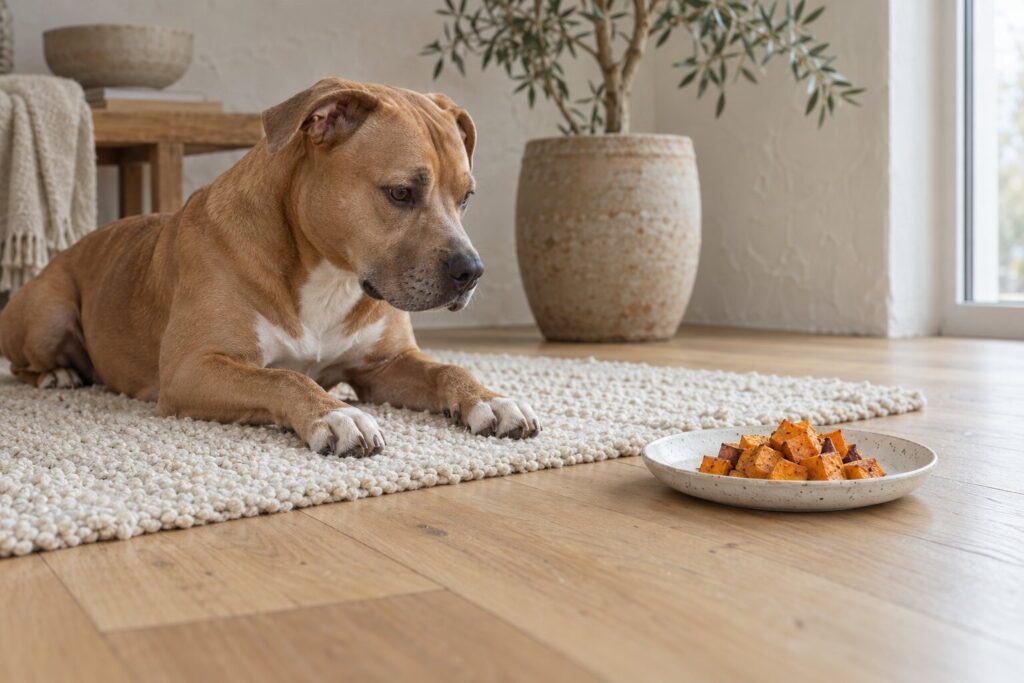
- Mashed into a puzzle toy and frozen. A little goes a long way.
- Diced as a topper, with the same calories taken off the meal.
- As a chew: thin slices baked low and slow until leathery, with nothing added.
- On a holiday plate, set aside before the butter and sugar go in. See the turkey guide for a full dog-friendly Thanksgiving plate.
Which Dogs Should Go Easy
- Diabetic dogs. It is a starchy vegetable that raises blood sugar. Ask your vet.
- Overweight dogs. Swap rather than add, or use lower calorie vegetables like green beans.
- Dogs prone to calcium oxalate stones. Sweet potatoes contain oxalates; check with your vet.
Sweet Potato And The DCM Question
Sweet potato is a common ingredient in grain-free dog foods, often alongside peas and lentils. In 2018 the FDA began looking into reports of dilated cardiomyopathy (DCM), a heart disease, in dogs eating grain-free diets. Many of the diets in those reports listed peas, lentils or potatoes, including sweet potatoes, high on the label, but the FDA has not found that any single ingredient causes DCM, and the cause is still not settled. Sharing a little cooked sweet potato is a different thing from a diet built heavily on starchy legumes and potatoes. If your dog eats a grain-free food and you are worried, talk to your vet.
Our study of 1,600 dry foods also found that grain-free does not mean low carb: grains are mostly swapped for other starches, usually peas and lentils. Sweet potato is one of the others; see what it adds on its ingredient page.
For more vegetables dogs can share, see pumpkin and carrots. For any other food, check the food checker.
In The Kibble reads labels and publishes what the numbers say. Guides are general information, not veterinary advice. Your vet knows your dog's history and we do not, so take anything here to them before you change how you feed.
Found this useful?
Comments
No comments yet. Tried this with your dog? Tell other readers how it went.