Can Dogs Eat Tuna?
A little plain canned tuna now and then is fine. Mercury is the reason to keep it occasional, and light tuna in water is the one to choose.
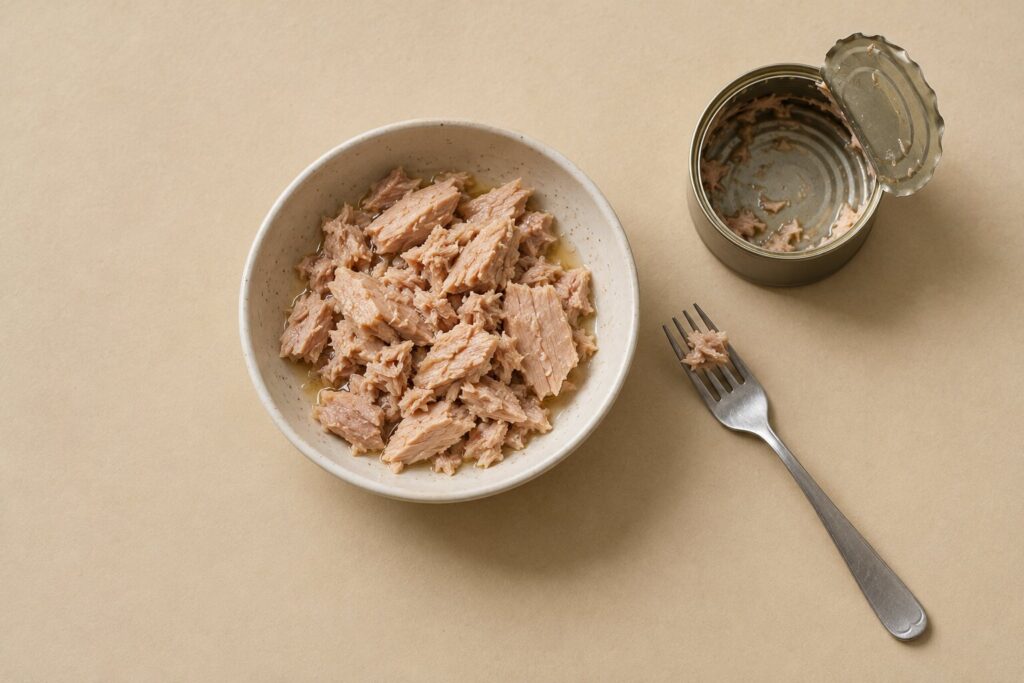
A little plain tuna now and then is fine for most dogs. It is high in protein and most dogs love it. The reason to keep it occasional is mercury: tuna are large, long-lived fish that build up more of it than most seafood, and it accumulates in a dog the same way it does in a person. Choose tuna canned in water with no salt added, and keep it to a small treat.
The Version That Is Fine
Canned light tuna in water, drained, with no added salt. Or a plain cooked tuna steak with no seasoning. A tablespoon of drained canned tuna is about 15 to 20 calories and mostly protein.

Which Tuna
| Tuna | Verdict | Why |
|---|---|---|
| Canned light (skipjack) in water, no salt added | Best option | The lowest mercury of the common canned types |
| Canned albacore (white) in water | Less often | Roughly three times the mercury of light tuna |
| Canned in oil | Avoid | Extra fat for no benefit. Drain if your dog snatched some |
| Canned in brine or salted | Avoid | High in sodium |
| Plain cooked tuna steak | Occasionally | Fine plain, but bigeye and other large tuna are high in mercury |
| Raw tuna, sushi and sashimi | Avoid | Bacteria and parasites, plus rice and soy sauce |
| Tuna salad | Avoid | Mayonnaise, salt, and often onion |
| Tuna casserole and melts | Avoid | Cheese, butter, salt and onion |
| Flavored pouches (lemon pepper, chili) | Avoid | Seasoning, and some contain garlic or onion |
The Mercury Question
Mercury enters the ocean food chain and concentrates as big fish eat smaller ones, so long-lived predators like tuna, swordfish and king mackerel carry the most. In dogs, as in people, very high exposure over time can harm the nervous system and kidneys. Signs of mercury poisoning in dogs include tremors, loss of coordination, vomiting, hair loss and anxiety, but they belong to large, regular amounts over a long period, not to a spoonful of tuna on a Sunday.
The practical answer is not to avoid tuna completely, just to treat it as an occasional extra, choose light over albacore, and not use it as a daily topper. If you want fish in your dog’s week, smaller fish are the better habit, as below.
How Much Tuna
| Dog weight | Drained canned light tuna |
|---|---|
| Under 20 lb | About a teaspoon |
| 20 to 50 lb | About a tablespoon |
| Over 50 lb | About 2 tablespoons |
Once or twice a week at most. Tuna also counts toward the 10% of daily calories that treats and extras share.
If Your Dog Ate A Whole Can
One can will not cause mercury poisoning. If it was in oil, expect a greasy stool or an upset stomach. A whole can of tuna in oil, for a small dog or one with a pancreatitis history, is worth a call to your vet. Check the lid too: dogs sometimes cut their tongues licking an open can.
What About Cat Food With Tuna?
A stolen mouthful of the cat’s tuna food will not hurt a dog. As a habit it is a poor idea: cat food is made for cats, with more protein and fat than a dog needs, and a dog that eats it regularly can put on weight or get an upset stomach. Feed the cat where the dog cannot reach.
Better Fish For Dogs
Smaller, shorter-lived fish carry far less mercury and more omega-3 fatty acids, which support skin, coat and joints. Plain cooked salmon, never raw, and sardines canned in water with no salt are both better regular choices than tuna. For a lean seafood treat, plain cooked shrimp works too.
Which Dogs Should Skip It
- Dogs with a fish allergy, or on an elimination diet.
- Dogs with kidney disease on a phosphorus or protein restricted diet, unless your vet says otherwise.
- Dogs on a low sodium diet, unless the tuna has no added salt.
- Pregnant dogs and young puppies, who are more sensitive to mercury.
Fish is also a common protein in dog food. Foods made with whole fish or fish meal from smaller species give the benefits without the mercury concern of a tuna-heavy diet. For any other food question, check the food checker.
In The Kibble reads labels and publishes what the numbers say. Guides are general information, not veterinary advice. Your vet knows your dog's history and we do not, so take anything here to them before you change how you feed.
Found this useful?
Comments
No comments yet. Tried this with your dog? Tell other readers how it went.