Can Dogs Eat Rice?
Yes. Plain cooked rice is safe and easy to digest. White rice is the one for an upset stomach, and fried rice is a no.
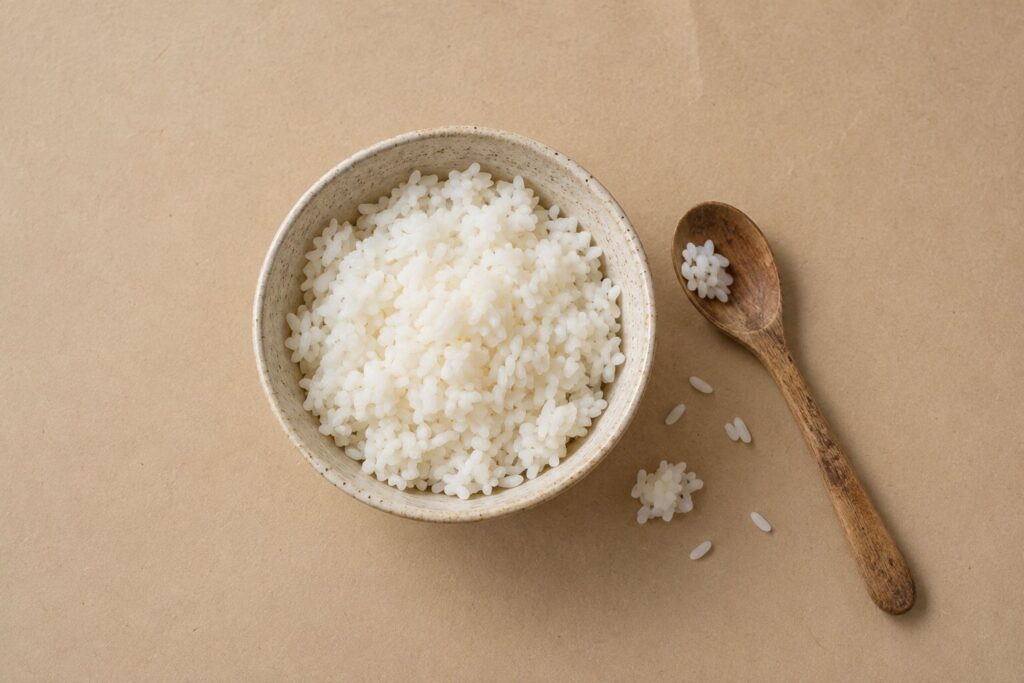
Yes. Plain cooked rice is safe for dogs and easy to digest, which is why it is the base of the bland diet vets suggest for an upset stomach. It is also one of the most common grains in dog food. The questions worth answering are which rice, how much, and when it stops being helpful.
The Version That Is Fine
Cooked until soft, in plain water, with no salt, butter, oil or seasoning. White or brown both work for a healthy dog. Never feed raw, uncooked rice: it is hard to digest and swells as it takes up water.
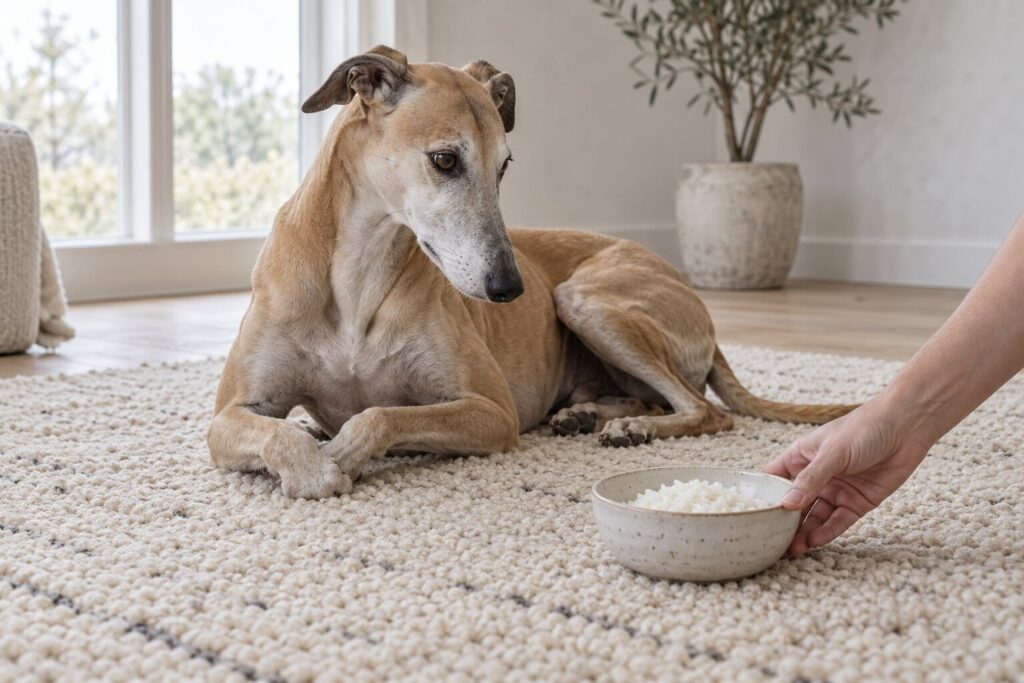
Cooked white rice is about 130 calories per 100g, or roughly 200 calories per cup. That is a lot of starch, so rice is a side, not a meal.
White Rice Or Brown Rice?
| White rice | Brown rice | |
|---|---|---|
| Fiber (cooked, per 100g) | About 0.4g | About 1.6g |
| Digestibility | Very easy | A little harder, because of the bran |
| Best for | Upset stomachs and the bland diet | Healthy dogs, as an occasional extra |
| Blood sugar | Raises it faster | Raises it more slowly |
| Arsenic | Lower | Higher, since arsenic collects in the bran |
For a dog with diarrhea, white rice is the one to use. The low fiber is exactly the point: it gives the gut less to work on. For a healthy dog, brown rice brings a little more fiber, B vitamins and minerals, though a dog on a complete food is not short of those.
Rice For An Upset Stomach
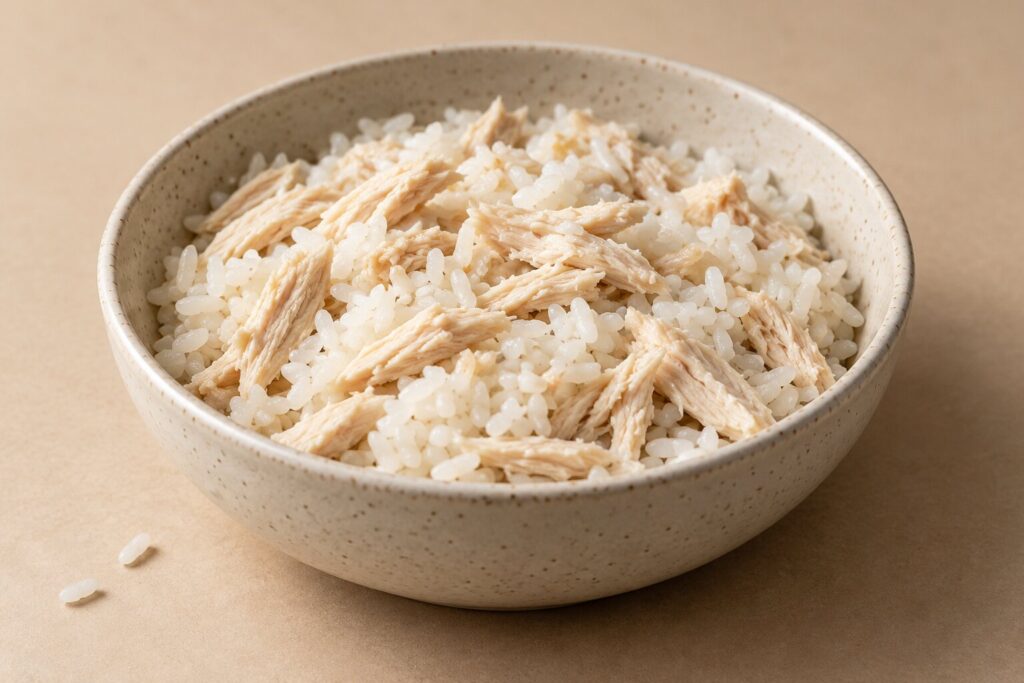
Plain white rice with boiled, skinless chicken, roughly one part chicken to two parts rice, is the classic bland diet. Feed small meals several times a day, then mix the dog’s normal food back in over a few days as the stools firm up.
- It is a short term fix. Chicken and rice is not nutritionally complete. A few days is fine; weeks of it lead to deficiencies.
- Three days is the working limit. If the diarrhea has not settled by then, the problem needs a diagnosis, not more rice.
- Call the vet sooner for a puppy, a senior, blood in the stool, repeated vomiting, a dog that will not drink, or one that seems flat and unwell.
A spoonful of plain canned pumpkin is the other kitchen staple for loose stools, and the two are often used together. There is more on when home care is enough in our guide to easing a dog’s upset stomach.
How Much Rice
As a treat or topper for a healthy dog, keep extras under 10% of daily calories, so the complete food keeps doing its job:
| Dog weight | 10% treat budget | Cooked rice |
|---|---|---|
| 10 lb | ~35 cal | About 2 tablespoons |
| 30 lb | ~75 cal | About a third of a cup |
| 60 lb | ~125 cal | About half a cup |
Those are ceilings for a day where rice is the only extra. If you are not sure how many calories your dog needs, our guide to daily calorie needs works it out by weight. During a bland diet the rice is part of the meal, not a treat, so these limits do not apply for those few days.
What About Arsenic?
Rice takes up more arsenic from soil and water than most crops, and brown rice holds more of it than white. For a dog eating a little rice now and then, or a few days of bland diet, this is not a reason to worry. If rice is a daily part of a home cooked diet, two simple steps help: rinse it before cooking, and cook it in plenty of water (around six parts water to one part rice) and drain off the extra, which removes a good share of the arsenic.
Rice Dishes To Avoid
- Fried rice. Oil, soy sauce, salt, and almost always onion and garlic, which are toxic to dogs. See the onions and garlic guide.
- Seasoned and boxed rice mixes. Salt, onion powder, garlic powder and bouillon.
- Risotto and rice cooked in stock. Store bought stock nearly always contains onion and garlic, plus butter and cheese.
- Rice pudding. Sugar and milk, and sometimes raisins, which are toxic. See the grapes and raisins guide.
- Sushi rice. Seasoned with sugar, salt and vinegar, and often served with raw fish or avocado.
- Plain rice cakes are fine in small pieces; flavored ones are not.
Which Dogs Should Go Easy
- Diabetic dogs. White rice raises blood sugar quickly. Ask your vet before adding any.
- Overweight dogs. Rice is calorie dense starch. Green beans add bulk for far fewer calories.
- Dogs with a rare grain allergy. True rice allergies are uncommon, but they exist.
Rice In Dog Food
Rice is one of the most used carbohydrates in kibble, and it shows up under several names. White rice and brown rice are what they sound like. Brewers rice is the small broken pieces left over from milling, nutritionally close to white rice. Rice bran is the outer layer, added mainly for fiber and fat.
Rice is not a filler in the sense of being harmful; it is a digestible source of energy. What matters more is how much of the food is starch overall, which the label does not tell you directly. We work out an estimated starch figure for the foods we review, and our study of 1,600 dry foods found that dropping grains like rice cuts carbohydrates by only about 5 points on average, because peas and lentils usually take their place.
For a cooked starch with more fiber, plain sweet potato or cooked potato are the usual alternatives. For any other food question, check the food checker.
In The Kibble reads labels and publishes what the numbers say. Guides are general information, not veterinary advice. Your vet knows your dog's history and we do not, so take anything here to them before you change how you feed.
Found this useful?
Comments
No comments yet. Tried this with your dog? Tell other readers how it went.