Can Dogs Eat Bananas?
Bananas are safe and most dogs like them. The thing to watch is sugar: banana carries about twice that of strawberries, so portion size is the whole question.
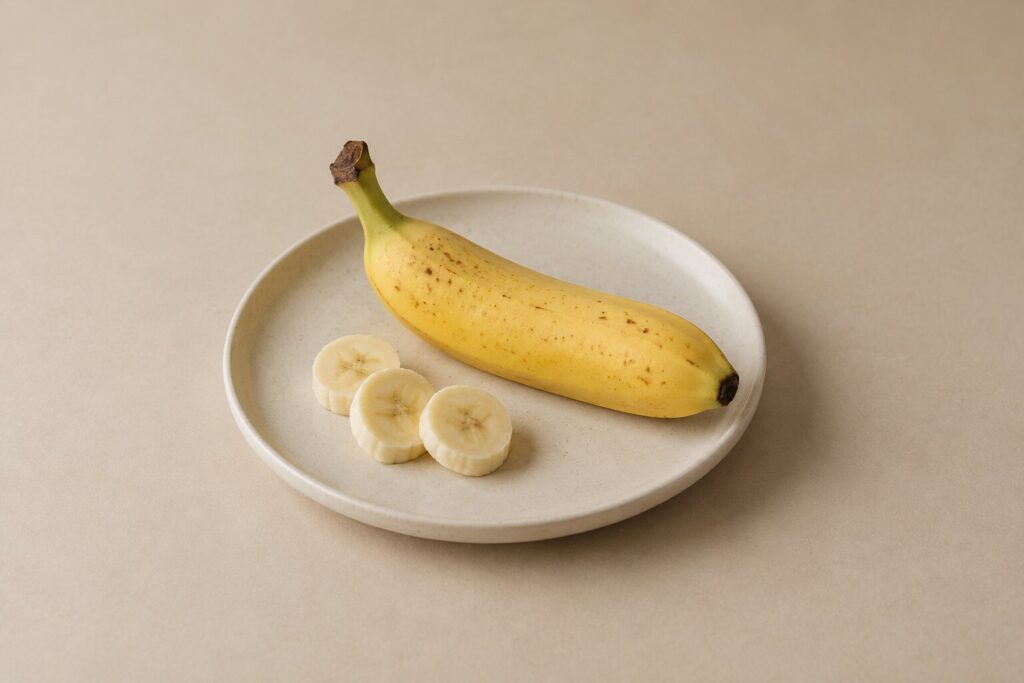
Yes, dogs can eat bananas. They are not toxic, most dogs like them, and the soft texture makes them useful for hiding pills or filling a puzzle toy.
The thing to watch is sugar. At roughly 12g per 100g, banana carries more than twice the sugar of strawberries and about three times that of a carrot. That does not make it dangerous, it just makes portion size the whole question.
How Much Banana
A medium banana is around 105 calories, which is a lot of treat for a small dog. Treats and extras should stay under 10% of daily calories so the complete diet keeps doing its job, and against that:
| Dog weight | Rough daily calories | 10% budget | Sensible banana portion |
|---|---|---|---|
| Under 10 lb | ~350 | ~35 cal | Two or three thin slices |
| 20 to 30 lb | ~750 | ~75 cal | Up to a third of a banana |
| 50 lb and up | ~1,250 | ~125 cal | Up to half a banana |
Most dogs should be getting banana a couple of times a week rather than daily, and it should be sharing that budget with everything else they get in a day.
What A Banana Actually Provides
Potassium, vitamin B6, vitamin C, magnesium and a reasonable amount of fiber. It is a genuinely nutritious fruit.
The honest caveat is that a dog on a complete commercial food is already getting all of those in balanced amounts. A banana is a pleasant snack rather than a supplement, and framing it as filling a nutritional gap overstates the case. The vitamin C in particular does nothing special for dogs, since they synthesize their own in the liver.
Can Dogs Eat Banana Peel?
Not toxic, but do not feed it. Banana peel is dense, fibrous and very difficult for a dog to digest. In a small dog it is a plausible obstruction risk, and in any dog it is likely to come back up or cause a day of upset.
If your dog has eaten a peel, watch for vomiting, straining, or a refusal to eat, and call your vet if any of those appear. Most dogs pass a small piece without incident.
Which Dogs Should Skip Them
- Diabetic dogs. Banana is one of the higher sugar fruits. Anything that moves blood glucose belongs in a conversation with your vet.
- Overweight dogs. At 105 calories a banana is not a diet food. Green beans or cucumber do the volume job for a fraction of the calories.
- Dogs with kidney disease. The potassium that makes banana attractive is a reason to check first if your dog has compromised kidneys.
- Dogs prone to constipation. Banana is high in soluble fiber and, in quantity, can firm things up more than you want.
Good Ways To Serve It
- Sliced, plain. The simplest option, and easy to portion.
- Frozen chunks. Genuinely good in hot weather, and a far better idea than ice cream. Cut them small for little dogs, since frozen banana is hard.
- Mashed into a puzzle toy. Smear it inside a rubber toy and freeze it. This is the highest value use of a small amount of banana.
- Around a pill. Soft enough to hide tablets, sweet enough that most dogs do not inspect it.
What to avoid: banana bread, which brings sugar, fat and sometimes raisins or chocolate, both of which are toxic. Banana chips, which are usually fried and sweetened. And anything banana flavored, which mostly means sugar with a banana on the label.

Can Puppies Eat Bananas?
Yes, in tiny amounts. A puppy is growing on a food built for that, so its treat budget is small, and a new food is best tried one thin slice at a time. Mashed banana in a puppy chew toy is a good way to use very little of it.
Can Dogs Eat Plantains?
Cooked and plain, a small piece is fine. Plantains are starchier and less sweet than bananas, and too hard to digest raw. Most plantain dishes, though, are fried in oil and salted, like tostones and plantain chips, and those are worth skipping.
How Banana Compares With Other Fruit
| Fruit (fresh, per 100g) | Sugar |
|---|---|
| Banana | About 12g |
| Apple | About 10g |
| Blueberries | About 10g |
| Pineapple | About 10g |
| Watermelon | About 6g |
| Strawberries | About 5g |
For a dog that needs to watch its weight or blood sugar, the bottom of that table is the better place to shop. And whatever the fruit, grapes and raisins are never on the list: they can cause kidney failure.
What To Watch For
Introduce a couple of slices and give it a day. Too much banana at once tends to produce constipation rather than diarrhea, which is the opposite of what people expect from fruit. If you see vomiting, obvious itching, or a change in stool that persists, banana is not a good fit and there is no reason to insist. Fruit is optional.
Where This Sits In The Diet
Bananas are a snack. What your dog actually lives on is the food in the bowl twice a day, and no amount of fruit compensates for a bag that is not doing its job. That is a label question rather than a treat question, and the guaranteed analysis on the back is where the answer is.
We convert every food we index to the same basis so two bags can be compared directly rather than by moisture content. You can browse them in the dog food reviews, or check what a specific panel ingredient actually is in the ingredient wiki.
In The Kibble reads labels and publishes what the numbers say. Guides are general information, not veterinary advice. Your vet knows your dog's history and we do not, so take anything here to them before you change how you feed.
Found this useful?
Comments
No comments yet. Tried this with your dog? Tell other readers how it went.